Five anime about revenge, recovery and the cost of opposition
War, criminal infiltration, a stolen body, catastrophic loss and strategic political resistance. Five opening motives that make opposition compelling without promising easy vindication.
Reviewed 2026-10-01 · Premise-level spoilers · Editorial selections, without a universal ranking.
Recovery, revenge and resistance overlap but are not identical. These are premise-level choices, with violent and mature material; later moral reversals and endings are deliberately outside this guide.
Choose your starting point
Follow the branch that sounds most appealing. This is a selection map, not a shared universe or a chronology.
How we chose these five
Each selection needs a theme that shapes its premise, a distinct reason to choose it and a verifiable anime project. We distinguish films from television, explain tone differences and use official production, studio, publisher or licensed-distributor pages for project identity. The order groups viewing experiences; it is not a score based on popularity or a claim that one work is objectively better.
Vinland Saga
TV anime · A personal pursuit inside a violent social world

Thorfinn’s story begins in a violent Viking-era world where a private pursuit is entangled with the people around him.
Why choose it?
Choose this when the pursuit of an enemy should unfold inside a wider culture of warfare. Our lens is the gap between a private motive and the circumstances that keep violence useful to other people. Compare 91 Days for a revenge route inside organized crime, or Dororo for recovery of what was taken before birth. The historical setting does not make every character event a verified historical occurrence. Begin the first television season and allow the relation between personal purpose and the surrounding world to develop; later arc labels and promotional character changes reveal how that purpose evolves. We are recommending the opening tension rather than promising a particular moral conclusion.
Where to start
Begin the first television season, then the separately named second season. Makoto Yukimura’s manga is the source route. Do not use a later arc synopsis as an introduction or infer an exact chapter handoff from a season label.
Tone & scope: War, enslavement, death and psychological distress. Later character goals and ending explanations are spoilers.
Attack on Titan
TV anime · A personal loss becomes a larger conflict

Eren’s opening world is violently disrupted by Titans, giving a personal loss a place within a much larger struggle.
Why choose it?
Choose this when a response to loss should eventually confront a world larger than the original enemy image. The opening’s violent disruption gives Eren a strong personal motive, but our recommendation does not disclose how the series later changes the terms of that motive. Compare Vinland Saga for a pursuit already surrounded by warfare, or Code Geass for a protagonist who deliberately adopts a political role. The attraction is the possible difference between what someone wants after a catastrophe and what acting on it requires. Begin with the first television episode. Explanations of the world’s later factions and final decisions belong behind a much stronger spoiler boundary.
Where to start
Begin the first TV season. Later seasons, the final specials and their alternate theatrical presentation need distinct labels; the compilation film is not another sequel after the ending. Hajime Isayama’s manga is the source.
Tone & scope: Graphic violence, war, death and trauma. World explanations and ending summaries contain major spoilers.
Dororo
TV anime · A stolen body makes recovery morally difficult
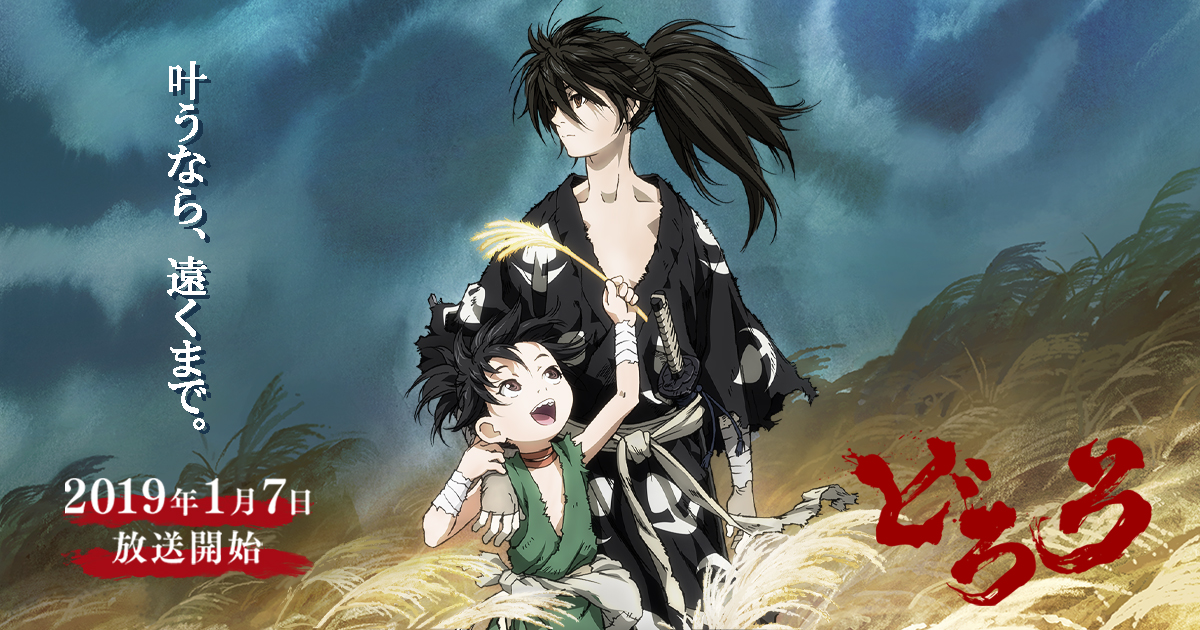
The 2019 anime introduction describes a ruler’s pact with demons, an abandoned heir missing parts of his body, and Dororo meeting the artificial-limbed Hyakkimaru.
Why choose it?
Choose this when seeking redress should involve something taken before the protagonist could consent. Physical restoration gives the journey a different starting motive from 91 Days’ infiltration or Vinland Saga’s pursuit of a person. Our thematic reading concerns the claim someone can make against a situation that other people have accepted as normal. Recovery and revenge are not identical; the distinction is why this belongs in a collection about the cost of opposition rather than only satisfying retaliation. Compare Code Geass for resistance aimed at political authority. The opening pact gives the conflict its shape without requiring the later outcome of any particular confrontation to be disclosed.
Where to start
Begin the 2019 television adaptation at episode one. Osamu Tezuka’s original manga and the earlier television version are separate routes. Do not combine episode counts or ending summaries across the two anime adaptations.
Tone & scope: Dismemberment, violence, abandonment and tragic situations. Body-recovery milestones and later political consequences are spoilers.
91 Days
TV anime · Revenge requires entering the enemy’s circle
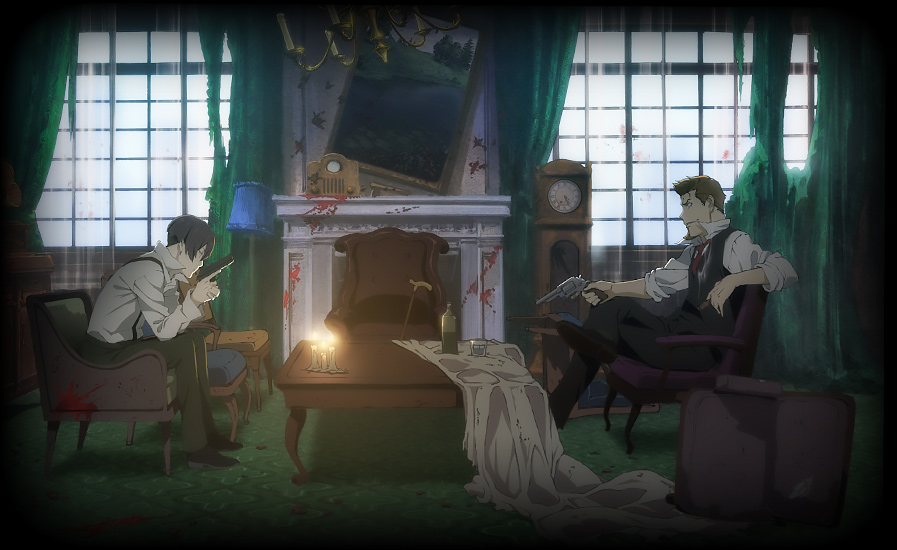
Shochiku identifies an original television revenge drama produced by Shuka. The licensed opening follows Avilio returning to Lawless after a letter prompts revenge against the mafia connected with his family’s loss.
Why choose it?
Select this when retaliation should depend on proximity rather than a visible confrontation from the outset. Entering a criminal environment makes a relationship useful and dangerous at the same time. Compare Vinland Saga for a pursuit embedded in warfare, or Code Geass for opposition expressed through a political role. Our interest is the strain between a private objective and the conduct needed to keep pursuing it among other people. The recommendation does not presume that revenge succeeds or delivers relief. Prohibition-era framing supplies a dramatic setting; the fictional families and events are not evidence for a specific historical crime. Begin with the opening and keep character dossiers closed until the story has introduced their relationships.
Where to start
Begin the 2016 television series in numbered story order. Shochiku’s maintained project distinguishes the later Day 13 release. That extra material does not replace the main opening or establish a separate sequel season. Streaming availability must be checked for your country.
Tone & scope: Murder, organized crime, alcohol and betrayal. Ending interpretations contain major spoilers.
Code Geass: Lelouch of the Rebellion
TV anime · A private grievance becomes public opposition

The original first-episode synopsis places Lelouch in occupied Japan, called Area 11, where a confrontation with Britannian forces reunites him with his friend Suzaku and changes the possibilities available to him.
Why choose it?
Choose this for opposition that uses a deliberately constructed role within a conflict of institutions. Lelouch’s unusual power and concealed public identity make strategy and presentation part of the opening attraction. Compare 91 Days for infiltration on a smaller criminal scale, or Dororo for a claim centered on a stolen body. Our thematic interest is how personal reasons change when they must organize action involving other people. The recommendation does not assume that a clever plan justifies its consequences or that political upheaval can be measured through fictional speeches. Start the original Lelouch of the Rebellion television route; compilation-film revisions and later related projects need their own labels.
Where to start
Begin the original Lelouch of the Rebellion television series, then its television sequel R2. Keep the separately labeled theatrical compilation route distinct when comparing later films. A film that revisits television events is not automatically an additional episode in the same route.
Tone & scope: Political violence, manipulation and death. Official character and sequel pages can expose identities and later reversals.
Read the full Code Geass: Lelouch of the Rebellion guide & visual adaptation map →
Case check: recovering what was taken is not the same as entering an enemy’s world
Dororo’s official opening establishes a pact and an heir deprived of parts of his body. The licensed 91 Days premise introduces a return to Lawless and a revenge objective inside a mafia environment. Our interpretation is that these give different things to follow: recovery of the self and conduct among people connected with a loss. Vinland Saga places a pursuit in warfare, Attack on Titan begins with catastrophic disruption, and Code Geass connects private reasons with a strategic public role. The comparison explains five entry experiences. It does not disclose their endings, rank the legitimacy of their motives or invent a historical account from fictional events.
Confirmed: the linked primary descriptions establish project identity and starting premises. Editorial reading: the thematic fit and comparisons are our interpretation. Not established here: exact adaptation endpoints, production costs, complete viewing availability or a scene-by-scene source comparison.
Discuss and continue
Community and catalog links are secondary navigation. They can help you find contrasting responses, but they are not evidence of audience-wide agreement. Discussion threads and later-season pages may contain spoilers.
Use official source pages for project identity and check your licensed service for regional availability.
Find community discussions on Reddit · Watch-order guides · Reading routes · Visual adaptation maps
Another experience to explore
- Farming & countryside life
- Food at the heart of the story
- Build, craft & organize
- Time loops & changing the past
- Life after battle
Review and artwork notes
This selection was reviewed on 2026-10-01. Original official or licensed images identify each project; later-season art is labeled where used. Artwork is reproduced under permission asserted by the site owner, with attribution and source links retained. This is not an open-license claim. Future revisions can replace a pick, improve source routes or add a maintained Work guide while preserving the selection’s published purpose.