Begin Tezuka’s original manga or the independent 2019 anime. The 1969 series, Shiki manga and modern Re:Verse webcomic are separate interpretations, with different edition and story details.
Reviewed 2 October 2026 · Opening premise and format relationships; major ending revelations withheld. Linked publisher summaries and discussions may reveal later events. · Licensed access varies by country.
The source and screen branches

Parallel versions are not chronological seasons. The source’s unfinished development is not repaired by a collected binding; games and live action remain outside this map.
- READ · source: Tezuka original opening → Omnibus · check binding contents
- WATCH · independent versions: 1969 television series → 2019 television · 24 episodes
- READ · separate remake: Legend · Satoshi Shiki → Begin its own book 1
- READ · modern webcomic: Dororo Re:Verse → Season-one hiatus notice
Choose a version before counting demons or episodes
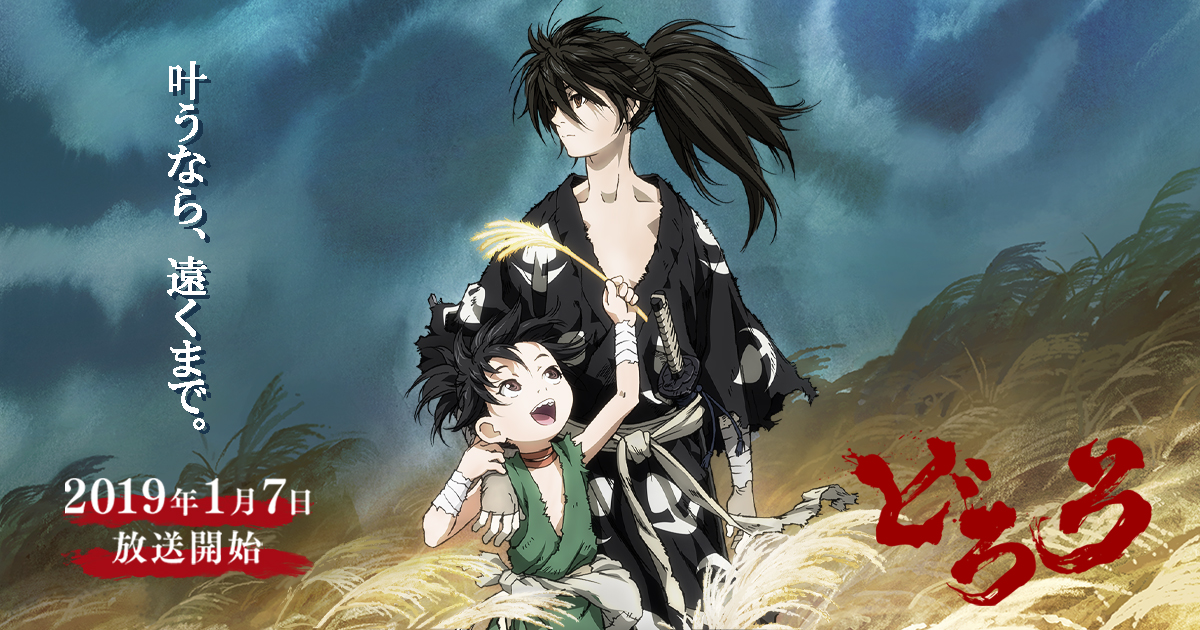
Dororo originates in Osamu Tezuka’s manga, serialized across two magazines in the late 1960s. Begin the source at its opening, or choose the 2019 twenty-four-episode anime at episode one. The 1969 television series is an earlier, separate adaptation. It is not a first season that must precede the newer production.
The versions do not share every narrative quantity. Tezuka’s original premise describes forty-eight demons; the 2019 official introduction names twelve demon statues in the father’s bargain. A visitor should not carry one version’s count into another, or use an episode number as a reliable chapter position across substantially different treatments.
The Legend of Dororo and Hyakkimaru is Satoshi Shiki’s separate manga reimagining. Dororo Re:Verse relocates its interpretation to modern Japan as a webcomic. Both begin their own routes. Games and live action remain outside this reading and viewing map, and no unverified source novel is inserted to manufacture a third origin.
| Route | Start | Relationship |
|---|---|---|
| Tezuka manga | Original opening | Source; check binding contents |
| 1969 television | Episode 1 | Earlier independent adaptation |
| 2019 television | Episode 1 of 24 | Reworked adaptation, not season two |
| Legend manga | Shiki book 1 | Separate reimagining |
| Re:Verse webcomic | Hyakki, episode 1 | Modern-setting reimagining |
An omnibus contains published material without repairing its history
Kodansha’s English omnibus gathers material previously sold in three installments. Its print record dates to 20 March 2012, ISBN 9781935654322; the digital record is 18 August 2020, ISBN 9781647290115. Those are edition dates. Neither represents an additional conclusion written after the animation, and binding counts differ among Japanese collections.
Tezuka’s archive explains the interrupted magazine run and later continuation. Its English story record also labels the narrative incomplete. The collected publication can therefore be available in one complete physical binding without every originally planned demon encounter having been individually developed. This guide avoids promising a fully expanded ending merely because a retailer sells an omnibus.
The licensed Re:Verse page carries a 21 July 2025 season-one hiatus announcement. Its generic Monday update label should not override that specific notice. Shiki’s Legend has its own publisher list and release schedule; this guide links it without transferring the original’s edition totals or declaring a current English final volume from an old catalog snapshot.
Two travelers occupy the same direction without becoming interchangeable
The selected original Tezuka illustration shows a taller armed traveler and a smaller companion facing left, their dark hair extending strongly toward the right. Pale ground and ochre rock formations frame them. This is source-related artwork from the official creator archive, not an episode screenshot from the 2019 anime.
Our visual reading begins with the figures’ shared direction and unequal scale. The smaller figure remains clearly visible rather than disappearing behind the taller traveler. Their matching orientation suggests a journey together, while differences in height, clothing and equipment preserve their distinct positions within that journey. The illustration alone cannot establish a specific conversation or destination.
It also makes a useful comparison prompt: what does each adaptation allow Dororo to contribute beyond following Hyakkimaru? A licensed chapter or episode is needed to answer for a particular encounter. We use the artwork to frame that question, rather than treating a promotional pose as evidence for every later event or disguising a new image as Tezuka’s original drawing.
Original visual reference

A ruler calls something a benefit when someone else pays
Our central reading starts with the father’s bargain: political ambition is financed through a child who cannot consent. The supernatural premise exposes a human distribution of power. The decision maker expects a territory’s advantage while assigning the cost to another body, making prosperity and violence part of the same arrangement.
That creates a sharper question than whether defeating a monster is impressive. Who is allowed to define the bargain as worthwhile? A close reading can track whose experience enters that calculation and whose is excluded. Public stability cannot automatically settle the ethical issue when its conditions were imposed on someone unable to refuse.
The story’s historical setting supports that conflict without making its invented demons a documentary account of the Sengoku period. A reviewer should distinguish political interpretation from a verified historical claim. Nor should differences between the forty-eight-demon source and twelve-statue anime be dismissed as counting errors: they belong to separately authored narrative arrangements.
Restoration is an aim; personhood is not a prize
Hyakkimaru’s quest concerns recovering what was taken from him. Our interpretation keeps that goal separate from the idea that a person becomes worthy of care only after restoration. A bodily change may alter what a character can perceive or do without creating their right to exist or determining whether another person owes them respect.
A close reading should examine how others address the traveler before and after any recovery. Do they recognize an individual, a weapon, an omen or a problem? Those social responses reveal assumptions that the adventure can challenge. The narrative’s extraordinary premise does not make a fictional body a general description of real disabled lives.
This distinction also improves adaptation comparison. Differences in communication, perception and bodily presentation can shift a scene’s emotional emphasis. The guide does not assert an exhaustive correspondence without inspecting the named versions. It offers specific questions for comparison while withholding late outcomes and avoiding clinical labels or real-world treatment claims.
Dororo can connect survival knowledge with a solitary quest
The publisher and creator premises identify Dororo as an orphan and thief who travels with Hyakkimaru. Our reading asks how street-level survival changes the direction of an apparently solitary mission. A companion can bring information, negotiation, humor and practical contact with other people, rather than only providing someone for a fighter to rescue.
The pair also has unequal kinds of knowledge. Ability with a weapon does not automatically provide the language or judgment needed for every social encounter. A close reading can locate moments when the smaller traveler supplies a perspective the more formidable figure lacks, keeping contribution distinct from a simple hierarchy of physical power.
This is a way to investigate the partnership, not a promise that every version assigns the same role or emotional trajectory. Original manga, 1969 television, 2019 television and modern remakes require their own evidence. The source illustration’s two distinct silhouettes make a useful starting point for asking how a shared journey preserves individual agency.
A modern production has its own credited interpretation
The 2019 official staff page credits Kazuhiro Furuhashi directing, Yasuko Kobayashi for series composition, Hiroyuki Asada for original character concepts, and MAPPA with Tezuka Productions for animation. These roles identify the adaptation’s creative framework; the source artwork’s creator credit remains Tezuka, rather than being reassigned to the modern character designer.
The archive lists the earlier 1969 television work separately. Seven Seas credits Tezuka and Shiki on Legend, while Tapas identifies Lee do kyong, Bean and Tezuka for Re:Verse. Keeping those distinctions visible allows visitors to follow connected creators without collapsing several adaptations into one supposedly unchanged illustrated sequence.
AniList’s displayed 8.1 out of 10 concerns only the 2019 twenty-four-episode television entry. It is not an average of the manga, older anime or webcomic. Reddit and the linked wiki offer version discussions with substantial spoilers possible; official production and publisher records govern credits and edition status rather than an unverified fan explanation.
Reprinting a classic and creating a remake measure different activity
The omnibus record, Shiki’s English manga list and the licensed webcomic establish several ways the property has been republished or reinterpreted. They demonstrate distribution activity, not one continuous source serialization. A modern adaptation’s availability should be checked in a visitor’s territory rather than assumed from the original 2019 launch arrangements.
No audited Dororo-specific net profit or complete production budget was verified. Views shown on a webcomic platform, copies in print and anime audience scores are separate measures. They cannot be converted into one revenue figure without reliable reporting, a defined period and the terms governing what those counters actually include.
Start the chosen version at its beginning. After the 2019 series, return to the original opening or begin a separately named reimagining instead of jumping to a fabricated continuation chapter. Future updates should monitor the English edition lists and the explicit Re:Verse hiatus notice; neither an old streaming announcement nor a generic update badge establishes a new release.
Primary sources and useful navigation
- Tezuka official archive · source and publication history
- Tezuka official archive · 1969 animation
- Kodansha · English omnibus binding
- 2019 official introduction · twelve-statue premise
- 2019 official staff and studios
- Seven Seas · Shiki reimagining
- Tapas · licensed modern webcomic and hiatus notice
- AniList · named adaptation audience score
Community and catalog routes
- MyAnimeList · named adaptation catalog
- Reddit · version discussion, spoilers possible
- Fandom · secondary version reference, spoilers
The production and publisher links support project facts. Catalog and community pages are secondary navigation and may reveal later events.
Find this work in our thematic collections
Original series imagery is reproduced under permission asserted by the site owner; the source and rights credits are retained. The route diagram is Animeteor’s own explanatory graphic.
Games and live-action adaptations
- Dororo — Live action: Film · 2007
- Dororo (2004) — Game: Action-adventure · 2004
Separate console interpretation and future English remake volumes
SEGA’s Japanese PlayStation 2 Dororo was released on 9 September 2004. The director identifies its conclusion as the game’s interpretation, separate from Tezuka’s unfinished manga development. It stays outside the anime route.
Original Japanese console game guide
The separately named Satoshi Shiki manga remake has future English paperbacks: volume 12 on 6 October 2026 (ISBN 9798897655502) and volume 13 on 20 April 2027 (ISBN 9798898633929), each 160 pages. These English book numbers are not Tezuka source-volume numbers or animated episodes.