Start Norihiro Yagi’s manga at volume one for source continuity, or watch the 2007 television adaptation. Keep manga completion, screen ending and box-set packaging distinct.
Reviewed 2 October 2026 · Opening premise and format relationships; major ending revelations withheld. Linked publisher summaries and discussions may reveal later events. · Licensed access varies by country.

The source and screen branches

Source and screen are separate branches. A box packages the source books; no exact post-anime chapter bridge is certified.
- READ · source: Manga · volume 1 → Follow source volume order
- WATCH · adaptation: 2007 television · 26 episodes · Screen presentation · separate endpoint
- BUY · edition choice: Individual volumes / complete box · Packaging · not a sequel
Start the manga for the source, or choose the 2007 screen route
Claymore originates in Norihiro Yagi’s manga. VIZ identifies its serialization as running from 2001 to 2014 and provides the English manga catalog. Begin with volume one for its own introduction to the setting and characters. The first volume is a practical source entry, rather than a requirement that a viewer purchase an entire collection before deciding whether the story suits them.
The named 2007 television entry is a separate twenty-six-episode route. Watch its own episode sequence for that adaptation. The fact that the source and screen share characters does not establish that the anime’s ending is the manga’s ending or that a numerical chapter bridge can be inferred from an episode count.
A completed-source product and an animated season are different promises. This page identifies both and leaves a precise post-anime chapter recommendation unverified. Start the manga at its opening when you want a reliable comparison. A game product remains outside the reading and viewing roadmap.
A box set packages books rather than adding a sequel
VIZ’s Claymore Complete Box Set is a collected purchase option, while its numbered volumes are the individual reading units. Compare included books and language before buying. The packaging itself does not supply an additional continuation after the source, and a store’s availability is separate from whether the manga’s serial publication has ended.
Use the publisher’s product descriptions to distinguish introductory previews from full volumes. A preview can help you inspect artwork, page direction and translation presentation. It cannot support an assertion about scenes in a later book that it does not contain. The catalog below is retained so readers can check the exact edition they are considering.
The television website is another record, with its own broadcaster presentation and imagery. A manga image and an anime campaign image can be placed together for visual comparison only when their provenance stays visible. Their shared title does not make their episode or page numbers interchangeable.
The village needs its defender and fears her resemblance to the threat
VIZ’s first-volume description introduces a village frightened by a Yoma and a dispatched warrior who is not the protector its inhabitants expected. Its series description identifies the Claymores as women with both human and monstrous characteristics. Those are publisher-confirmed opening conditions, not conclusions drawn from the anime’s later battles.
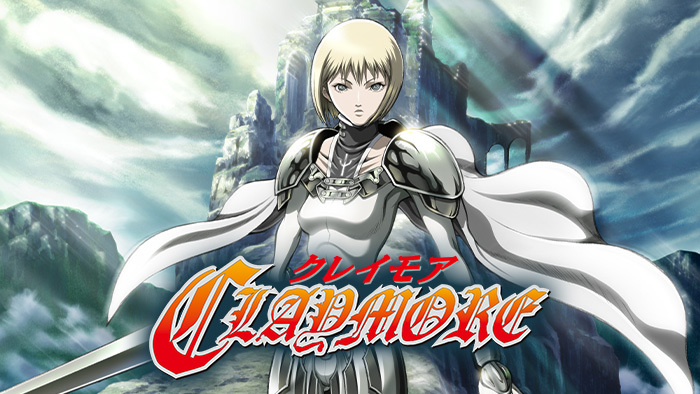
The selected VIZ illustration and NTV campaign image are original promotional material. Our reading examines how recognizable warrior imagery can invite admiration while the premise makes that same defender an object of suspicion. The case does not pretend that an advertisement is a frame from the village encounter.
The useful comparison is between the community’s stated need and its willingness to accept the person meeting that need. A detailed scene comparison would need the licensed opening chapter and its named animated treatment. This introduction does not certify dialogue, panel placement or a complete inventory of adaptation changes.
Original visual reference
Protection does not guarantee acceptance
Our interpretation begins with a social contradiction: a community may rely on somebody whose identity it refuses to welcome. Protection then becomes conditional recognition. The warrior is accepted as a solution to danger while remaining outside the ordinary relationships that make a place feel like home.
That lens keeps attention on the villagers as well as the fighter. How is danger described before she arrives? What changes after she is seen? Is gratitude extended to a person or only to a useful service? These questions distinguish fear of a specific threat from a habit of treating difference itself as threatening.
A fantasy monster does not map neatly onto any real population. The analytical value lies in the structure of dependence and exclusion, not in assigning one fictional species to a real group. Readers can use that distinction to discuss prejudice without reducing the story to a single allegorical key.
A weaponized body creates questions about who decides its limits
The premise ties extraordinary strength to an unstable boundary between human and monster. Our reading asks who defines a warrior’s acceptable use of that strength. Is restraint a personal ethical choice, an institutional rule or a condition imposed by those who benefit from her work?
Power is therefore more than a ranking of attacks. A person can gain the ability to defeat an enemy while losing control over the terms under which she must fight. A careful character analysis tracks permission, obligation and risk together, especially when the same organization supplies identity and assigns dangerous tasks.
Look for scenes where somebody chooses not to use an available advantage. Restraint can reveal values that a victory does not. Conversely, a demand for restraint may protect others or merely preserve institutional convenience. Those possibilities should be judged through named scenes rather than inferred from the size of a sword in promotional artwork.
Shared experience can challenge the identity imposed by outsiders
Our interpretation of companionship asks whether being understood by another person changes what the warrior can imagine for herself. A label applied by frightened outsiders may explain her public role while missing her private choices. A relationship can expose that gap without removing the material danger around her.
Track who asks a question and who supplies its answer. Friendship becomes narratively important when it allows a person to be uncertain, disagree or accept assistance. It need not consist only of a companion praising the fighter’s strength. Mutual recognition can emerge through mundane exchanges between confrontations.
This offers a useful adaptation question: how much time does each version make available for those exchanges? Different pacing may alter the balance between solitary combat and relationship building. The guide proposes that comparison without claiming an exact scene was omitted from a source book that has not been inspected here.
Yagi’s source and the television audience are separate records
VIZ credits Norihiro Yagi for the manga and places Claymore alongside his earlier work Angel Densetsu in its creator biography. That is a useful author-discovery route for a reader interested in contrast between works. It does not make the earlier title a narrative prequel that must be read first.
The displayed AniList score belongs to the 2007 television adaptation, checked on 2 October 2026. It is not transferred to the manga or interpreted as an objective measure of the creator’s career. Catalog scores represent the participating audience of a particular entry, with their own selection effects.
MyAnimeList and the linked community entry points support further discussion and edition questions. Discussion may reveal later events. They are not primary evidence for a new season, a sales total or a certified manga continuation chapter. Consult the named production and publisher records when a claim changes the practical route.
A finished manga and a maintained catalog offer different information
The publisher’s historical serialization dates establish a completed publishing period for the source. A current English catalog establishes a route to its listed editions. Neither fact establishes a title-level profit margin, a current worldwide readership or the cost of producing the animated adaptation.
No audited budget or net profit was verified for this guide. A box-set price is a retail offer, not revenue multiplied by an assumed audience. Similarly, a score should not be converted into demand or an earnings prediction. A future commercial update should specify the reporting party and the measure being counted.
Choose the manga’s first volume for source continuity or the named television adaptation for a screen introduction. Keep the box set as a buying decision and any game as separate coverage. The page can add a verified edition or production announcement later while retaining these distinctions and its original address.
Primary sources and useful navigation
- VIZ · Claymore source, creator and opening premise
- NTV · official Claymore anime record
- AniList · named adaptation audience score
Community and catalog routes
- MyAnimeList · named adaptation catalog
- Reddit · Claymore community, spoilers possible
- Wikipedia · secondary format navigation
The production and publisher links support project facts. Catalog and community pages are secondary navigation and may reveal later events.
Explore related story guides
Original series imagery is reproduced under permission asserted by the site owner; the source and rights credits are retained. The route diagram is Animeteor’s own explanatory graphic.