Small clues, different mysteries: five anime for curious viewers
Palace observations, taxi conversations, a return to the past, school-club curiosity and a specialist’s interest in bones. Five mysteries with different reasons to notice what others pass over.
Reviewed 2026-10-01 · Premise-level spoilers · Editorial selections, without a universal ranking.
The selections compare starting methods and tone, not the answers to their cases. Hyouka’s school questions and Beautiful Bones’ disturbing remains should not be mistaken for the same viewing mood. Later-case pages, community timelines and film descriptions may spoil central connections.
Choose your starting point
Follow the branch that sounds most appealing. This is a selection map, not a shared universe or a chronology.
How we chose these five
Each selection needs a theme that shapes its premise, a distinct reason to choose it and a verifiable anime project. We distinguish films from television, explain tone differences and use official production, studio, publisher or licensed-distributor pages for project identity. The order groups viewing experiences; it is not a score based on popularity or a claim that one work is objectively better.
The Apothecary Diaries
TV anime · Knowledge turns an observation into a question

Maomao brings her knowledge of medicines and poisons into a palace setting. The licensed source and television adaptation establish observation, constrained access and court relationships as parts of her starting situation.
Why choose it?
Choose this for the moment when specialist knowledge makes an ordinary detail worth questioning. Maomao’s medicine-and-poison premise distinguishes her from a school-club investigator and from a taxi driver encountering a city’s conversations. The palace also means access to information is shaped by rank. Our thematic reading connects knowledge with the ability to notice a discrepancy; it does not turn every suspected condition into a clinical diagnosis or reveal a case’s solution. Compare Hyouka when curiosity and school relationships are the preference, or Beautiful Bones when physical remains are the distinctive entry point. Begin with the first case and allow the explanations to arrive in their own order.
Where to start
Begin the first television season or the licensed light novel at volume one. Our Work guide distinguishes prose and the separately credited manga adaptations. A comic edition’s volume count cannot be transferred directly to the novel or anime.
Tone & scope: Poison, exploitation, power imbalance and medical themes. Later case explanations can expose mystery solutions.
ODDTAXI
TV anime · Conversations form a larger pattern

The broadcaster introduces Odokawa as a taxi driver whose unusual passengers and seemingly ordinary conversations become connected to a missing girl.
Why choose it?
Choose this for a mystery assembled through encounters rather than a detective being handed one neatly bounded case. A cab provides a reason for people with different concerns to pass through the same small space. The viewing attraction is the possibility that a minor remark belongs to a larger pattern. That is our interpretation of the broadcaster’s setup, not a promise that every background detail is a clue. Compared with Hyouka’s school club, the network is a working city; compared with Beautiful Bones, the immediate material is conversation rather than a specialist reading of remains. Start without explanatory timelines, which can reveal relationships before the show does.
Where to start
Begin the original television series at episode one. Leave In the Woods and other related projects until after the TV story; their labels do not mean they are a spoiler-free introduction. The official portal distinguishes its anime project.
Tone & scope: Missing-person material, threats and criminal activity. Discussion titles can reveal central connections.
ERASED
TV anime · A past event can be reconsidered
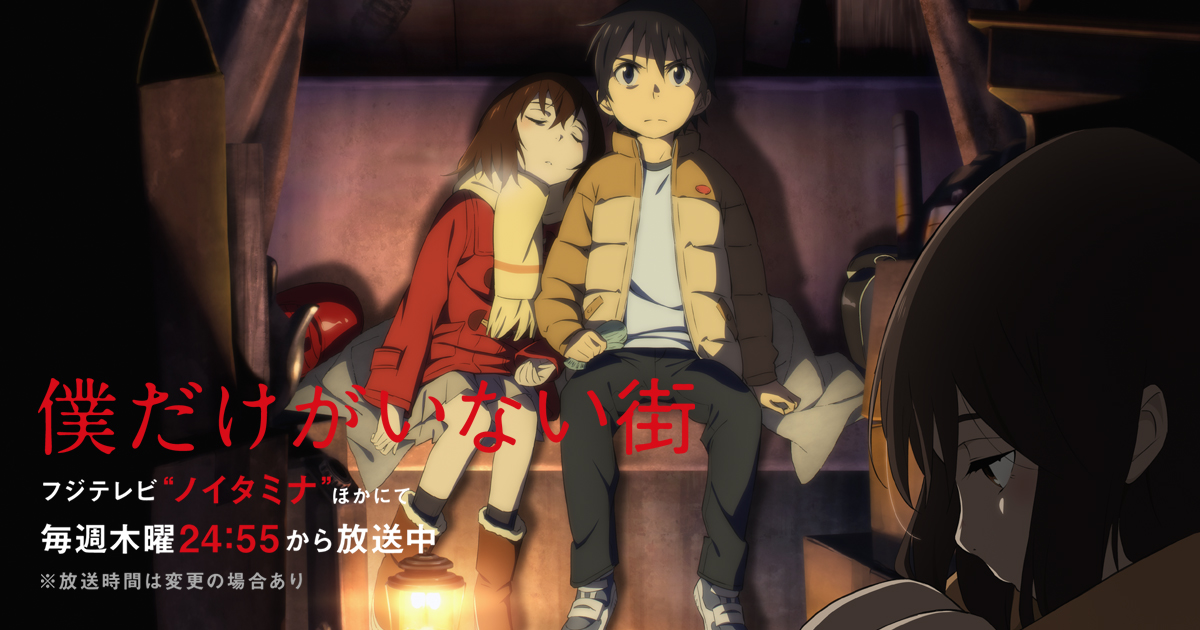
Satoru’s unusual returns to earlier moments draw him toward events in his childhood and the possibility of preventing tragedy.
Why choose it?
Select this when identifying a troubling pattern should create an opportunity to revisit the circumstances behind it. The time-return premise separates ERASED from the other selections: a question is joined to a changed temporal position, not only a new interview or examination. That gives a viewer interested in prevention and childhood vulnerability a different starting branch. Compare ODDTAXI for a present-day urban network or Hyouka for lower-stakes curiosity. We recommend the premise without naming an offender or treating a television outcome as a scene-by-scene account of the manga. The anime and source remain distinct ways to follow the mystery.
Where to start
Begin with the television opening. The anime, manga and live-action versions are separate presentations; keep their endings and access labels distinct.
Tone & scope: Child endangerment and abuse are serious tone considerations. This article does not compare the adaptations’ ending details or claim that they are identical.
Hyouka
TV anime · Curiosity changes an ordinary school day
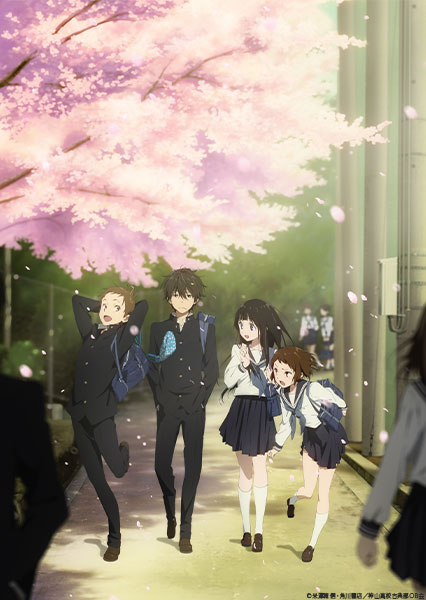
Kyoto Animation describes four members of a high-school Classics Club solving mysteries, with the energy-conserving Hotaro drawn into Eru Chitanda’s curiosity.
Why choose it?
Select this when the reason to investigate is curiosity rather than a duty to catch a violent criminal. The club setting makes an apparently modest question worth sustained attention. It is the gentlest starting branch here, though its human questions need not be trivial. Compare ODDTAXI if you want small observations to enter a more dangerous urban network, or The Apothecary Diaries if practical knowledge must operate under court restrictions. Our preference is for how a question can change the relationship between someone who resists effort and someone who wants to know. We describe the official club premise without revealing the answers to its mysteries.
Where to start
Begin the 2012 television series with episode one. Kyoto Animation identifies the source as Honobu Yonezawa’s Classic Literature Club series. Those prose titles are a reading route, not an extra anime season; verify language and edition when looking for books.
Tone & scope: School mysteries, social discomfort and reflective emotional material. Choose for observation and dialogue rather than continuous combat.
Beautiful Bones: Sakurako’s Investigation
TV anime · A specialist reads what remains
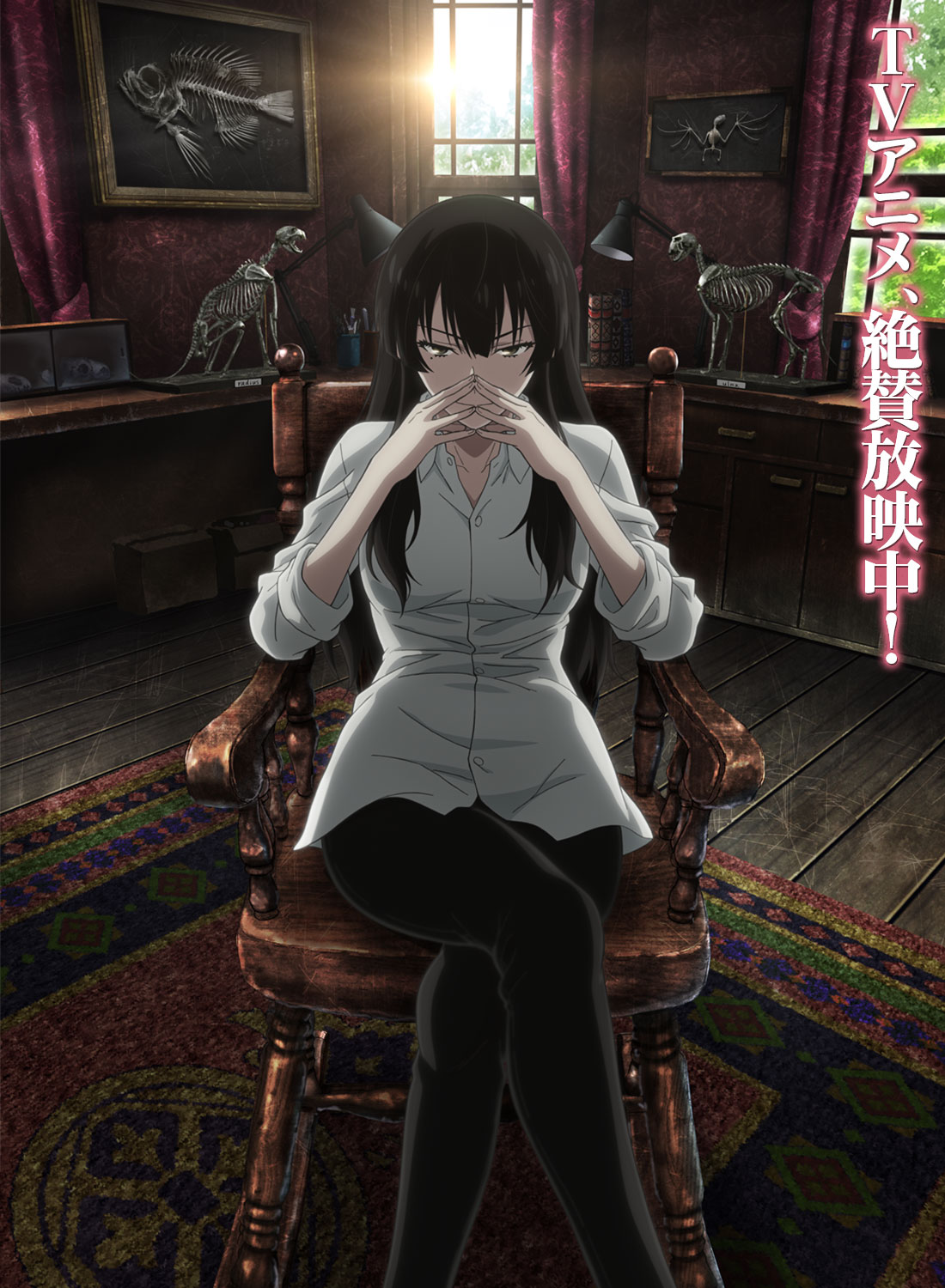
The official project follows Sakurako Kujo and Shotaro through mysteries in Asahikawa. Sakurako’s interest in bones gives the investigations a specialist point of entry.
Why choose it?
Choose this when a mystery should begin with physical traces and an unusual expert’s attention. It supplies a material-evidence contrast to ODDTAXI’s conversations and Hyouka’s club questions. The partnership also lets the viewer encounter that specialist perspective through someone accompanying her. The attraction is not that expertise removes every uncertainty; it is that a trace others would overlook can become worth examining. We keep this recommendation at the starting premise and do not disclose the identities or explanations of later cases. This is a dramatic investigation with disturbing subject matter, so a viewer looking for cozy school curiosity should use the Hyouka branch instead.
Where to start
Begin the original television adaptation with episode one. The official episode archive is useful for checking titles but lists later cases first and can spoil outcomes. Choose the prose source by its full title and edition rather than treating a TV case number as a book-volume number.
Tone & scope: Human remains, death and unsettling criminal material. The title’s forensic interest is fictional drama, not a practical guide to identification.
Read the full Beautiful Bones: Sakurako’s Investigation guide & visual adaptation map →
Case check: the size of a clue does not determine the size of a story
Kyoto Animation describes Hyouka through a school club and curiosity. TV Tokyo describes ODDTAXI through a working driver’s passengers and conversations that connect to a missing girl. Neither premise requires a clue to arrive as a dramatic announcement. Our interpretation is that a viewer can choose between a bounded school environment and a network of people whose ordinary exchanges acquire larger importance. Beautiful Bones supplies a different material starting point; The Apothecary Diaries adds specialist knowledge and restricted court access. The map identifies those invitations without listing solutions. A comparison of premises supports a choice of viewing experience, not a claim that every small object on screen must encode a hidden answer.
Confirmed: the linked primary descriptions establish project identity and starting premises. Editorial reading: the thematic fit and comparisons are our interpretation. Not established here: exact adaptation endpoints, production costs, complete viewing availability or a scene-by-scene source comparison.
Discuss and continue
Community and catalog links are secondary navigation. They can help you find contrasting responses, but they are not evidence of audience-wide agreement. Discussion threads and later-season pages may contain spoilers.
Use official source pages for project identity and check your licensed service for regional availability.
Find community discussions on Reddit · Watch-order guides · Reading routes · Visual adaptation maps
Another experience to explore
- Farming & countryside life
- Food at the heart of the story
- Build, craft & organize
- Time loops & changing the past
- Life after battle
Review and artwork notes
This selection was reviewed on 2026-10-01. Original official or licensed images identify each project; later-season art is labeled where used. Artwork is reproduced under permission asserted by the site owner, with attribution and source links retained. This is not an open-license claim. Future revisions can replace a pick, improve source routes or add a maintained Work guide while preserving the selection’s published purpose.