Pilots under pressure: five anime about institutions, loyalty and war
Children employed as guards, people erased from a war, a rebellion with divided loyalties, an undercover soldier and a student entering corporate space. Five mecha anime chosen for the forces around their pilots.
Reviewed 2026-10-01 · Premise-level spoilers · Editorial selections, without a universal ranking.
This collection compares institutions and responsibilities, not machine specifications or a single shared chronology. Code Geass includes command and rebellion as well as piloting; the two Gundam projects have independent premises. School comedy and war drama are different viewing experiences even when both contain a cockpit.
Choose your starting point
Follow the branch that sounds most appealing. This is a selection map, not a shared universe or a chronology.
How we chose these five
Each selection needs a theme that shapes its premise, a distinct reason to choose it and a verifiable anime project. We distinguish films from television, explain tone differences and use official production, studio, publisher or licensed-distributor pages for project identity. The order groups viewing experiences; it is not a score based on popularity or a claim that one work is objectively better.
Mobile Suit Gundam: Iron-Blooded Orphans
TV anime · Children facing an employer’s betrayal

Mikazuki works for a private security company on Mars. An escort mission and a military attack put the company’s young workers in danger; the official first-season synopsis connects Orga’s rebellion against their employers with Mikazuki piloting Gundam Barbatos.
Why choose it?
Choose this when the pressure on a pilot should begin with the conditions under which he works. The distinctive opening question is who gets protection when an organization decides to save itself. The boys’ relationship to adult employers gives the mecha conflict a labor and dependency angle. That makes it a useful pairing with 86, whose institutions erase the people fighting for them in a different way. It is also a contrast to The Witch from Mercury: entering a school and serving a security company expose their young characters to different arrangements of power. Our selection is about those relationships, rather than comparing which machine would win a fight.
Where to start
Begin Iron-Blooded Orphans season one, episode one, then season two. Use the original television project as the entry point. The separately labeled Urdr-Hunt project and anniversary short film are not replacements for that opening; the shared Gundam brand does not put every series into one continuous timeline.
Tone & scope: Child soldiers, violent conflict and exploitation. Later official character pages reveal physical injuries and outcomes, so use the first-season introduction for a cautious start.
· Official first-season premise
· Original TV project
· Find in MyAnimeList
Read the full Mobile Suit Gundam: Iron-Blooded Orphans guide & visual adaptation map →
86 EIGHTY-SIX
TV anime · People hidden behind “unmanned” weapons

San Magnolia calls its fighting machines unmanned, while the people of the excluded Eighty-Sixth Sector actually pilot them. The licensed novel and the anime’s first-part introduction establish the gap between official language and the human battlefield.
Why choose it?
Select this when the relationship between distant command and those exposed to danger is the central attraction. The useful lens is what an institution’s description leaves out: a bloodless war is a claim made inside the story, not a fact we endorse. Compared with Iron-Blooded Orphans, the pressure is framed through exclusion and the denial of personhood. Compared with Full Metal Panic!, the viewer is not simply meeting a competent soldier whose cover story makes school awkward. This is our pick for a sharper focus on how a society makes pilots disappear from its account of the war, while still following the people who have to fight.
Where to start
Start the first television part and continue into the second in broadcast episode order. The second-part visual is labeled here and should not determine where you begin. Yen Press lists the original light novel by Asato Asato with illustrations by Shirabii; reading starts with its first volume.
Tone & scope: Racism, dehumanization, military violence and death. The official second-half introduction discloses major transitions beyond the opening.
Code Geass: Lelouch of the Rebellion
TV anime · A rebellion and divided loyalties

The original first-episode synopsis places Lelouch in occupied Japan, called Area 11, where a confrontation with Britannian forces reunites him with his friend Suzaku and changes the possibilities available to him.
Why choose it?
Choose this for strategy, secrecy and the conflict between people tied to different sides of a political order. Its place on the shelf is broader than a cockpit: Lelouch’s decisions concern command and rebellion, while the opening places Suzaku within the opposing military structure. That distinction matters because not every selection gives the protagonist the same kind of pilot role. If you want a story organized primarily around people made to fight for an institution, use 86 or Iron-Blooded Orphans. Use Code Geass when competing loyalties and a plan for changing the order are more appealing than a straightforward training or escort premise.
Where to start
Begin the original Lelouch of the Rebellion television series, then its television sequel R2. Keep the separately labeled theatrical compilation route distinct when comparing later films. A film that revisits television events is not automatically an additional episode in the same route.
Tone & scope: Political violence, manipulation and death. Official character and sequel pages can expose identities and later reversals.
Read the full Code Geass: Lelouch of the Rebellion guide & visual adaptation map →
Full Metal Panic!
TV anime · A soldier trying to live as a student
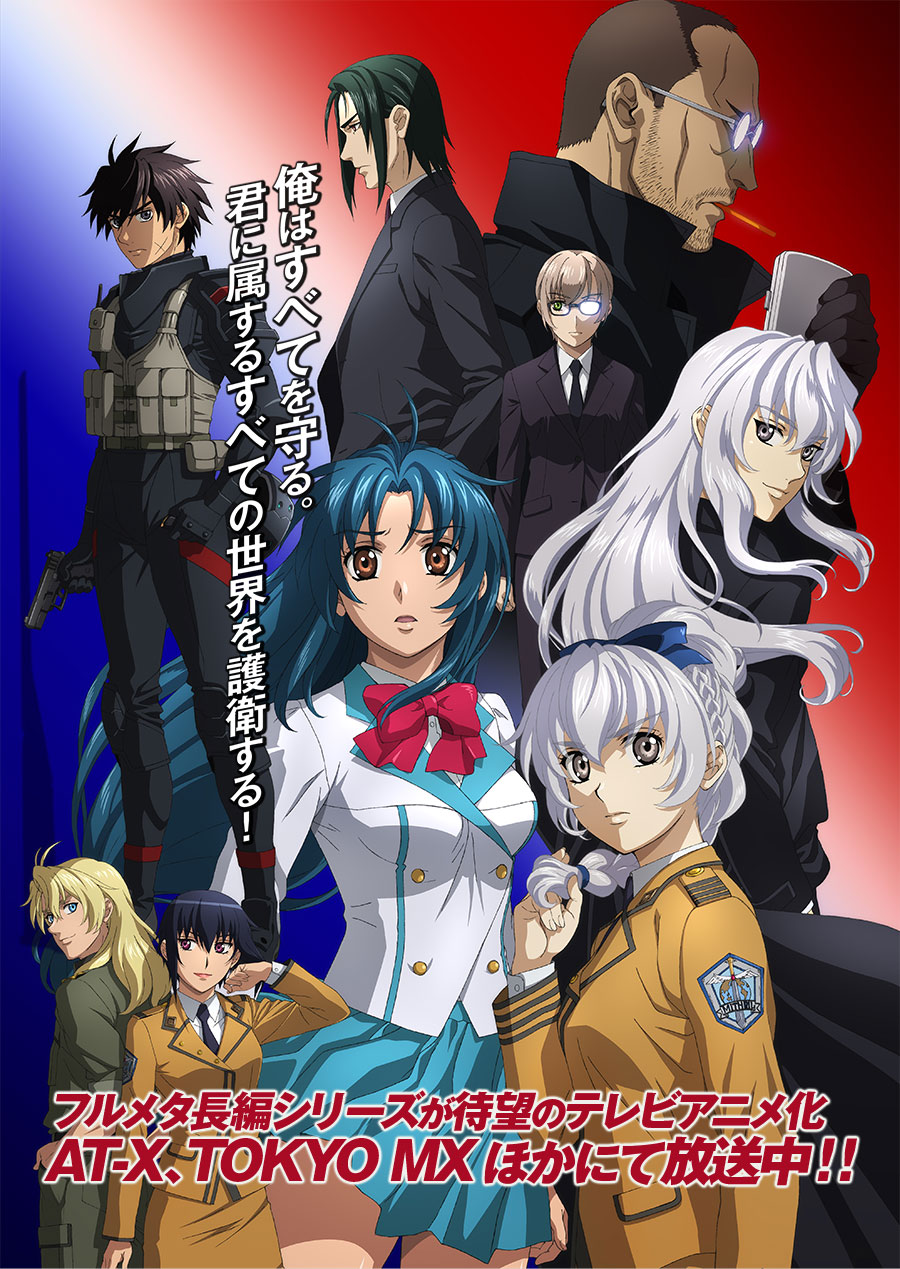
The licensed novel opening presents Sousuke as an unusual high-school student who is actually a mech-piloting mercenary assigned to protect Kaname. The official prose project page identifies the same boy-meets-girl opening.
Why choose it?
Choose this when the strain between military habits and ordinary social life should be part of the entertainment. It gives the shelf a different rhythm: competence in a dangerous assignment does not guarantee competence in a classroom. The protective mission creates the connection between those worlds. Compare it with The Witch from Mercury if you like a school setting but want to distinguish an undercover soldier’s assignment from a school whose corporate setting already matters to piloting. The comic material is a viewing consideration, not evidence that the entire franchise remains light. The illustrated Invisible Victory project belongs to a later stage of the screen route.
Where to start
Begin the original Full Metal Panic! television series. Treat Fumoffu, The Second Raid and Invisible Victory as separately named screen installments, and follow a release route before attempting a source-volume handoff. J-Novel Club separates the main novels from short stories and related products.
Tone & scope: Military violence, kidnapping threats, school comedy and suggestive material. Later-season summaries spoil changes in the central protective mission.
· Licensed main novel route
· Official prose project
· Find in MyAnimeList
Read the full Full Metal Panic! guide & visual adaptation map →
Mobile Suit Gundam: The Witch from Mercury
TV anime · A school inside a corporate power system

Suletta comes from Mercury to the Asticassia School of Technology. The official English project page places the story in an era of spacefaring corporations and identifies Prologue as a separately named prequel.
Why choose it?
Select this when piloting, relationships and institutional status should meet in a school environment. The attraction is not merely that students have machines; their setting belongs to a larger economic system. This gives the shelf a useful contrast to the children at the private security company in Iron-Blooded Orphans and the socially awkward protective assignment in Full Metal Panic!. All three involve young people under pressure, but the school, employer and mission are different arrangements. It is a good entry for someone who wants a Gundam project with its own premise rather than an instruction to begin decades of earlier television. Shared branding alone is not a chronology.
Where to start
Use the named Prologue, then season one and season two of The Witch from Mercury. The official portal offers the prequel as its own item. Keep this project’s labels separate from other Gundam timelines, and check the licensed service in your region rather than assuming an old streaming notice guarantees access today.
Tone & scope: Corporate coercion, family pressure and violent escalation. The portal’s current season-two introduction contains first-season outcomes; the visual reproduced here is labeled as later-season art.
Read the full Mobile Suit Gundam: The Witch from Mercury guide & visual adaptation map →
Case check: who is allowed to be visible in an organization’s account?
The first-season Iron-Blooded Orphans synopsis describes adults using their young employees as decoys during an evacuation. The 86 opening exposes the people inside supposedly unmanned machines. In each case, an institution’s convenient account conflicts with what happens to the people doing the dangerous work. Our editorial comparison is that a pilot’s vulnerability can be explained before comparing any robot: ask who receives protection, who is acknowledged and who is expected to accept risk. The Witch from Mercury introduces another structure, a technology school in a corporate space economy. This does not make its opening equivalent to the other two; it gives a contrasting place to look for institutional pressure. The cited premises support those distinctions. They do not establish a real-world defense budget, an analogy to one specific country or a judgment about later character choices.
Confirmed: the linked primary descriptions establish project identity and starting premises. Editorial reading: the thematic fit and comparisons are our interpretation. Not established here: exact adaptation endpoints, production costs, complete viewing availability or a scene-by-scene source comparison.
Discuss and continue
Community and catalog links are secondary navigation. They can help you find contrasting responses, but they are not evidence of audience-wide agreement. Discussion threads and later-season pages may contain spoilers.
Use official source pages for project identity and check your licensed service for regional availability.
Find community discussions on Reddit · Watch-order guides · Reading routes · Visual adaptation maps
Another experience to explore
- Farming & countryside life
- Food at the heart of the story
- Build, craft & organize
- Time loops & changing the past
- Life after battle
Review and artwork notes
This selection was reviewed on 2026-10-01. Original official or licensed images identify each project; later-season art is labeled where used. Artwork is reproduced under permission asserted by the site owner, with attribution and source links retained. This is not an open-license claim. Future revisions can replace a pick, improve source routes or add a maintained Work guide while preserving the selection’s published purpose.