Beyond royal titles: five anime about skills, secrets and court pressure
An apothecary, a would-be book maker, a secluded consort, a displaced princess and an herbalist. Five ways to approach the people whose choices meet royal power.
Reviewed 2026-10-01 · Premise-level spoilers · Editorial selections, without a universal ranking.
This is a court-and-hierarchy selection with deliberate boundaries. Bookworm begins with books and access; Yona becomes a journey after royal upheaval. Neither is described as five seasons of palace employment. We distinguish practical vocations, supernatural roles and inherited identities.
Choose your starting point
Follow the branch that sounds most appealing. This is a selection map, not a shared universe or a chronology.
How we chose these five
Each selection needs a theme that shapes its premise, a distinct reason to choose it and a verifiable anime project. We distinguish films from television, explain tone differences and use official production, studio, publisher or licensed-distributor pages for project identity. The order groups viewing experiences; it is not a score based on popularity or a claim that one work is objectively better.
The Apothecary Diaries
TV anime · An expert observes beneath court rank

Maomao brings her knowledge of medicines and poisons into a palace setting. The licensed source and television adaptation establish observation, constrained access and court relationships as parts of her starting situation.
Why choose it?
Choose this when a useful skill should operate inside an institution where knowledge and authority do not automatically belong to the same person. Maomao’s palace position makes observation interesting alongside limits on what she can openly do or say. That is a different court branch from Shouxue’s secluded supernatural role and Yona’s loss of royal protection. Compare Snow White with the Red Hair if a professional identity joined to romance is the stronger attraction. Our thematic lens concerns the friction between competence and position; it does not assign every character a political motive or reveal the solution of a palace case.
Where to start
Begin the first television season or the licensed light novel at volume one. Our Work guide distinguishes prose and the separately credited manga adaptations. A comic edition’s volume count cannot be transferred directly to the novel or anime.
Tone & scope: Poison, exploitation, power imbalance and medical themes. Later case explanations can expose mystery solutions.
Ascendance of a Bookworm
TV anime · A small craft goal encounters a larger hierarchy

A book-loving protagonist enters a world where access to books is constrained and makes the desire to read a reason to pursue materials and production.
Why choose it?
Select this for an entry into hierarchy that begins with the wish to make books. It supplies the collection’s outsider-and-production branch, rather than opening as a princess’s court adventure. The important scope distinction is that the initial premise concerns scarce access and practical work; the later Lord’s Adopted Daughter visual is not evidence that a first-time viewer should start in that later project. Compare Maomao for expertise already operating inside a palace, or Yona for an identity formed under royal protection. Our selection follows how a concrete desire can meet wider social structures, without summarizing later status changes as if they were the first episode.
Where to start
Begin with the original television opening. The newer Lord’s Adopted Daughter project has its own label; publisher prose and manga edition labels should also be kept distinct.
Tone & scope: Promotional material for later projects can reveal changes in the protagonist’s circumstances. The broad book-production premise does not establish a precise novel continuation volume.
Read the full Ascendance of a Bookworm guide & visual adaptation map →
Raven of the Inner Palace
TV anime · A hidden role and supernatural requests
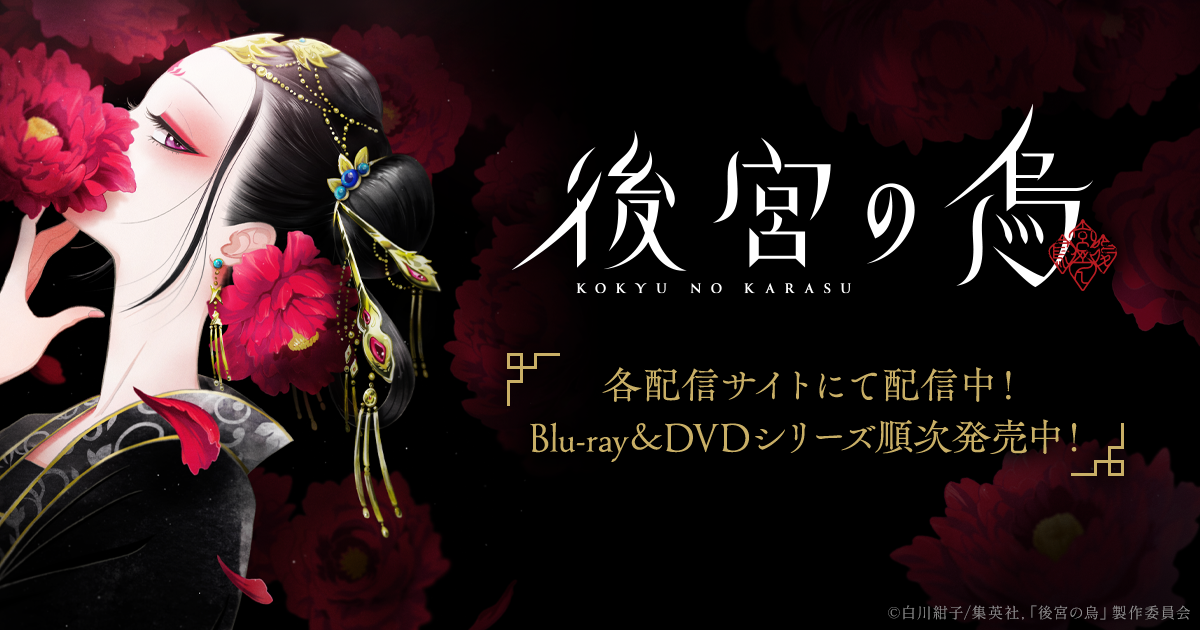
The official introduction describes Shouxue, the secluded Raven Consort, who receives requests involving mysterious powers. An emperor’s visit brings her role and the palace’s history into question.
Why choose it?
Select this when court intrigue should be approached through a role whose rules are not immediately visible to everyone around it. Shouxue’s position makes the palace a setting for supernatural requests as well as questions about authority and memory. Compare Maomao for a practical observational route; Raven’s official premise explicitly includes mysterious powers, so the two should not be offered as identical evidence-based investigations. Compared with Yona’s departure from royal protection, the opening stays with a secluded figure inside the court. We recommend this branch for the tension between being given a title and knowing what that title conceals, without exposing the later secret named by the introduction.
Where to start
Begin the original television series with episode one. The official introduction credits Koko Shirakawa’s written source. Choose the licensed prose edition from its first volume rather than assuming a television ending equals a particular novel chapter.
Tone & scope: Loss, ghosts, curses and court power. Supernatural explanations distinguish it from a realistic palace procedural.
Read the full Raven of the Inner Palace guide & visual adaptation map →
Yona of the Dawn
TV anime · Royal protection gives way to a journey
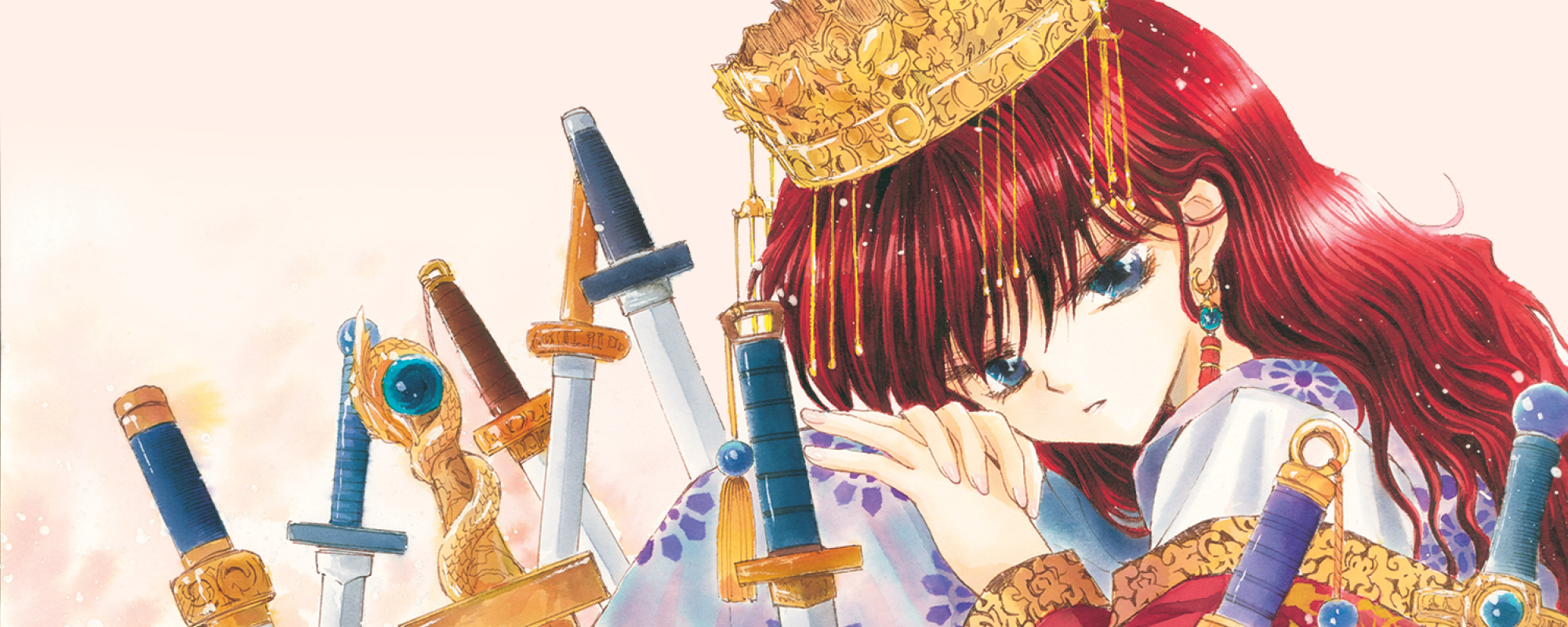
The studio’s synopsis begins with Princess Yona living under royal protection before a violent betrayal overturns her position. The licensed manga is by Mizuho Kusanagi.
Why choose it?
Choose this when the court’s importance should be felt through losing the security it once supplied. This is the collection’s deliberate journey branch: Yona does not begin as a hired expert navigating daily palace work. That distinction makes her useful beside Maomao, Shirayuki and Shouxue. The question becomes what a royal identity means when protection and authority cannot simply be assumed. We recommend it for a protagonist learning how to act after her starting circumstances collapse, while keeping the later companions and political outcomes outside the comparison. If staying inside a palace and following a profession is essential, use one of the other branches.
Where to start
Begin the 2014 television series with episode one. Studio Pierrot identifies a 24-episode TV project. The licensed manga begins at volume one and remains a separate reading route; this collection does not supply an unverified post-anime chapter jump.
Tone & scope: Betrayal, bereavement and violent political conflict. The opening upheaval is a premise spoiler; later journey outcomes are withheld.
· Studio’s original television project
· Licensed manga source
· Find in MyAnimeList
Read the full Yona of the Dawn guide & visual adaptation map →
Snow White with the Red Hair
TV anime · A vocation beside royal relationships

Shirayuki is an herbalist whose red hair attracts the unwanted attention of a prince. VIZ’s licensed description identifies that profession and the pressure that disrupts her existing life.
Why choose it?
Choose this when a court-adjacent story should leave room for a character’s practical vocation and personal agency. The licensed opening establishes Shirayuki as an herbalist before a prince’s unwanted interest changes her circumstances. That ordering matters to our interpretation: royal attention is not the whole identity being offered. Compare Yona for a protagonist whose starting protection is royal, or Raven for a title bound to a hidden supernatural role. This is a romance-and-vocation branch rather than a promise of detailed court administration. The publisher’s manga illustration identifies the source while the viewing recommendation starts with its television adaptation.
Where to start
Begin the first television season, then its second season. Read the licensed manga from volume one if choosing the source route. The publisher page identifies manga, not a prose novel; the television selection does not establish a verified chapter to skip to afterward.
Tone & scope: Unwanted royal attention and threats alongside romance. A character’s herbalist work is not an invitation to try fictional remedies.
Read the full Snow White with the Red Hair guide & visual adaptation map →
Case check: having a court title and having useful expertise are different advantages
The Apothecary Diaries introduces Maomao through medicines and poisons. Raven of the Inner Palace introduces a secluded consort whose mysterious abilities make her role unusual. The licensed Snow White description gives Shirayuki an herbalist’s profession before a prince places pressure on her life. Our reading is that the palace can matter because of a job, a title or someone else’s interest, and those circumstances offer different forms of agency. Yona’s studio synopsis supplies the contrast of a princess losing familiar protection. The branches let readers choose that starting relationship to power. They do not claim that all five protagonists occupy equivalent jobs or reveal later promotions, secrets or political outcomes.
Confirmed: the linked primary descriptions establish project identity and starting premises. Editorial reading: the thematic fit and comparisons are our interpretation. Not established here: exact adaptation endpoints, production costs, complete viewing availability or a scene-by-scene source comparison.
Discuss and continue
Community and catalog links are secondary navigation. They can help you find contrasting responses, but they are not evidence of audience-wide agreement. Discussion threads and later-season pages may contain spoilers.
Use official source pages for project identity and check your licensed service for regional availability.
Find community discussions on Reddit · Watch-order guides · Reading routes · Visual adaptation maps
Another experience to explore
- Farming & countryside life
- Food at the heart of the story
- Build, craft & organize
- Time loops & changing the past
- Life after battle
Review and artwork notes
This selection was reviewed on 2026-10-01. Original official or licensed images identify each project; later-season art is labeled where used. Artwork is reproduced under permission asserted by the site owner, with attribution and source links retained. This is not an open-license claim. Future revisions can replace a pick, improve source routes or add a maintained Work guide while preserving the selection’s published purpose.