Read Mizuho Kusanagi’s source manga from volume 1, or watch the original TV episodes 1–24. Japanese final volume 48 is scheduled for 20 October 2026, not yet released at this review. The announced anime sequel has no premiere date in the checked notice. Optional prose is a companion.
Reviewed 2 October 2026 · Opening premise and format relationships; major ending revelations withheld. Linked publisher summaries and discussions may reveal later events. · Licensed access varies by country.
The source and screen branches

The magazine conclusion and final collected-book release are separate events. English editions follow their own schedule. No exact after-anime chapter handoff or invented sequel date is supplied.
- READ · original manga: Standard volume 1 OR collected book 1 Continue source Follow selected edition numbering Forthcoming Japanese edition Japanese final volume 48 · 20 Oct 2026
- WATCH · original and announced sequel: Original TV episodes 1–24 Await release details Sequel anime · production announced
- READ · optional prose companion: Touko Fujitani · Under the Same Moon Companion scope Three original stories · spoiler check
Start with the manga or the original television route
Yona of the Dawn is Mizuho Kusanagi’s manga. Its princess begins in a protected royal setting, then has to understand the kingdom beyond the position that once sheltered her. The 2014–2015 television adaptation offers a twenty-four-episode introduction; it should not be mistaken for the complete source story.
For comics, begin standard volume 1 in a selected language edition. VIZ also lists a 3-in-1 edition. A collected book numbered 1 is a binding of source material, not a prequel that should be read before standard volume 1. Use one consistent edition route instead of buying both as if they were consecutive installments.
An official Japanese prose companion also exists: Under the Same Moon, written by Touko Fujitani with Kusanagi credited for the original work. It contains three original stories. It belongs in a separately labeled optional branch, not before manga volume 1 as an imagined source novel.
| Version | Entry | Relationship |
|---|---|---|
| Manga | Standard volume 1 OR 3-in-1 book 1 | Original source; alternate bindings |
| Original TV | Episode 1 → 24 | Beginning screen route |
| Prose companion | Under the Same Moon | Optional stories, not the source |
| Announced anime sequel | Await project-specific release notice | Not counted as released episodes |
The final Japanese book is forthcoming at this review
Hakusensha’s volume-48 record gives 20 October 2026 as its Japanese release date and describes the story’s conclusion. On this guide’s 2 October review date, that book is forthcoming. Its ISBN is 9784592225799. We do not replace the date with an assumption that every final-volume listing is already on sale.
The publisher’s 19 December 2025 announcement separately confirms the main magazine serialization’s conclusion and an anime sequel in production. These are different events: a magazine final chapter, a collected book’s later release and a future television project do not share one universal end or premiere date.
VIZ’s English standard volume 46 is cataloged for 7 July 2026, ISBN 9781974716715. That regional edition record does not establish that English readers already have the forthcoming Japanese final book. The guide keeps the source conclusion, collected-book availability and English publication sequence distinct.
A new anime announcement does not create a new viewing slot yet
Begin the released original TV adaptation with episode 1 and follow its twenty-four numbered episodes. The official story archive supports that main sequence. Manga-bundled animated extras, where available in a licensed edition, are optional supplementary viewing rather than an undocumented second full season.
Hakusensha’s sequel production notice asks readers to await further information. The reviewed notice gives no premiere day. This map therefore places the announced project beyond the released TV run with an explicit availability label, not a fabricated 2026 season-two schedule copied from community speculation.
For the source, start at manga volume 1 if you want an assured reading route. This guide has not directly compared the complete TV ending with a named VIZ edition to certify a chapter handoff. Optional prose stories may use relationships from later portions of the journey, so check their spoiler scope before reading them immediately after the opening episodes.
Princess Yona: the face of a protected life
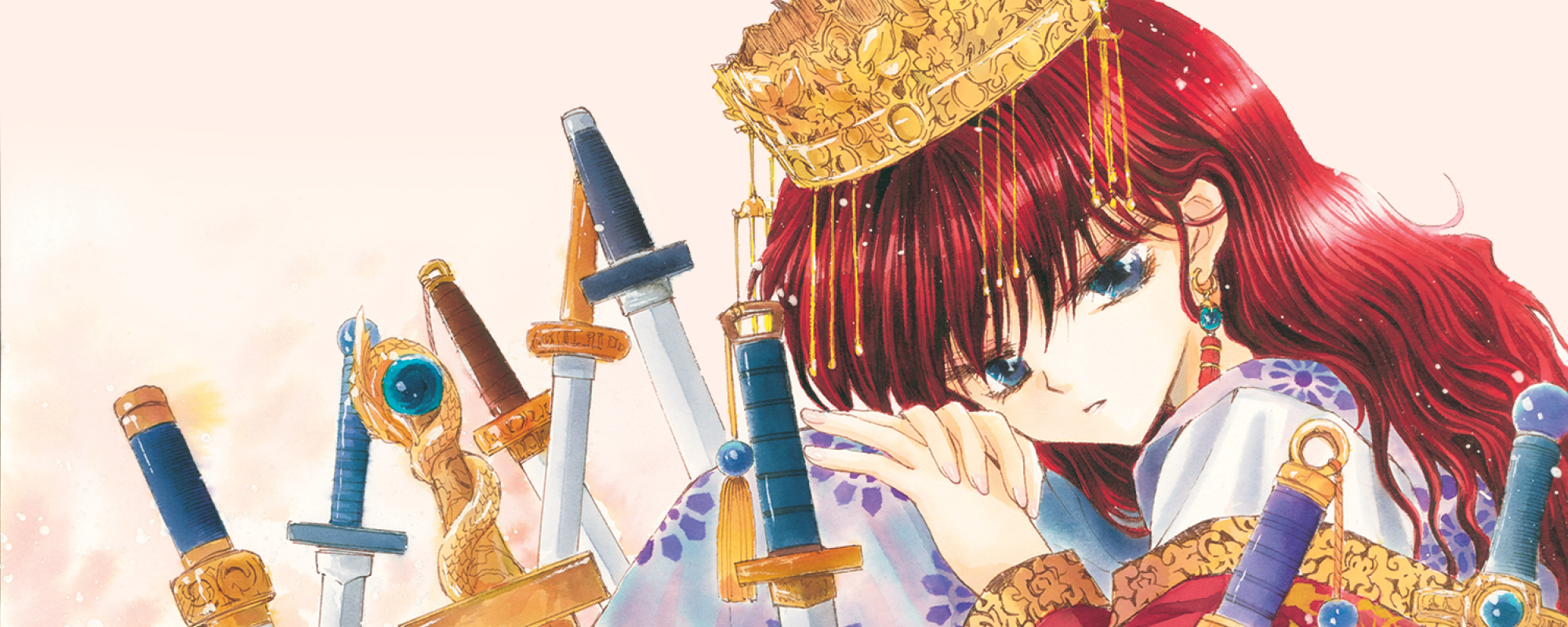
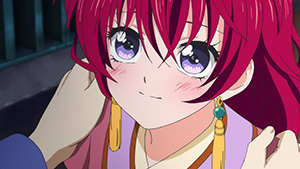
The selected image comes from the official first-episode gallery and shows Yona with long red hair, large violet eyes and gold earrings. We retain the complete native 300-by-169 frame. It is deliberately small and clearly identified as an episode image; the wider lead above comes from VIZ’s manga presentation.
The official opening synopsis situates Yona at Hiryuu Castle around her sixteenth birthday, surrounded by the king, Hak and the visiting Su-won. Our interpretation of the close-up is that the composed presentation emphasizes a person whose social identity has so far been supported by the royal environment around her.
The frame alone cannot establish the sincerity of another character, the cause of the opening crisis or Yona’s later development. Those require the story. Our case check uses the synopsis for setting and the image for visible character presentation, without implying an inspected manga-panel match or revealing the crisis’s resolution.
Original visual reference
Losing protection is different from learning to govern
The premise presents an important distinction between possessing a royal identity and understanding a country. Our reading is that Yona’s displacement exposes that gap. A person can have been cared for at the center of an institution while knowing little about what life beyond it requires.
This makes learning a dramatic process rather than an automatic reward for a tragic event. Danger does not instantly produce political judgment, practical skill or knowledge of other people’s needs. An effective character scene can show a small decision that changes how Yona participates, even before she can command a larger outcome.
A useful viewing question is whether she has understood somebody’s circumstances or merely obtained their loyalty. The two can overlap but are not identical. That distinction gives a reader a way to assess leadership growth without needing the final source resolution or treating every helpful companion as a simple power upgrade.
A journey measures responsibility through ordinary work
The story’s movement beyond the palace creates opportunities to observe support roles alongside combat. Our interpretation is that a traveling group depends on information, supplies, treatment and negotiation as much as on the most visibly powerful fighter. The journey can turn care into an action rather than just a sentiment.
That perspective is useful for understanding Hak’s protective position. Protection can keep someone alive while also raising a question about independence: what can the person being protected decide and contribute? The guide does not assume that every protective act is controlling or every independent act is wise; the situation has to be read in context.
Look for who notices hunger, fatigue or a frightened local person. Such details can connect the royal stakes to lived conditions. They also help distinguish this property’s political journey from a checklist of legendary recruits. A group’s abilities become more meaningful when the story asks what they are used for.
The optional novel has its own author and its own scale
Hakusensha’s prose page credits Fujitani’s writing and Kusanagi’s original work, identifies three original stories and dates the Japanese book to 20 March 2015. That is a specific licensed companion, not evidence that the main manga is a prose adaptation. Its early publication date also does not make every story a spoiler-free starting point.
Kusanagi is credited by VIZ for both story and art. VIZ’s profile identifies NG Life among her other work, which is a legitimate creator-discovery route rather than part of Yona’s chronology. Shared authorship does not make another manga a required prequel.
Keeping these credits separate gives readers useful choices: the original visual storytelling, a timed screen presentation, or additional prose episodes. Our audience score concerns only the original 2014 TV entry. It is not an average of manga quality, sequel anticipation and novel-companion preference.
Completion creates several products, not one measurable revenue figure
Hakusensha’s completion announcement combines a magazine issue, commemorative goods, a special volume-47 illustration booklet and plans for side-story publication. This documents a coordinated publisher presentation around the conclusion. It does not supply title-level net earnings or an audited anime budget.
The newer volume-48 catalog is the controlling collected-book record for the final Japanese release. An older completion campaign mentioning volume 47 should not be transformed into a definitive forty-seven-book endpoint. Likewise, the English 3-in-1 binding changes shopping and shelf space, not the number of distinct original narrative installments.
Community discussions linked below can help compare the early anime experience with long-time source reading, but they may discuss the ending openly. Begin with the manga or original TV according to your preferred medium, then use the palace-skills collection for related choices. Future updates should check the final book’s actual release and the sequel’s own production notices, preserving these separate dates.
Primary sources and useful navigation
- VIZ · original source and creator profile
- VIZ · English volume 46 edition
- VIZ · English edition catalog
- Hakusensha · Japanese final volume 48, forthcoming
- Hakusensha · serialization conclusion and sequel production announcement
- Official original anime story and image archive
- Hakusensha · Fujitani optional prose companion
- AniList · named TV audience score
Community and catalog routes
- MyAnimeList · named television catalog
- Yona Wiki · secondary character and version navigation; spoilers
- Reddit · final-volume numbering discussion; major spoilers
- Wikipedia · adaptation navigation
The production and publisher links support project facts. Catalog and community pages are secondary navigation and may reveal later events.
Find this work in our thematic collections
Original series imagery is reproduced under permission asserted by the site owner; the source and rights credits are retained. The route diagram is Animeteor’s own explanatory graphic.
Announced sequel record
The announced sequel already appears in the source map above. Its separate anime adaptation record preserves the production-announced status without assigning an unverified premiere date.