Five anime about supernatural work, requests and responsibility
A god taking requests, a wish shop, a supernatural investigator, an arbiter’s bar and a traveling specialist. Five occupations with very different responsibilities.
Reviewed 2026-10-01 · Premise-level spoilers · Editorial selections, without a universal ranking.
These roles do not share one universe or moral code. We compare service, exchange, investigation, judgment and care; the fictional rules are not financial or medical advice.
Choose your starting point
Follow the branch that sounds most appealing. This is a selection map, not a shared universe or a chronology.
How we chose these five
Each selection needs a theme that shapes its premise, a distinct reason to choose it and a verifiable anime project. We distinguish films from television, explain tone differences and use official production, studio, publisher or licensed-distributor pages for project identity. The order groups viewing experiences; it is not a score based on popularity or a claim that one work is objectively better.
Noragami
TV anime · A minor god takes everyday requests

Kodansha introduces Yato as a god without a shrine who offers help for a small fee, accepting tasks ranging from finding kittens to helping a bullied student.
Why choose it?
Choose this when supernatural work should begin with the modest needs of ordinary people. The service premise gives a god an everyday reason to encounter the human world, rather than starting with a throne or a grand cosmic office. Compare xxxHOLiC for requests whose price is part of a shop’s rules, or Death Parade for a role defined by judgment. Our interest is the gap between Yato’s ambitions and the unglamorous jobs available to him. Comedy does not remove the darker material, and a fee in the fictional premise is not evidence of a real creator’s income or a production budget. Begin before later character histories reveal how his past relates to the work.
Where to start
Begin the first television season, then the separately titled Noragami Aragoto. Adachitoka’s manga is the main reading route; Stray Stories is separately labeled supplementary manga, not another television season.
Tone & scope: Violence, bullying, death and troubling supernatural histories alongside comedy. Character wiki pages contain major backstory spoilers.
xxxHOLiC
TV anime · A wish-granting shop asks for an equivalent price
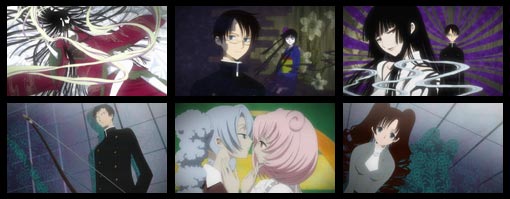
TBS’s original synopsis introduces Kimihiro Watanuki, who can see supernatural beings, meeting Yuko Ichihara and working at her shop as the price for help with his condition.
Why choose it?
Select this when a supernatural service should make the terms of a request as interesting as its fulfillment. Work inside the shop connects the protagonist’s own need with the needs of people arriving there. Compare Noragami for a fee-based itinerant service, or MUSHI-SHI for knowledge used in encounters with unfamiliar life. Our thematic reading is that asking for something and understanding its cost are different acts. The shop’s exchange rule is a fictional narrative device, not a financial theory. CLAMP’s connected stories can make catalog navigation tempting, but a newcomer does not need to open every crossover character page to understand the first television encounter. Those pages frequently reveal later relationships.
Where to start
Begin the original 2006 television series at episode one; the TBS /1st/ archive identifies this route. Kei is the later TV project. CLAMP’s manga, theatrical animation and later original-video projects need separate edition labels rather than being spliced together by title alone.
Tone & scope: Supernatural danger, ominous bargains and unsettling personal situations. Connected-franchise explanations and later manga summaries contain spoilers.
Mononoke
TV anime · An investigator needs more than a weapon

The original production presents the mysterious Medicine Seller investigating supernatural events. Asmik Ace describes the form, truth and reason that must align before his exorcising sword can be drawn.
Why choose it?
Choose this when a supernatural occupation should depend on understanding an event before confronting it. The sword is not simply a reason to expect uninterrupted combat: the conditions attached to using it make investigation part of the attraction. Compare MUSHI-SHI for encounters framed through knowledge of unusual life, or Death Parade for a setting that subjects visitors to tests. Our lens is the responsibility involved in deciding what has happened and why. The visual style is exceptionally distinctive, but we do not turn that observation into a claim that every disturbing image is a literal historical record. Begin with the television route and avoid individual case summaries if you want to discover their causes yourself.
Where to start
Begin the twelve-episode 2007 Mononoke series. The earlier Ayakashi Bakeneko story is a separately identified introduction included in some box sets. The later named Mononoke films are another project sequence; the shared protagonist does not make them extra TV episodes. This is unrelated to Princess Mononoke.
Tone & scope: Horror, violence, abuse and disturbing imagery. Case explanations often disclose the central revelation.
Death Parade
TV anime · A bartender’s games lead toward judgment

Nippon TV introduces Decim receiving two visitors at Quindecim and requiring a game with their lives at stake, before revealing his role as an arbiter.
Why choose it?
Select this when the supernatural job should be an unsettling authority rather than a helpful service. A welcoming bar and a compulsory game create a contradiction in the opening situation: familiar hospitality conceals a test the visitors do not understand. Compare xxxHOLiC for a request with a price, or Noragami for a god trying to secure work. Our interest is what someone appointed to judge can actually learn about another person. That question distinguishes it from a simple contest recommendation; winning a game is not assumed to summarize a life. Begin before reading the visitors’ biographies, which explain the information the episodes initially withhold.
Where to start
Begin the 2015 Death Parade television series. Death Billiards is a separately named earlier short, not an ordinary numbered episode. Nippon TV credits Yuzuru Tachikawa and Madhouse as the original project; no source manga has to be read first.
Tone & scope: Death, psychological distress, coercion and disturbing games. Visitor histories and episode endings contain major spoilers.
MUSHI-SHI
TV anime · A traveler helps people understand unfamiliar life

Kodansha describes mushi as life existing alongside humanity and Ginko as a specialist who travels with knowledge that can help people affected by them.
Why choose it?
Choose this when the supernatural encounter should invite explanation before moral condemnation. The publisher frames mushi as unfamiliar life, giving Ginko’s knowledge a different purpose from simply destroying a villain. Compare Mononoke for an investigation that must establish the conditions for confrontation, or Noragami for a service tied to a god’s personal ambition. Our attraction is the encounter between someone’s ordinary situation and a phenomenon that changes its terms. The quiet reputation of the series should not be mistaken for the absence of death or distress. Start with an individual opening encounter, allowing the relationship between knowledge and care to emerge rather than reading an exhaustive taxonomy first.
Where to start
Begin the original television series; the later Zoku-Sho project and separately named specials are distinct screen entries. Yuki Urushibara’s manga is the source reading route. A later-series visual is labeled here and does not change the starting recommendation.
Tone & scope: Illness-like suffering, loss and unsettling natural phenomena. This fictional knowledge is not medical guidance.
Case check: helping a visitor and judging a visitor are different jobs
Kodansha’s Noragami opening has Yato accept practical requests to support his ambition. TBS’s xxxHOLiC synopsis makes Watanuki’s employment the price of help, while Nippon TV’s Death Parade introduces a compulsory game and an arbiter. Our interpretation is that the visitor’s ability to ask, negotiate or refuse matters to the viewing choice. Mononoke puts knowledge before confrontation; MUSHI-SHI describes expertise used to aid people encountering unusual life. These differences support five routes into supernatural stories without claiming that their fictional systems agree on justice or that a quiet presentation guarantees a gentle outcome.
Confirmed: the linked primary descriptions establish project identity and starting premises. Editorial reading: the thematic fit and comparisons are our interpretation. Not established here: exact adaptation endpoints, production costs, complete viewing availability or a scene-by-scene source comparison.
Discuss and continue
Community and catalog links are secondary navigation. They can help you find contrasting responses, but they are not evidence of audience-wide agreement. Discussion threads and later-season pages may contain spoilers.
Use official source pages for project identity and check your licensed service for regional availability.
Find community discussions on Reddit · Watch-order guides · Reading routes · Visual adaptation maps
Another experience to explore
- Farming & countryside life
- Food at the heart of the story
- Build, craft & organize
- Time loops & changing the past
- Life after battle
Review and artwork notes
This selection was reviewed on 2026-10-01. Original official or licensed images identify each project; later-season art is labeled where used. Artwork is reproduced under permission asserted by the site owner, with attribution and source links retained. This is not an open-license claim. Future revisions can replace a pick, improve source routes or add a maintained Work guide while preserving the selection’s published purpose.