Protecting people under pressure: five anime with different responsibilities
A firefighting team, aspiring heroes, a retired assassin, a would-be kaiju defender and an adult helping children after an earthquake. Five different ways to follow protection when circumstances turn dangerous.
Reviewed 2026-10-01 · Premise-level spoilers · Editorial selections, without a universal ranking.
This is a protective-responsibility collection, not five identical rescue professions. Sakamoto Days concerns a threatened household; Tokyo Magnitude 8.0 follows civilians receiving and offering help. We distinguish fantastic action, training and disaster drama before suggesting a route.
Choose your starting point
Follow the branch that sounds most appealing. This is a selection map, not a shared universe or a chronology.
How we chose these five
Each selection needs a theme that shapes its premise, a distinct reason to choose it and a verifiable anime project. We distinguish films from television, explain tone differences and use official production, studio, publisher or licensed-distributor pages for project identity. The order groups viewing experiences; it is not a score based on popularity or a claim that one work is objectively better.
Fire Force
TV anime · A rescue service faces a fantastic threat

Shinra joins a special firefighting team in a Tokyo afflicted by spontaneous human combustion. Kodansha’s licensed manga description identifies the team’s work and the mystery behind the phenomenon.
Why choose it?
Choose this when the protective job should have a named service, colleagues and a fantastic danger to investigate. Firefighting gives the premise a public purpose before the action expands into the larger mystery. It is a useful contrast to My Hero Academia’s hero-training branch and Kaiju No. 8’s defense organization: all involve protecting people, but their threats and routes into the work differ. Our shelf includes it for the connection between a rescue identity and the burden of facing an event that cannot be treated as an ordinary accident. The uniform is not a guarantee of realism, and the extraordinary abilities should not be read as firefighting advice.
Where to start
Begin the first Fire Force television season, then follow the numbered seasons in order. The current portal promotes the third season and contains later-story summaries. Kodansha separates standard manga volumes, omnibus editions and box sets; their numbering is not interchangeable.
Tone & scope: Fire-related death, violent action and fanservice. The third-season image on this page is later-project publicity, not the starting installment.
My Hero Academia
TV anime · Learning what a protective role requires
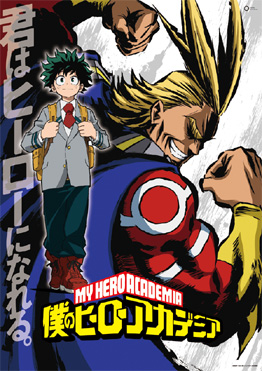
Izuku Midoriya wants to become a hero in a world where extraordinary abilities are common. The manga and anime establish training and the path toward that public role.
Why choose it?
Select this when the appeal lies in becoming qualified to help, rather than beginning as an experienced protector. The school setting gives ambition a place to meet instruction, peers and limits. Compare it with Kaiju No. 8 for another route into a defense role, but keep their circumstances distinct: a student’s early ambition and an adult’s renewed attempt offer different starting perspectives. Compare Fire Force if an assigned service is more interesting than training. Our selection concerns the responsibility attached to a role, not a ranking of the most powerful characters. The wish to save someone can be an opening motive without settling every later judgment about institutions or their members.
Where to start
Begin the main television series with season one, episode one, or the original manga with volume one. Our full Work guide separates main installments, films and the separately named Vigilantes project. A related title should not be inserted into the main school route without checking its identity.
Tone & scope: Action violence, injuries and later darker conflicts. The educational opening does not guarantee a gentle story throughout.
Sakamoto Days
TV anime · Protecting a family after leaving a violent job

Taro Sakamoto leaves assassination behind for family life and a shop, but threats from his former world disturb that new existence. The official anime and licensed manga identify the retirement premise.
Why choose it?
Choose this when the protective responsibility comes from a life someone has chosen after a dangerous career. It is the personal-family branch of this collection, not a public rescue service. That qualification matters: the shelf is about protecting people under pressure, rather than five works with the same profession. Compare it with Fire Force’s organized emergency role or My Hero Academia’s path into a public identity. Our attraction here is the tension between capabilities learned for violence and the daily life the character now wants to maintain. That makes an experienced protagonist useful without suggesting that assassination and emergency response have the same ethical purpose.
Where to start
Begin the television opening or the manga at volume one. Our maintained Work guide distinguishes screen and reading routes and links official project information. Later-season announcements identify another installment; they do not independently verify an exact manga continuation chapter.
Tone & scope: Assassins, threat and stylized violence mixed with comedy. This is protection of a household, not professional disaster rescue.
Kaiju No. 8
TV anime · A cleanup worker tries another path

Kafka Hibino works in kaiju cleanup and still wants to join the Defense Force. The official anime identifies his transformation into Kaiju No. 8 and the conflict it creates for his ambition.
Why choose it?
Select this when experience outside the prestigious frontline role should matter to a renewed attempt to enter it. The cleanup background gives the premise a practical perspective on the aftermath of battles. His changed body also complicates the boundary between the organization he wants to join and the category it fights. Compare it with My Hero Academia if a training route is attractive, but choose this for an adult protagonist with an existing working life. Compared with Tokyo Magnitude 8.0, the threat is a fantastic combat setting rather than a disaster journey through an ordinary city. The collection’s purpose is to make that difference visible before someone chooses a viewing mood.
Where to start
Begin the first television season, episode one, or the original manga’s first volume. Use the official season labels for continuation and keep any compilation or special episode identified by its own title. The current character pages reveal later defense-unit events, so the broad starting premise is safer.
Tone & scope: Monster violence, bodily transformation and military danger. The fictional defense organization is not a real emergency-service guide.
Tokyo Magnitude 8.0
TV anime · Helping each other get home
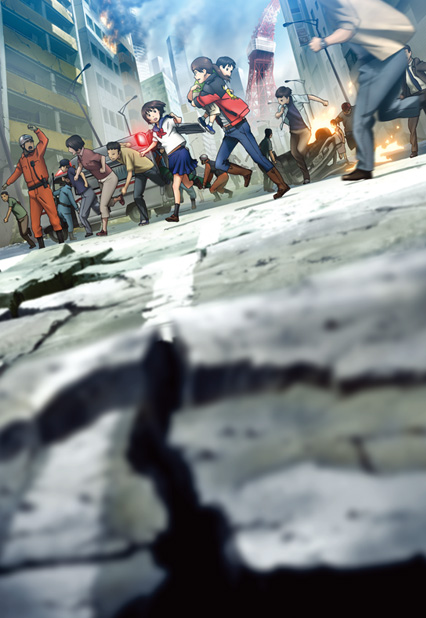
An earthquake changes Tokyo while siblings Mirai and Yuki are visiting Odaiba. BONES’ synopsis follows their attempt to reach home with help from Mari, a motorcycle courier concerned about her own family.
Why choose it?
Choose this when danger should be felt through ordinary people’s need for care and a route home. It is the collection’s deliberate exception to professional or superpowered protective roles. Mari’s assistance connects responsibility for others with her own family concern, while the children’s circumstances make movement and dependence central to the premise. Compare it with Fire Force only at the broad level of helping under danger: the disaster setting here is a different emotional promise from fantastic firefighting combat. If you want a protective relationship without a power-progression system, this is the clearer starting branch. We describe its fictional scenario without converting it into current disaster-preparedness advice.
Where to start
Begin the original television series with episode one and follow its episode order. The studio identifies the 2009 project and its BONES/Kinema Citrus production credits. Later summaries and discussions expose important family outcomes, so avoid them before completing the story.
Tone & scope: Earthquake destruction, distress, separation and loss. Choose it for human vulnerability, not a light superhero rescue adventure.
Read the full Tokyo Magnitude 8.0 guide & visual adaptation map →
Case check: a uniform and an act of care are different starting promises
The licensed Fire Force opening establishes a named team responding to an extraordinary combustion phenomenon. BONES’ Tokyo Magnitude 8.0 synopsis establishes siblings trying to reach home with the help of a courier who also worries about her family. Both qualify for our protective theme, but the institutional service and the civilian relationship should not be described as the same kind of rescue story. Our interpretation is that a viewer can choose between role-based action and dependence on an ordinary person’s assistance. My Hero Academia and Kaiju No. 8 add routes toward protective institutions; Sakamoto Days gives the household a different boundary. The decision map uses those premises. It makes no claim that these fictional situations teach emergency procedures or accurately model a real service’s working conditions.
Confirmed: the linked primary descriptions establish project identity and starting premises. Editorial reading: the thematic fit and comparisons are our interpretation. Not established here: exact adaptation endpoints, production costs, complete viewing availability or a scene-by-scene source comparison.
Discuss and continue
Community and catalog links are secondary navigation. They can help you find contrasting responses, but they are not evidence of audience-wide agreement. Discussion threads and later-season pages may contain spoilers.
Use official source pages for project identity and check your licensed service for regional availability.
Find community discussions on Reddit · Watch-order guides · Reading routes · Visual adaptation maps
Another experience to explore
- Farming & countryside life
- Food at the heart of the story
- Build, craft & organize
- Time loops & changing the past
- Life after battle
Review and artwork notes
This selection was reviewed on 2026-10-01. Original official or licensed images identify each project; later-season art is labeled where used. Artwork is reproduced under permission asserted by the site owner, with attribution and source links retained. This is not an open-license claim. Future revisions can replace a pick, improve source routes or add a maintained Work guide while preserving the selection’s published purpose.