Start with the original TV79, then Joe2 TV47, allowing for revisited material. The 1980/1981 films are compact alternatives; English omnibus publication is still in progress.
Reviewed 3 October 2026 · Opening premise and adaptation relationships. Major endings withheld; linked catalog summaries and discussions may contain spoilers. · Licensed access varies by country.

The source and screen branches

The full television route includes revisited material. Films are shorter alternatives, not extra sequel episodes. English: eight omnibuses planned, six available when checked. Megalobox is an anniversary reimagining outside this sequence.
- WATCH · full productions: Original TV · 79 → Joe 2 TV · 47
- WATCH · compact films: Theatrical version · 1980 → Joe 2 film · 1981
- READ · source editions: Japanese manga · 1–20 · English omnibus · from 1
Start with a difficult young man, then choose a complete source or screen route
Ashita no Joe follows Joe Yabuki, a drifting young man whose raw fighting ability draws the attention of former boxer Danpei Tange. Joe does not enter the story with the habits of a cooperative sports hero. His abrasive behavior is part of the opening conflict, and the relationship with Danpei gives the boxing an emotional problem to work through. The opening therefore asks for more patience with its protagonist than a straightforward tournament introduction might suggest.
For a complete-production anime route, begin with the 1970 television series, then watch Ashita no Joe 2. The catalog counts are 79 and 47 episodes respectively. This route preserves both productions, although some material is revisited when moving between them. It is an editorial recommendation for encountering the full adaptations, rather than an assertion that every episode forms a seamless, nonoverlapping manga chronology.
For the source, begin with the manga. English readers have Kodansha’s licensed Fighting for Tomorrow edition, while Japanese readers can follow the original collected volumes. The two animated theatrical versions offer shorter screen alternatives. Megalobox has an anniversary relationship to the property, but should be explored as a separate work. Games and live-action versions belong outside this anime-and-manga route.
Japanese volume twenty and English omnibus eight describe different editions
The manga credits separate the writer Asao Takamori and artist Tetsuya Chiba. Kodansha’s English announcement identifies the original publication as 1968–1973 and describes a plan to translate the complete work in eight oversized hardcover omnibuses. That plan concerns a new language and physical edition of an existing manga. It does not indicate that the original story acquired eight new sequel volumes decades after its ending.
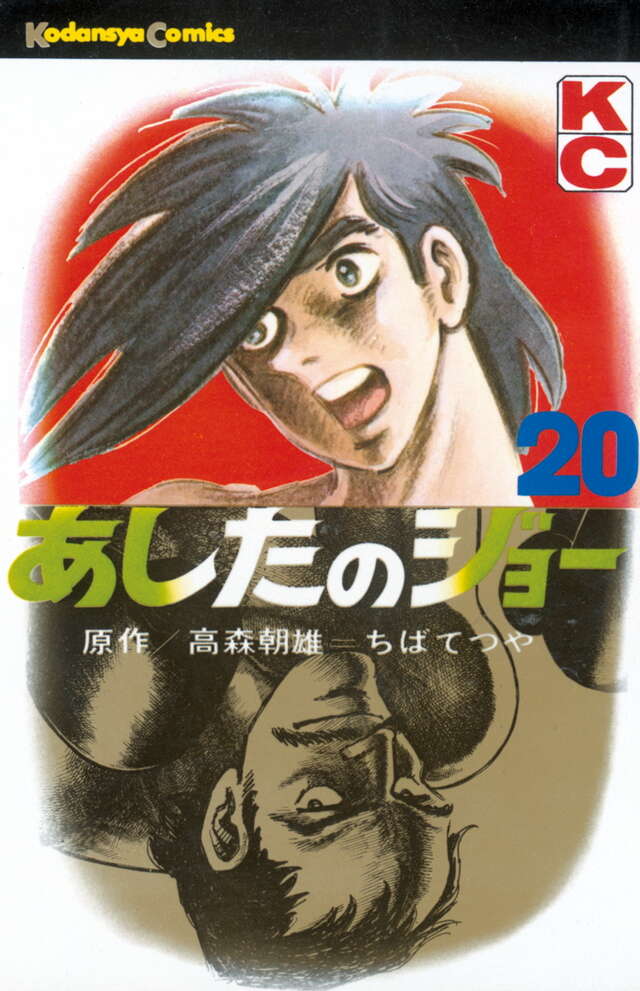
Kodansha’s Japanese volume 20 listing provides an endpoint reference for the standard collected edition. Keep that numbering attached to its edition. An English omnibus gathers source material differently, so an instruction to buy Japanese volume 20 cannot be converted into English volume 20. The same caution applies to page counts: an omnibus is a larger package, rather than evidence that the publisher has created extra original chapters.
As checked on October 3, 2026, the English series page shows six volumes available. The first volume’s print and digital publication date is December 24, 2024; volume six is dated August 25, 2026. Eight remains the announced complete-edition plan, while six describes the observed available catalog. We have not verified a prose-novel source that belongs before the manga, and do not assign the work a Novel format merely because its publishing history is substantial.
The two television runs and two films need distinct labels
Mushi Production’s original-series record verifies the first television adaptation’s 79 episodes and its 1970–1971 broadcast. TMS lists Ashita no Joe 2 as a separate 47-episode production from 1980–1981. A second-series title, different production credit and later broadcast all matter when choosing a version. The first series is not a one-season introduction whose remaining source automatically begins at the second series’ first frame without revisiting anything.
The licensed broadcaster Kayopops identifies the 1980 film as a condensed presentation of the earlier television story, and the 1981 film as the theatrical version of Joe 2. Those descriptions support offering a compact alternative lane. They do not make the movies extra episodes to insert between every television arc. Choose the full screen productions if time spent with the characters matters more than shortening the route.
Fan guides sometimes recommend changing from the first series to the second around a particular early-series stopping point. We do not present a community shortcut as an official universal chapter boundary. A precise future shortcut would need the selected releases, actual episode coverage and treatment of adaptation-original material checked together. The current map instead labels the complete-production route and the compact film route clearly, allowing a newcomer to decide how much television to undertake.
Original visual reference
The central tension is what a person is willing to become
Our reading begins with Joe’s resistance to other people’s expectations. Talent makes him visible to Danpei, but visibility also invites someone else to imagine a future for him. The drama depends on whether Joe can claim that future himself. That is why an early act of defiance can be more revealing than a technically impressive punch: it shows the distance between being useful to a trainer and having a purpose of one’s own.
Watch the relationship between the gym and the surrounding neighborhood. Boxing supplies a recognizable structure of training, rivals and matches, while the people outside the ring give achievement a social setting. Success can change how a person is regarded without erasing the conditions that shaped him. The sports framework becomes richer when the audience remembers those relationships during a contest, rather than treating everyone beyond the ropes as decoration.
The idea of tomorrow also invites a difficult distinction between direction and self-destruction. A strong commitment can give someone a reason to move forward, yet that same intensity can narrow what they are willing to value. The useful viewing question is how the story makes that tension felt in encounters, pauses and preparations. This is our interpretation of its dramatic concerns; it does not diagnose the protagonist or treat animated boxing as an instructional model for real training.
Dezaki’s direction connects the versions without erasing their separate teams
Mushi Production credits Osamu Dezaki as director of the original television adaptation. Its account highlights experiments with lighting, water effects and point-of-view photography alongside dynamic drawing. This is useful production context for watching how a bout can feel subjective: what the boxer perceives and what an outside observer sees do not have to be presented with the same emphasis. The company’s retrospective description is not a substitute for checking an individual scene.
TMS’s Joe 2 credits name Dezaki for direction, Akio Sugino for animation direction, Kazuo Oga for art direction and Ichiro Araki for music, with Tokyo Movie Shinsha producing. These roles offer concrete paths into further viewing and listening. Teruhiko Aoi’s Joe and Shigeyoshi Fujioka’s Danpei also provide identifiable performances to follow across versions. A staff link should retain the version it describes instead of becoming an undifferentiated franchise credit.
The licensed film broadcaster credits Yoichiro Fukuda as director of the 1980 theatrical version and Dezaki for the 1981 film. That distinction is easy to lose when both are discussed simply as Joe movies. Our original television artwork and Japanese manga cover similarly identify their own contexts: one introduces the screen adaptation, while the other documents a particular source edition. Neither image is relabeled as a newly drawn illustration or evidence of an unseen scene.
An admired protagonist can be hard to like at first
The official AniList entry for the original 1970 television adaptation reports 81/100, shown here as 8.1/10 and observed October 3, 2026. Its scope is the 79-episode original series. This external audience score does not average the sequel, theatrical versions, source manga and anniversary productions. A strong score is a useful discovery signal, while the protagonist’s behavior and the length of the viewing commitment remain separate questions of fit.
In a selected r/AshitaNoJoe first-viewing discussion, a reader coming from Hajime no Ippo objects to Joe’s early behavior. Replies encourage patience, connect that behavior to a troubled upbringing and suggest adjusting expectations for the different dramatic approach. Other comments question how Danpei imposes his own ambitions. The disagreement is more informative than a simple recommendation because it exposes competing ways to understand their relationship.
Our recommendation is strongest for viewers willing to follow an initially abrasive protagonist and a long dramatic build. Coming from Ippo can provide an interest in boxing while also creating expectations of a different kind of newcomer. Give the opening enough attention to judge its own relationships. The linked community thread contains later-story discussion, so a spoiler-sensitive viewer should treat it as optional and avoid using its replies as a factual episode-cutting guide.
A dated circulation figure and a restored film answer different commercial questions
TMS’s October 13, 2017 anniversary announcement reports that collected manga circulation had exceeded 20 million copies. That is a dated cumulative manga claim. It is not an October 2026 sales total, a count of individual readers, anime ticket revenue or audited franchise profit. The same announcement presents Megalobox as an original anniversary project drawing on Ashita no Joe, supporting a thematic connection without requiring a direct canonical sequel.
A separate TMS release dated October 20, 2017 announced a 4K Ultra HD edition of the 1981 theatrical Joe 2 for April 27, 2018. It describes restoration from surviving 35mm original negatives and a new 4K/HDR master. That evidence identifies a restoration and distribution initiative for an existing film. It does not describe a newly animated continuation, and its promotional quality claims should not be mistaken for an independent comparison of every available transfer.
The English omnibus program adds another commercial layer: larger collected packages in print and digital formats. Its continuing release schedule affects how much English source material a newcomer can currently obtain, even though the original manga is complete. We do not infer production budgets, royalty shares or profitability from circulation, restoration specifications or catalog availability. Practical edition identities are more useful here than speculative explanations of why a company chose a particular publication schedule.
Choose a route, preserve its scope and revisit actual release coverage
The immediate choice is between reading the source from the beginning and watching the original television adaptation before Joe 2. The full television route offers time with the ensemble; the two theatrical versions provide a compact alternative with their own directorial and release identities. The map makes these choices visible without requiring a new reader to understand a fan-maintained filler taxonomy first. A source reader can also use the screen versions as comparisons after reaching the relevant material.
Use Kodansha for the English catalog and Japanese edition reference, Mushi Production for the original animation record, and TMS for Joe 2 and the dated anniversary and restoration documents. The licensed film broadcaster distinguishes the theatrical versions. AniList and MyAnimeList provide named adaptation discovery points; the selected discussion opens a question about audience expectations. These links serve different purposes and should not all be treated as interchangeable authorities.
Future updates should verify when the remaining announced English omnibuses actually become available and whether any new licensed screen edition changes access or language coverage. A new package should update availability rather than automatically adding a story node. Megalobox can receive its own linked analysis when produced, while preserving its anniversary relationship outside the Joe sequence. That keeps the guide useful as publishing changes without forcing separate productions into a false chronology.
Primary sources and useful navigation
- Kodansha · English source catalog and current volume coverage
- Kodansha · eight-omnibus announcement and writer/artist credits
- Kodansha · English volume 1 release
- Kodansha · English volume 6 release
- Kodansha · Japanese standard volume 20 and original cover
- Mushi Production · original TV and direction
- TMS · original 79-episode catalog
- TMS · Joe 2 TV47 and production credits
- Kayopops · licensed broadcaster’s two theatrical version descriptions
- d Anime Store · licensed original TV artwork
- TMS · dated circulation and original Megalobox anniversary project
- TMS · 1981 film restoration and 2018 Ultra HD announcement
- AniList · named anime audience score
Community and catalog routes
- MyAnimeList · named anime catalog
- Reddit · first-viewing discussion of Joe’s early behavior and expectations
The production and publisher links support project facts. Catalog and community pages are secondary navigation and may reveal later events.
Explore related story guides
Original series imagery is reproduced under permission asserted by the site owner; the source and rights credits are retained. The route diagram is Animeteor’s own explanatory graphic.
Games and live-action adaptations
- Tomorrow’s Joe (2011) — Live action: Film · 2011
- Ashita no Joe (1970) — Live action: Japanese theatrical film · 1970
Two cinema adaptations and a future English book
The newly linked 1970 feature is the Yasuharu Hasebe film starring Shoji Ishibashi, released in Japan on 22 July 1970. It is separate from both the first television anime and the existing 2011 film guide.
English hardcover omnibus 7 is scheduled for 15 December 2026, ISBN 9781647295189, 564 pages; it remains future on 4 October. The existing six-released-omnibus state is retained.
Exact English omnibus release record
A NIJIBOX publisher announcement dated 26 April 2013 identifies the separate historical Ashita no Joe: Ashita no Tame ni Yahoo! Mobage card/gym game and a then-limited collaboration. The expired 2013 event is not a new agreement or current playable-service guarantee.