Start the 26-episode television series or the source novel Guardian of the Spirit. For the wider prose world, follow the publisher’s book guide; Fujiwara’s manga is a separate adaptation.
Reviewed 2 October 2026 · Opening premise and format relationships; major ending revelations withheld. Linked publisher summaries and discussions may reveal later events. · Licensed access varies by country.
The source and screen branches

The television entry does not cover every Moribito novel. Prose labels identify the original series; English availability must be checked book by book. Live action is excluded.
- READ · novels: Guardian of the Spirit → Guardian of the Darkness → Wider series · publication order
- WATCH · television: 2007 Production I.G · 26-episode adaptation
- READ · manga: Kamui Fujiwara comic · Uehashi source / I.G setting cooperation
A complete television entry into a larger prose world
Begin Moribito: Guardian of the Spirit with the twenty-six-episode 2007 television series or Nahoko Uehashi’s novel Guardian of the Spirit. Production I.G’s English record identifies the screen project and its broadcast run. The novel is the prose entry; the television series is not an adaptation of every book carrying the Moribito name.
Kaiseisha’s official series guide recommends Guardian of the Spirit or Guardian of the Darkness as approachable starting books, then publication order for the widening narrative. For a screen viewer, reading Guardian of the Spirit first is our recommended bridge: it establishes the source’s own presentation instead of assuming the anime replaced that volume exactly.
Kamui Fujiwara’s manga is an additional reading branch. Square Enix credits Uehashi for the original and Production I.G for setting cooperation. That credit connects the adaptation work, but it does not turn the comic into a new television season or authorize a manga chapter number as the prose continuation point.
Language, translation and collection scope affect the reading route
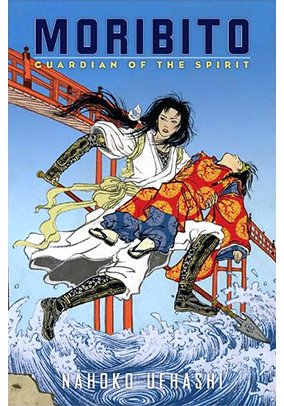
Kaiseisha identifies the English Guardian of the Spirit translation by Cathy Hirano, published by Scholastic with cover art by Yuko Shimizu. The displayed English cover belongs to that edition. The original Japanese series has a wider catalog; an English-language product page does not establish that every later book is available in English.
The American Library Association records the English volume’s 2009 Batchelder award. That recognizes translated literature; it is not a score for the animation and should not be used as proof of the anime’s sales. Edition identifiers and translator credits help a reader find the actual recognized book.
After the first source volume, use the publisher’s series guide to identify Guardian of the Darkness and subsequent books in publication order, checking the language of each edition. Avoid listings that silently substitute unofficial translations. Current stock and licensed streaming access must be checked in the reader’s own territory.
Protection begins with a person, before an explanation
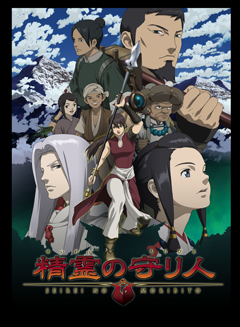
The licensed novel description places Balsa in a rescue involving Prince Chagum. Production I.G’s promotional image gathers the central characters, while the English cover focuses on the armed guardian. Neither is presented here as a captured frame from that encounter; both are original visual references for the premise.
Our interpretation asks why a rescue matters before a protector understands every political and supernatural consequence. An immediate obligation can arise from seeing someone in danger. Later explanations may complicate the task, but they do not erase the fact that a vulnerable person needed help at that moment.
Compare the group image with the English cover’s emphasis on Balsa. One opens a social world; the other makes a guardian’s body and weapon prominent. That is a reading of promotional framing, not evidence that one edition changes the rescue. The case withholds the final resolution of Chagum’s situation.
Original visual reference
Keeping somebody alive involves ordinary work
Balsa’s profession supplies a striking entry image, but our reading treats protection as more than readiness to fight. Food, shelter, concealment and decisions about movement all affect whether a dependent person survives. Physical skill is one part of a sustained relationship with another person’s needs.
This changes how quiet sequences can be evaluated. Ask whether a routine action makes the young prince more capable, more secure or simply more obedient. Teaching and sheltering are different forms of care, and a protector may need to choose between immediate safety and allowing a child some experience of the world.
That framework makes practical detail meaningful without claiming every domestic scene carries the same message. A specific review should show which decision is made and what follows. The introductory premise supports examining care as labor; it does not justify assigning an unverified intention to the novelist or adaptation staff.
Political authority and local knowledge need different tests
The opening danger joins a ruler’s fear with the unfamiliar presence carried by Chagum. Our interpretation follows how explanations become credible. A public account may have institutional support while a local tradition preserves knowledge that the public account cannot accommodate. Neither should be accepted merely because it is convenient.
Ask who has direct experience, who interprets that experience and who controls the consequences of the interpretation. These may be three different people. A child can bear the risk while adults argue about its meaning, making the distribution of knowledge an ethical question rather than an abstract debate.
A careful comparison of versions should distinguish an explanation spoken aloud from one communicated by action or setting. This guide does not reveal the final reconciliation of the competing accounts. It offers a way to watch the problem develop and to notice when certainty serves power more effectively than understanding.
Competence can coexist with an unresolved personal burden
Our reading of an experienced guardian asks what expertise can and cannot settle. Knowing how to respond to a fight is not the same as knowing why a particular responsibility should be accepted. A capable adult can make difficult decisions without having a fully reconciled account of her own past.
This is one reason the broader prose route should be treated as a world with its own development. The publisher’s next-book description gives Balsa’s return to her homeland a distinct focus. It is not useful to reduce that book to the next episode of the same chase or promise an identical emotional task.
For a review, separate a character’s demonstrated skill from the narrator’s explanation of her motives. A gesture can protect somebody even while its personal meaning remains unclear. Further source reading can deepen that distinction; the route map therefore keeps the novels sequential without pretending the television entry exhausts Balsa’s life.
The translation award and television score measure different things
Uehashi is the source novelist. Production I.G identifies Kenji Kamiyama’s screen direction, and the publisher gives Hirano’s translation credit for the English book. Square Enix separately identifies Fujiwara’s comic. Each role shapes a different route, so a single generic author field would lose useful information.
The audience score displayed on this page belongs only to the 2007 television adaptation. It is an AniList weighted score observed on 2 October 2026, converted from a hundred-point scale. It is not the source novel’s literary rating or the translated book’s award record.
The linked Reddit discussion is a place to explore personal responses to the animation. Its comments do not establish prose availability or complete series coverage. MyAnimeList and Wikipedia provide secondary catalog navigation, while the studio, Kaiseisha, Square Enix and award body support the specifically attributed facts.
A translated book, a comic and an anime are separate products
The documented adaptations and translations demonstrate more than one way to enter the property. Their existence does not disclose the revenue attributable to each route. A literary award may increase attention, but without sales evidence it cannot be turned into a numerical estimate of commercial impact.
No audited title-level net profit or complete screen budget was verified. A Japanese catalog may include editions that an English visitor cannot currently buy locally. Confirm language, publisher and stock before following a product link, and check streaming rights separately rather than assume worldwide availability.
Start the complete named television series for the screen route, or Guardian of the Spirit for prose, then use Kaiseisha’s publication-order guide for the wider world. Explore Fujiwara’s comic as its own adaptation. Live-action material, if separately covered on Animeteor, remains outside this reading and anime map.
Primary sources and useful navigation
- Production I.G · English television record
- Production I.G · original imagery and project
- Kaiseisha · source series reading guide
- Kaiseisha · English translation and cover credits
- Square Enix · Kamui Fujiwara manga volume one
- American Library Association · 2009 translated-book award
- AniList · named adaptation audience score
Community and catalog routes
- MyAnimeList · named adaptation catalog
- Reddit · anime discussion
- Wikipedia · secondary series navigation
The production and publisher links support project facts. Catalog and community pages are secondary navigation and may reveal later events.
Explore related story guides
- Scrapped Princess · guardians and a threatened young person
- The Twelve Kingdoms · institutions and another-world knowledge
Original series imagery is reproduced under permission asserted by the site owner; the source and rights credits are retained. The route diagram is Animeteor’s own explanatory graphic.
Games and live-action adaptations
- Moribito: Guardian of the Spirit — season 1 (2016) — Live action: Series · 2016
- Moribito II: The Anguish of the Destroyers (2017) — Live action: Series · 2017
- Moribito: The Final Chapter (2017–2018) — Live action: Series · 2017–2018