Start Sumito Oowara’s manga volume 1 or the twelve-episode 2020 animation. Continue source reading in the named edition; English volume 8 has a verified 29 September 2026 date. No exact post-anime chapter handoff or second-season premiere is certified here.
Reviewed 2 October 2026 · Opening premise and format relationships; major ending revelations withheld. Linked publisher summaries and discussions may reveal later events. · Licensed access varies by country.

The source and screen branches

Manga editions and screen episodes use separate numbering. Book publication dates do not announce animated seasons. Games and live-action adaptations are outside this source and anime map.
- READ · original source: Manga · volume 1 → Japanese volume 10 · 9 January 2026
- WATCH · adaptation: 2020 animated series → Twelve episodes
- FOLLOW · English editions: Dark Horse source books → Volume 8 · 29 September 2026
- COMPARE · production imagination: Source page / animated presentation → Exact chapter handoff not certified
Start the original manga or the twelve-episode 2020 animation
Begin Keep Your Hands Off Eizouken! with Sumito Oowara’s manga volume 1 or the twelve-episode 2020 animated series. The source follows three schoolgirls whose different creative and practical interests come together in an animation club. The manga is the original reading route; the television production is an adaptation, not an independent original-anime premise.
The English publisher’s first-volume description distinguishes Midori’s world design, Tsubame’s animation interest and Sayaka’s commercial instinct. That division is useful context for choosing the work: making an imagined world believable and making a project possible are connected tasks. It does not require a source novel, and no original prose-novel route was verified in the inspected catalogs.
After the screen introduction, read the manga from volume 1 if you want the original arrangement and continued source route. No exact chapter shortcut is certified without comparing the licensed animated ending with the named collected edition. Live-action presentations are handled separately and are excluded from the source-and-anime diagram.
| Route | Starting point | Next decision |
|---|---|---|
| Manga | Dark Horse · volume 1 | Continue in the named source edition |
| Animated series | 2020 · twelve episodes | A complete first screen presentation |
| Source after animation | Start volume 1 for comparison | No certified chapter handoff here |
| Later English books | Check the current publisher record | A publication date is not a new-season date |
| Live action | Separate adaptation discovery | Excluded from this route map |
The first book has different print and digital release histories
Penguin Random House’s official Dark Horse listing gives 17 November 2020 for the first English paperback, with 168 pages and ISBN 9781506718972. The same record identifies a later ebook presentation dated 23 January 2024. Those dates describe editions of the same opening book, not two different beginnings to the source story.
The listing credits Sumito Oowara with writing and illustration and Kumar Sivasubramanian with translation. Keep these roles separate from the animation director’s contribution. A translated paperback can provide source access while the animated adaptation supplies a different performed presentation of that source.
For any later volume, verify the current product record rather than relying on an older seasonal announcement. Publication schedules can move, and a delayed book can retain the same ISBN. A reader who wants the next source installment needs the released edition and its contents, not the first date that appeared in a promotional catalog.
English volume eight is a source release, not a second anime season
The current official distributor record lists English volume 8 for 29 September 2026, with 168 pages and ISBN 9781506749754. That date is already past at this guide’s 2 October review. The product is a manga volume, and its arrival does not establish a new animated production or an English publication of every later Japanese chapter.
The Japanese Media Arts Festival’s government-hosted creator record identifies the 2020 animation as twelve television episodes and associates it with Masaaki Yuasa. This is a historical production record. Later festival screenings or catalog entries should not be converted into an additional season merely because a different year appears in the event listing.
No verified second-season premiere is added here. The appropriate update path is to track source books through publisher notices and new animation through the production or distributor announcement that actually names it. Keeping those feeds separate prevents a genuine book release from creating a misleading watch-calendar entry.
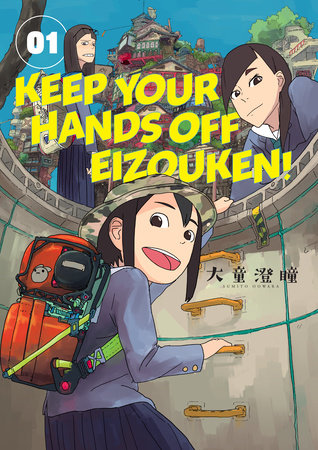
The first-volume cover shows a group and a world under construction
The selected official English first-volume cover places the three schoolgirls at different depths in a densely built environment, with an orange mechanical object close to the foreground figure. The large yellow title and volume number remain visible. It is a source-edition cover, not an episode screenshot or a production blueprint for a real machine.
The publisher’s premise establishes a club trying to produce animation with limited school resources. The cover demonstrates a visually busy built world and a group composition, but it cannot certify which exact scene the animation retains or identify every object’s plot function. Those questions need the actual source pages and licensed episode.
Our interpretation is that the composition invites curiosity about how an environment works. Buildings, levels and machinery occupy attention alongside the people. That makes it a useful visual entry into a story about designing worlds: the imagined setting can become something the viewer wants to explore before any explanation tells them how the parts fit together.
Original visual reference
A convincing imagined machine gives the audience a way to think
Our reading treats world design as more than decoration. An imagined mechanism becomes persuasive when a viewer can form an expectation about what it might do. The object does not have to be a feasible real invention for its shape, movement and apparent purpose to make the fictional environment feel coherent.
That offers a concrete analytical question: does a design communicate how people would use it, or does it merely occupy the background attractively? The distinction connects imagination to action. A place that suggests paths, obstacles and tools gives characters something to do and gives viewers a reason to anticipate the next movement.
The manga and animated versions can achieve that effect differently. A page can accumulate details the reader inspects at their own speed; animation can demonstrate an invented process through sound and timed motion. An adaptation comparison should identify those effects in named passages rather than assume that more visible movement automatically means a better imagined world.
Practical limits can become part of the creative design
The opening project has limited resources, making the practical member’s role important to the premise. Our analysis is that a constraint can change an artistic decision without simply defeating it. A group may need to choose which idea carries the essential effect and which attractive detail exceeds what they can complete.
That makes negotiation a creative activity. Asking how long a sequence takes, what an audience can understand and what a project needs to deliver can protect an idea by giving it a workable form. The practical person is not automatically the enemy of imagination just because they ask for a plan.
Compare this with SHIROBAKO’s larger workplace dependencies. The club and commercial production have different circumstances, yet both premises make it useful to distinguish enthusiasm from the ability to finish. A thematic recommendation should explain that shared question while preserving the difference between a school project and an actual paid industry.
Oowara’s source and Yuasa’s screen presentation deserve separate credits
The source publisher credits Sumito Oowara as writer and illustrator. Science SARU’s work record identifies the animated project, and the Japanese Media Arts Festival creator page associates its 2020 twelve-episode production with director Masaaki Yuasa. These primary records keep the source and screen contributions distinct.
Our critical approach is to ask how the adaptation turns designing animation into animation the audience can watch. The work can move between a student’s idea, the group’s discussion and an imagined result. A detailed scene study would need to mark those transitions precisely, instead of treating every visually inventive moment as an already finished project inside the story.
The linked manga and anime communities offer further discussion and edition questions, with spoiler risk. They are not evidence that a delayed book is canceled or that a sequel has been announced. The displayed AniList score belongs to the twelve-episode 2020 television entry only, excluding the source volumes and separate live-action presentations.
The fictional club’s business problem is different from real publisher earnings
The premise gives money and resources an explicit place in a creative group. That can be analyzed as part of how the story understands production. It does not provide the real animation budget, title-level net income or the amount earned by the manga creator, studio or English publisher.
No audited profitability calculation was verified for this guide. A first-volume retail price, available-book count or enthusiastic audience response would not supply one. A future financial update should identify actual sales reporting or disclosed receipts and state the period, territory and difference between gross revenue and profit.
Choose the source’s first book for its original visual arrangement or the twelve-episode animated introduction for performed invention. Follow the publisher’s current edition records for continued reading and primary production notices for any genuine new screen project. The existing guide can absorb those verified updates without manufacturing an uninspected chapter shortcut.
Primary sources and useful navigation
- Official Dark Horse first English volume and original cover
- Official current English volume 8 release
- Official English source series catalog
- Science SARU · animated project
- Japan Media Arts Festival · Yuasa and twelve-episode production
- AniList · named adaptation audience score
Community and catalog routes
- MyAnimeList · named adaptation catalog
- Reddit · anime discussion; search Eizouken, spoilers possible
- Reddit · manga discussion; search Eizouken, spoilers possible
- Wikipedia · secondary source and adaptation navigation
The production and publisher links support project facts. Catalog and community pages are secondary navigation and may reveal later events.
Find this work in our thematic collections
Original series imagery is reproduced under permission asserted by the site owner; the source and rights credits are retained. The route diagram is Animeteor’s own explanatory graphic.
Games and live-action adaptations
- Keep Your Hands Off Eizouken! The Movie — Live action: Film · 2020
- Keep Your Hands Off Eizouken! (2020 drama) — Live action: Series · 2020
Japanese and English manga dates remain separate
Shogakukan dates Japanese print volume 10 to 9 January 2026, ISBN 9784098636716, 160 pages. Dark Horse’s English volume 8 has the separate 29 September 2026 date, ISBN 9781506749754, 168 pages. Neither book number is an anime episode count or a verified post-anime chapter jump.