Watch the 52-episode television run. For the full source, choose the original 32-volume manga or completed 16-book new edition. K MANGA is the licensed English discovery route; no exact post-anime chapter jump is verified.
Reviewed 3 October 2026 · Opening premise and adaptation relationships. Major endings withheld; linked catalog summaries and discussions may contain spoilers. · Licensed access varies by country.
The source and screen branches

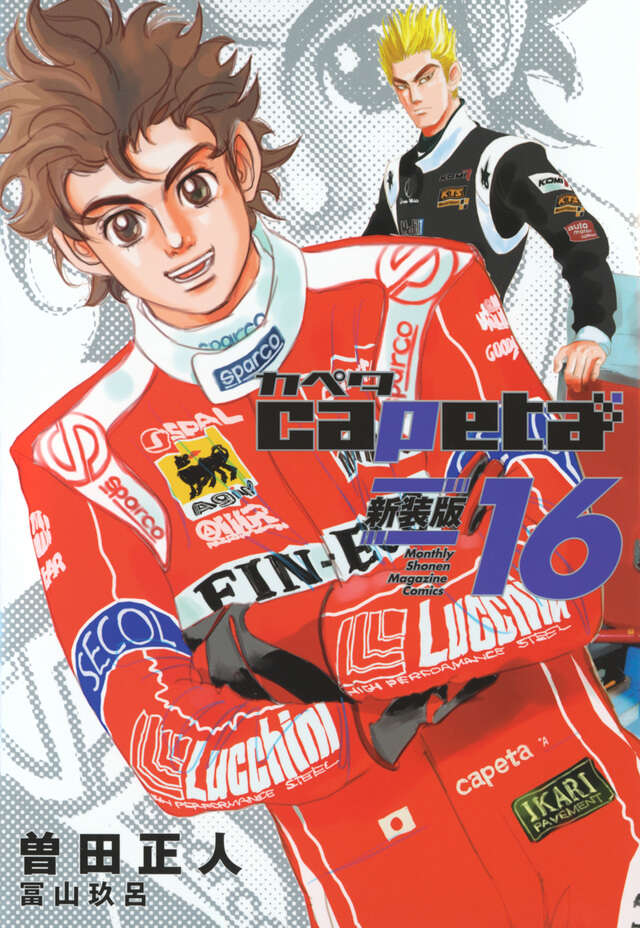
The anime and source have different coverage. New-edition book 16 collects original volumes 31–32; it is not a new continuation. No exact chapter handoff is verified. Games and live-action stay separate.
- WATCH · original television: Episode 1 · handmade kart → Later episodes · formula racing → Episode 52 · TV endpoint
- READ · alternative editions: Original Japanese · 32 volumes · New Japanese edition · 16 books · K MANGA · English chapter entries
A handmade kart opens the route
Capeta begins with a child and a racing kart assembled by his father from discarded parts. The machine is imperfect, but the opportunity is extraordinary to the boy. His first encounter with driving changes the way his family and friends understand his interests. Start with the first television episode or manga volume, where the emotional value of this improvised gift matters before racing becomes an organized ladder of competition.
The 2005 television adaptation has 52 episodes. TV Tokyo’s archive preserves the progression from karting into a later formula-racing setting and records the final broadcast on September 26, 2006. Follow the numbered television run for the animated introduction. The manga offers a completed source route with a broader career trajectory; its ending should not be inferred from the animation’s last race.
Choose the anime for its sustained introduction to the boy’s circle and the changing racing environment. Choose the manga if you want the full source story, controlling your reading pace through technical exchanges and competition. The opening’s appeal is not simply speed. It asks what happens when an activity a family can barely provide becomes something a child wants to pursue seriously, with other people increasingly sharing the work that pursuit requires.
The original thirty-two volumes and a completed sixteen-book reissue coexist
Kodansha marks original volume 32 as the final volume of Masahito Soda’s manga. Its catalog also identifies new-edition volume sixteen as the completed reissue, containing original volumes 31 and 32. The reissue’s July 16, 2025 publication date is a book-edition date rather than a new ending written after the original source. Record the edition before comparing someone’s volume recommendation with your copy.
The official English K MANGA record provides a licensed digital discovery route. It credits Masahito Soda and Kuro Tomiyama, with translation by Kevin Gifford and lettering by Kai Kyou. Its chapter interface uses segmented entries such as Chapter 16(1), which are not interchangeable with a Japanese collected volume number. We verify that named English route without turning one accessible episode page into a promise that every chapter is free in every country.
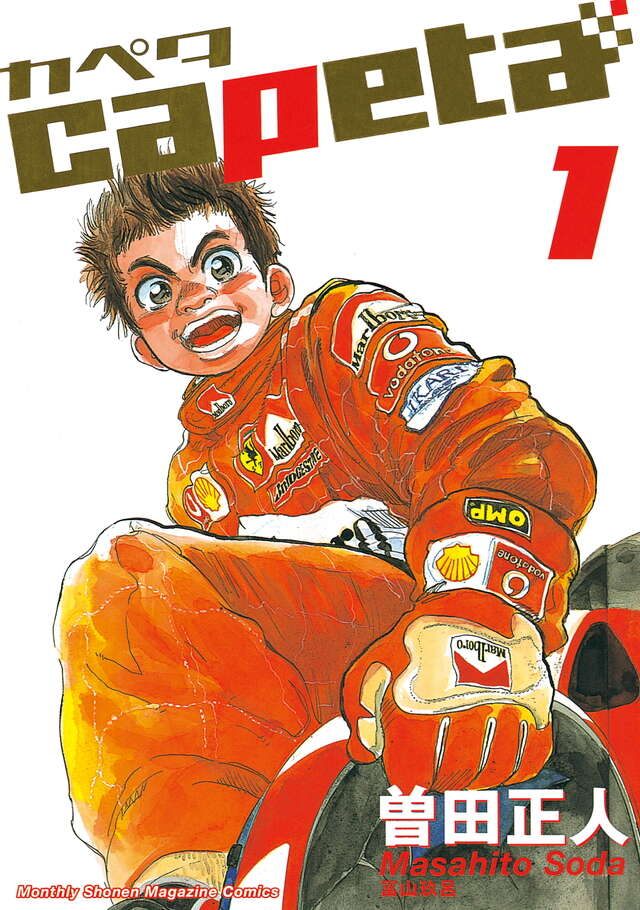
This research does not establish a required prose-novel branch. A new manga edition, an app entry and an anime soundtrack are different products, not automatic evidence of another narrative medium. The two original images on this page deliberately identify their edition: the new-edition final cover leads the page, and the standard volume-one cover appears inside. They are publisher manga illustrations, rather than claims to show a particular animated racing scene.
Do not jump by an unverified volume formula
The television archive shows that the later episodes reach a formula-racing setting. The source’s final-volume description concerns a later competition in its completed manga career. Those records establish different scopes, but they do not prove an exact episode-to-chapter handoff. An anime viewer seeking the full source should use the manga as a complete reading route until a scene comparison has established a more selective starting point.
A reliable comparison would track the final animated race, identify corresponding source scenes in a named edition and check earlier reshaped material. Dividing 52 episodes by 32 books does not perform that work. The new edition makes a casual volume jump still less reliable: its sixteen books collect material under different numbering. Our guide therefore avoids a confident read-from-volume-X instruction unsupported by a documented mapping.
There is also no need to add an invented second television season to close the gap. A complete manga and a finished anime run can coexist with different story coverage. Games and live-action, if separately verified for a work, belong on their own adaptation pages under the site’s production rule. They would not bridge an anime episode to a manga chapter or change the source-edition distinction shown in this guide.
Original visual reference
Skill has a material setting
Our interpretation starts with the machine’s imperfections. The opening opportunity comes from a parent’s work rather than a ready-made professional environment. That makes ability visible through an obstacle: a child has to understand something about the kart he actually has. A better machine is not merely a cosmetic upgrade; it changes what the boy can attempt and what people around him need to arrange.
The family relationship gives that technical problem emotional weight. Support can begin as a gift and become a continuing commitment. A parent, a friend or a helper may experience a race through the work before and after it, rather than through the driver’s moment on the track. When comparing manga and animation, notice who explains a difficulty, who absorbs its cost and who gets to describe an achievement afterward.
Capeta’s progression also creates a useful question about opportunity. Being recognized as promising does not remove the need for equipment, access or a team role. Talent must operate inside an institution that has its own standards and priorities. This is an editorial reading of the fictional competitive journey. It is not a real-world driving lesson or a calculation of what a young person should spend to recreate the characters’ decisions.
The television credits identify one adaptation
Masahito Soda created the source manga for Monthly Shonen Magazine. TV Tokyo’s original staff page names Shin Misawa as director, Tsutomu Kamishiro for series composition, Tadami Okumura for character design and Toshihiko Sahashi for music, with Studio Comet as the production studio. These credits belong to the animated production rather than to the later manga reissue or the English digital translation.
The broadcaster’s original cast listing identifies Naoto Adachi as Capeta, Yuta Takihara as Nobu, Yume Miyamoto as Monami and Shinya Kote as Shigeo. That archived listing is useful for the original introduction; we do not extend it into an unverified claim that one performer covers every age of every character. A production comparison can distinguish the early family setting from the later competitive setting while checking the relevant episode credits when precision matters.
The English K MANGA page and the new-edition publisher record also name Kuro Tomiyama alongside Soda. Keeping those credited names visible is preferable to treating a manga’s title as evidence that its art, translation and television production all come from an identical team. Future creator pages can connect verified contributions and other works. Such links are author discovery, not proof that another sports series occupies the same fictional racing world.
A licensed English route changes an older access conversation
AniList’s named Capeta television entry reports 75 out of 100, displayed here as 7.5 out of 10 and observed October 3, 2026. Its scope is the 2005 anime with 52 episodes. It is an external audience score, not our grade of racing realism or an average of manga and animation. Someone primarily interested in the completed source should not read that number as a score of its final volumes.
A selected 2023 community discussion welcomes the English K MANGA listing, while expressing frustration with access and the service’s payment model. One response criticizes the translation. The conversation documents enthusiasm and reservations at that moment; it does not establish that the same territory rules, price structure or individual reaction describe every reader today. The official named manga record is our evidence for licensed discovery.
Those comments are a small discussion rather than a representative quality survey. A useful next step is to inspect the official preview and check the service’s current availability where you live. We do not redirect visitors to an unauthorized mirror simply because an old thread mentions one. For taste, the relevant question is whether a sustained racing development story interests you enough to follow both the family context and the later competitive institutions.
Separate story costs from production finances
The fictional racing journey gives equipment, repairs and access narrative importance. That does not provide a verified anime budget or financial statement. We do not derive production profit from the machines portrayed on screen, a manga’s final-volume count or an audience score. A story about limited resources and an actual media product’s economics require different evidence, even when discussing both can be useful.
The completed Japanese new edition is a concrete product fact. Kodansha lists volume sixteen with 416 pages and identifies the original volumes collected in it. A buyer comparing the original final book with this edition is therefore comparing publication formats, not selecting between two different final arcs. Keep the ISBN or exact edition title on a checklist if collecting or locating a specific scene.
The English service presents digital chapter entries, so a collected-book count should not be used as a price estimate for reading through that interface. Access, promotions and territorial terms must be checked with the provider. Likewise, the TV Tokyo archive’s broadcast dates are historical records, not a current streaming schedule. Our commercial guidance is to inspect the named official product and its present terms rather than reproduce a decade-old assumption about availability.
Keep progression, edition and access on the same checklist
The first-pass animated route remains episodes one through 52. The full source-reading route is the original 32-volume manga or the completed sixteen-book new edition, selected as alternatives. K MANGA provides a separately named licensed English entry. The map does not imply that the new edition continues after original volume 32, and it does not promote an unsupported novel or sequel season.
For a closer comparison, return to the early handmade kart. Track how an equipment problem becomes a learning problem and then a relationship problem. Follow which details the manga lets you examine on the page and which the animation communicates through movement, sound or a reaction. That gives a source reread a purpose even when you already know the race’s outcome, without exposing later results just to demonstrate different coverage.
TV Tokyo verifies the original introduction, staff and late television episodes. Kodansha verifies the completed source and reissue scope, and K MANGA supplies English publication credits. AniList gives the scoped anime score; the community thread and fan catalog offer optional discovery. Later revisions should check confirmed adaptations, current licensed access and any documented scene-to-chapter handoff. Until then, a complete named source route is more useful than a guessed shortcut.
Primary sources and useful navigation
- TV Tokyo · original series archive
- TV Tokyo · story introduction
- TV Tokyo · staff and original cast listing
- TV Tokyo · later episodes and final broadcast
- Kodansha · original standard first volume and cover
- Kodansha · original final volume 32
- Kodansha · completed new edition 16 and original-volume scope
- Kodansha · series and edition catalog
- K MANGA · official English record and translation credits
- AniList · named anime audience score
Community and catalog routes
- MyAnimeList · named anime catalog
- Reddit · 2023 licensed-English discovery discussion; historical access claims
- Manga Wiki · optional fan catalog navigation
The production and publisher links support project facts. Catalog and community pages are secondary navigation and may reveal later events.
Explore related story guides
Original series imagery is reproduced under permission asserted by the site owner; the source and rights credits are retained. The route diagram is Animeteor’s own explanatory graphic.