Watch First → Second → Third (film) → Fourth → Fifth → Final Stage. Legend is a retelling; Extra/Battle are optional. The complete digital manga and ongoing new omnibus edition use different numbering.
Reviewed 3 October 2026 · Opening premise and adaptation relationships. Major endings withheld; linked catalog summaries and discussions may contain spoilers. · Licensed access varies by country.
The source and screen branches

Third Stage is part of the original main route. Legend retells early encounters. Battle Stage 2 includes added races. MF Ghost is a later-world successor with a new lead. Games and live-action stay separate; a soundtrack is not another story installment.
- WATCH · original main route: First Stage · 26 episodes → Second Stage · 13 episodes → Third Stage · animated film → Fourth Stage · 24 episodes → Fifth Stage · 14 episodes → Final Stage · 4 episodes
- OPTIONAL · extra material: Extra Stage / Extra Stage 2 · Battle Stage 1 / 2 / 3 · Battle 2 · added race scenes
- WATCH · alternative films: Legend 1 · Awakening → Legend 2 · Racer → Legend 3 · Dream
- READ · choose an edition: Japanese source · volumes 1–48 · English digital · complete 48 · New English omnibus · ongoing
The original Stage route begins with the tofu deliveries
Initial D introduces Takumi Fujiwara through the routine of delivering tofu in his father’s AE86. Other drivers see a mysterious challenger before Takumi understands the reputation forming around him. Start with First Stage for the original animated introduction, or volume one of a clearly named manga edition. The series’ racing vocabulary becomes easier to follow when the people and local teams enter in their intended context.
The main animated route is First Stage, Second Stage, Third Stage, Fourth Stage, Fifth Stage and Final Stage. Third Stage is an animated feature, so a television-only filter can accidentally remove a core installment. The verified television blocks contain 26, 13, 24, 14 and four episodes respectively, with the feature between the second and fourth blocks. Numerical Stage names provide the simplest first-pass checklist.
The newer Legend trilogy retells early material through another production. It belongs on an alternative branch, rather than after Final Stage as the next part of Takumi’s original journey. Extra Stage and Battle Stage products also deserve their own labels. A newcomer should be able to distinguish a side story, a racing compilation and a continuation without relying on every title containing the word Stage.
A complete digital edition and an ongoing omnibus edition coexist
Kodansha’s Japanese catalog marks original volume 48 as the final volume, with a print date of November 6, 2013 and a separate digital date of December 27, 2013. The official English digital series page likewise identifies a complete 48-volume edition. That means an English reader can investigate the full licensed source story without waiting for the newer printed omnibus program to reach its endpoint.
The current omnibus program is a different edition, advertised with a new translation and lettering. Its first book contains original volumes one and two. The eleventh book, released September 1, 2026, contains volumes 21 and 22. Eleven omnibus books should therefore not be mistaken for eleven original volumes or a newly completed eleven-book story. Keep edition names visible when recording progress or comparing a source passage. The new translation is another reason to record which book you read: matching the same character or scene across two licensed English editions does not guarantee identical wording, lettering or page breaks. An edition label makes later comparisons more useful.
The original manga and the later MF Ghost manga also have distinct endpoints. MF Ghost’s official introduction identifies it as a successor set after Initial D, with another protagonist and a different racing environment. This guide does not manufacture a prose-novel requirement for the core route. An arcade game’s scenario or a soundtrack product is not evidence of an additional prose installment that must be read before a numbered Stage.
Extra material is useful when its purpose stays visible
The official 2024 OVA and Battle Stage collection names Extra Stage, including Beyond Impact Blue and Sentimental White, Extra Stage 2, and Battle Stage one through three. Its product description explicitly distinguishes that set from material omitted from the 2023 Complete Blu-ray. The word complete therefore needs its product scope. A main-series collection and an extras collection can each be complete within their own remit without containing the same works.
Battle Stage 2 is especially worth labeling carefully. The official portal describes races from Fourth Stage and newly produced battle scenes absent from that main production. Calling it only a recap loses that qualification. Our practical recommendation is to inspect it after Fourth Stage as an optional racing-focused supplement; it is not a replacement for the character and team developments across the 24-episode series.
For a first pass, finish the original main Stage sequence and then choose the optional branches. Extra Stage focuses attention away from the central Takumi route, while the Legend films restart the early encounters in their own presentation. MF Ghost follows a later setting and a new lead. Games and the live-action film may warrant separate product pages, but they remain outside this anime-and-manga chronology as required by our site’s production standard.
Original visual reference
Repetition becomes skill before it becomes identity
Our interpretation begins with the difference between doing something repeatedly and recognizing oneself as skilled. Takumi’s delivery routine gives him familiarity that other drivers read as exceptional. That gap lets a race become a social event before it becomes a personal ambition. The interesting question is when another person’s recognition changes how he understands an activity that once seemed ordinary.
The older car also changes the shape of a challenge. Rivals and observers can underestimate it while concentrating on equipment, reputation or the visible standing of a team. The story asks viewers to follow how local familiarity and individual decisions disturb those expectations. This is a reading of its competitive drama, rather than a real-world instruction for recreating fictional maneuvers on public roads.
An adaptation comparison can follow one encounter across manga, original animation and the Legend production. Observe what is retained as dialogue, what becomes a cut between vehicles and what is conveyed by engine sound or music. These are concrete viewing questions that do not require announcing one version as automatically superior. The retelling is most useful as a comparison when it is clearly separated from the original continuation sequence.
The first television series and the Legend films have different production identities
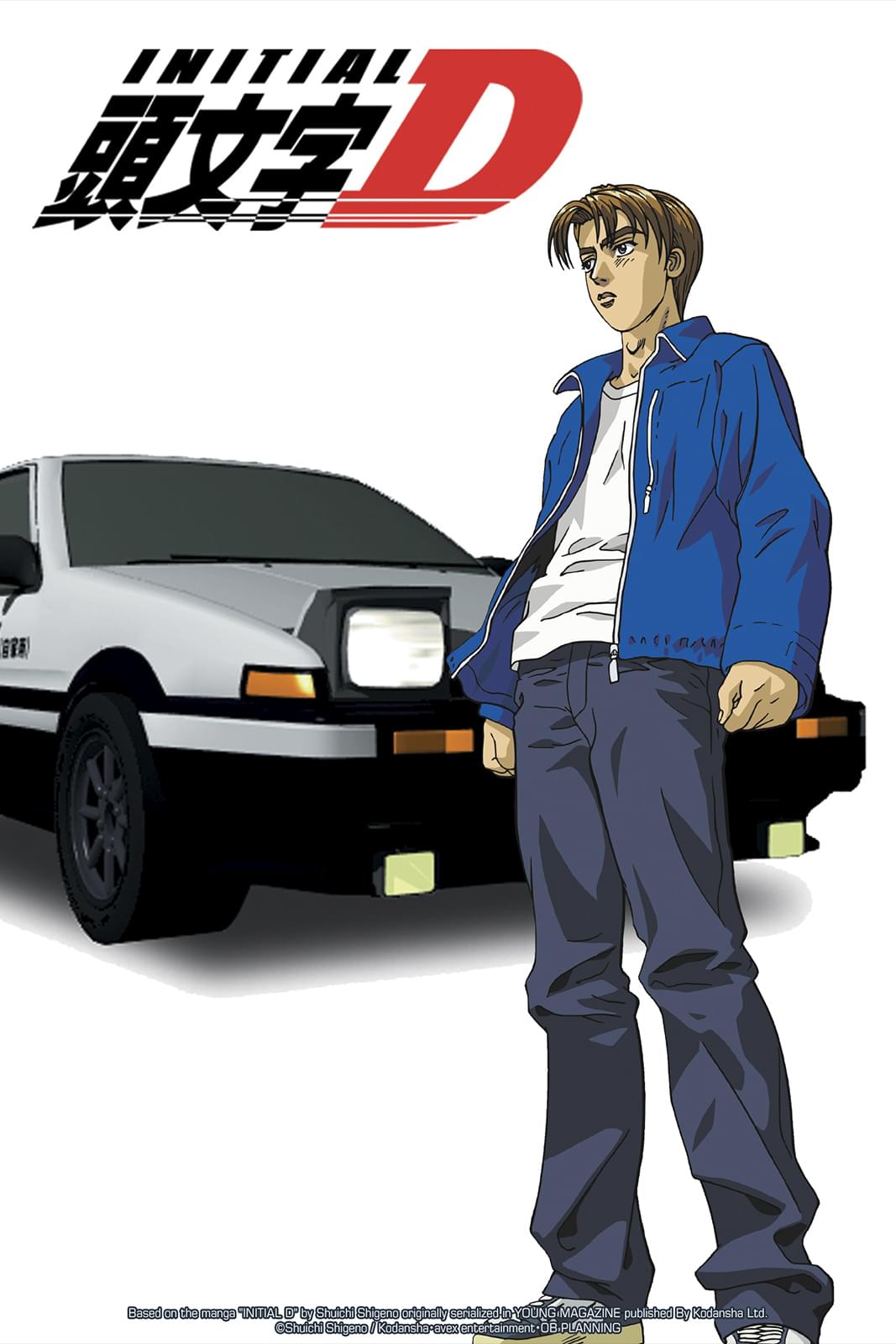
Shuichi Shigeno created the source manga for Young Magazine. AniList’s first-series record names Studio Comet and Studio Gallop for the 1998 television production. Kodansha’s licensing catalog supplies separate original artwork and rights lines for the numbered animated installments, rather than presenting them as one undifferentiated production. Our lead illustration is specifically its First Stage anime artwork.
Avex Pictures identifies Legend 1 as the first film of a three-part new theatrical adaptation. Its staff listing credits Masamitsu Hidaka for overall direction, Mayori Sekijima for screenplay, Koji Haneda for character design and Akio Dobashi for music. Sanzigen and LIDENFILMS are named for production. Those credits should not be transferred backward to the original 1998 television series.
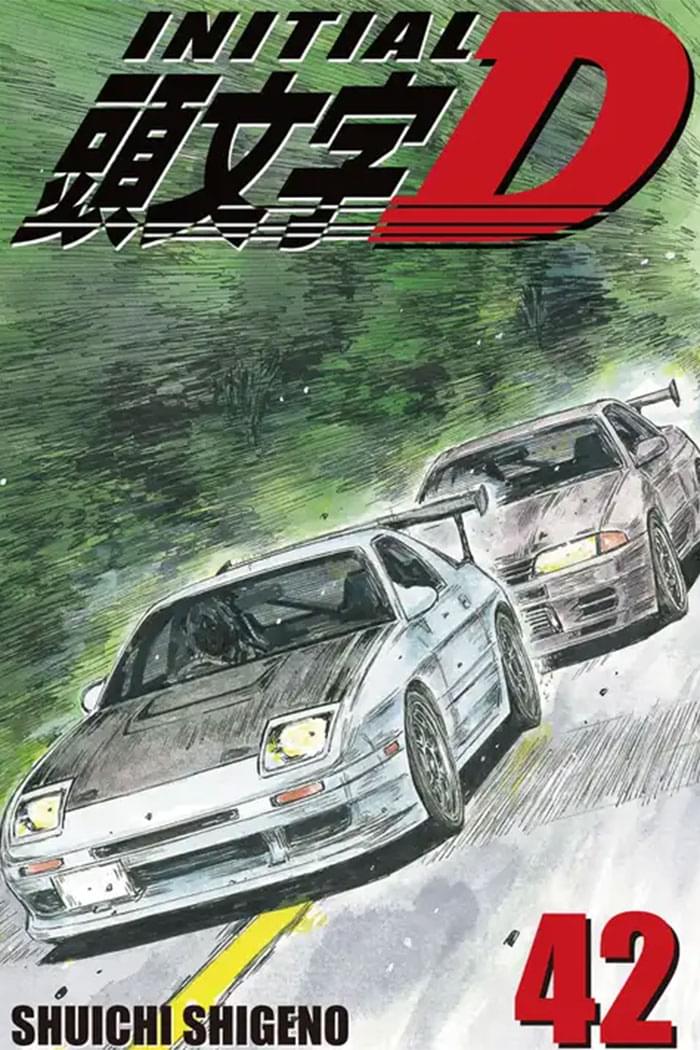
The same official film page names Mamoru Miyano as Takumi, Yuichi Nakamura as Keisuke, Daisuke Ono as Ryosuke and Junichi Suwabe as Takeshi Nakazato. It also describes 3DCG for the races and engine recordings made with real cars. That provides a specific production detail to investigate in a sound comparison. Our second image is manga cover artwork, not a Legend screenshot or evidence of a particular animated vehicle shot.
Soundtrack attachment is part of the taste difference
AniList’s First Stage entry reports 82/100, displayed as 8.2/10 and observed October 3, 2026. This score covers the 1998 television first series with 26 episodes. It is not an average of the entire franchise, manga editions, MF Ghost or the Legend trilogy. Someone attracted by a film clip should not assume this television score also rates that clip’s production.
A selected community discussion about the Legend English dub appreciates the performance of an encounter between the brothers and Takumi. Its replies also express attachment to the original series’ Eurobeat presentation and regret about the different musical experience of the newer films. That gives a useful explanation of why a polished retelling may still leave some established fans wanting another version.
Those comments describe preferences rather than an authoritative comparison of licensing arrangements. Our recommendation is to choose the original television introduction if its sustained team development and familiar musical identity appeal to you, then treat Legend as another interpretation. A visitor primarily interested in source art and dialogue can start with the licensed manga. We avoid adopting community claims that no legal edition exists worldwide: access needs a specific territory and a current provider check.
Date the sales claim and identify the reissue
Kodansha’s licensing catalog reports 55 million copies sold as of 2023. We retain that date and scope rather than updating the number by guesswork. The older official portal carries a different historical circulation figure, which reflects another snapshot and terminology. Neither number establishes production profit, soundtrack earnings or the current value of a media license.
The official 2024 theatrical anniversary box includes the three Legend films, an original soundtrack and a Battle Digest compilation. Its September 25, 2024 date is the package release, not the first theatrical release of all three films. The similarly dated OVA and Battle Stage collection serves a different collection purpose. A buyer should compare the listed works before using a title’s Complete or Anniversary wording as proof that every animated installment is included.
The current MF Ghost product page also documents an Initial D 30th-anniversary music collection released September 24, 2025. That is an official soundtrack discovery route, not a new animated season. It can support our later music-navigation ideas while keeping songs and racing-story installments separate. Catalog prices and bonuses vary with edition and availability, so we do not present historical preorder benefits as guaranteed current purchases.
Keep the core sequence and edition choice on the same checklist
The simplest watch instruction remains First, Second, Third, Fourth, Fifth and Final Stage. Include Third Stage despite its feature format. Then choose optional Extra and Battle material, with Battle Stage 2 explicitly labeled for its added racing scenes. The Legend trilogy is a retelling branch; MF Ghost provides later-world discovery with a new protagonist instead of another numbered Takumi Stage.
For reading, choose either the complete licensed digital source edition or the new omnibus edition, tracking progress in that edition’s own numbering. Japanese standard volume 48 is the source endpoint; omnibus 11 contains original 21–22 and is part of an ongoing publication program. No exact post-anime manga-chapter jump is supplied here, because a detailed scene comparison has not established one. Returning to volume one is the reliable source-comparison route.
Kodansha verifies the source, current English editions, historical sales scope and original artwork. The official package portal and MF Ghost product pages verify main blocks and extras. Avex Pictures supplies the Legend production identity. AniList gives the scoped anime score, while the linked community and fan wiki are optional discovery. Future revisions should check new omnibus releases and licensed screen access without inserting games, music compilations or the live-action version into this main route.
Primary sources and useful navigation
- Kodansha · original manga final48 and separate print/digital dates
- Kodansha US · complete English digital48
- Kodansha US · new omnibus edition and translation
- Kodansha US · omnibus11 covers21–22, September2026 release
- Kodansha Licensing · original artwork, adaptations and dated sales scope
- Initial D official portal · original main-series package scope
- Initial D official portal · BattleStage2 added races
- Avex Pictures · Legend1 staff, cast and3DCG
- Official product ·2024 Legend trilogy and soundtrack box
- Official product · Extra/Battle collection scope
- MF Ghost official introduction · successor setting and new lead
- MF Ghost official products · Initial D music and editions
- AniList · named anime audience score
Community and catalog routes
- MyAnimeList · named anime catalog
- Reddit · Legend dub and musical preferences discussion
- Initial D Wiki · optional fan navigation; spoilers and edition caution
The production and publisher links support project facts. Catalog and community pages are secondary navigation and may reveal later events.
Explore related story guides
Original series imagery is reproduced under permission asserted by the site owner; the source and rights credits are retained. The route diagram is Animeteor’s own explanatory graphic.
Games and live-action adaptations
- Initial D (2005 film) — Live action: Film · 2005
Initial D THE ARCADE remains a separate active game branch
SEGA’s Japanese Initial D THE ARCADE began operation on 25 February 2021. Its official modes include story, local multiplayer, online one-versus-one competition, time attack and Theory of Street. The 2026 national tournament pages demonstrate active organized play, but do not establish worldwide cabinet availability or a home edition. The product remains outside the anime, manga and live-action route map.