Giant Robo: The Animation — Japanese PlayStation 2 game guide
GAME GUIDE · Sources checked 04 October 2026 · Opening-premise spoilers; original promotional screenshots can reveal creatures and environments.
D3’s 2004 PlayStation 2 action game identifies the Giant Robo OVA and switches attention between a human controller and giant-robot combat. It is separate from the older performed television series.
- Product
- Giant Robo THE ANIMATION: The Day the Earth Stood Still
- Platform and territory
- Japanese PlayStation 2
- Publisher catalog release
- 3 November 2004
- Product code
- SLPM-62526
- Players
- 1–2, as listed by the original publisher
- Relationship
- OVA-based game; not an adaptation of the 1967 performed series
Product and edition
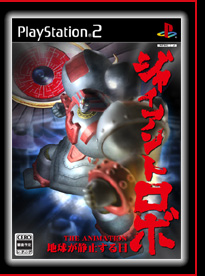
D3’s current console archive dates this Japanese PlayStation 2 product to 3 November 2004. The original product page identifies Mitsuteru Yokoyama, the OVA title, the SLPM-62526 product code and one-to-two-player versus action. Its surviving prerelease page says scheduled release, while the current catalog provides the historical released entry; the two records are distinguished rather than presented as a new announcement. The official gallery opens whole 400-by-300 game screens from smaller thumbnails. Those originals are used here, not enlarged thumbnail reconstructions. This product belongs to the OVA-related branch and is separate from the earlier 1967–1968 live-action television production already linked in the parent analysis.
Gameplay and story
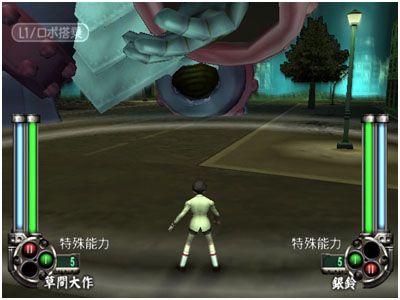
The publisher’s system material places the human controller and the giant robot within the same action design. The selected whole screen shows Daisaku beneath an opposing machine while status and command displays occupy both sides. Our reading is that the scale contrast becomes something for the player to manage rather than only a striking animated composition. The image establishes a visible human-versus-robot presentation, but it does not establish every mode, a complete sequence of story events or an optimal technique. The original interface is retained because it helps separate a game screen from an OVA still. The small native resolution is also retained; adding modern-looking detail would make the record less faithful to the publisher’s actual material.
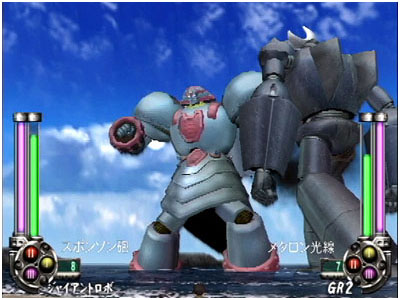
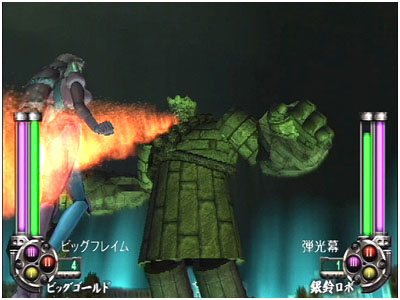
The two additional images show confrontations between larger machines and a fire attack. Meters, names and command icons remain around the action. Our interpretation is that recognizable robot designs become part of a competitive arrangement with explicit player-facing information. That differs from an animated scene whose timing and framing have already been selected by the production. The screenshots do not justify claims about balance, responsiveness or how closely every campaign event follows the OVA. They are original promotional samples of the documented product. Whole files allow readers to see both the spectacle and its surrounding controls, without substituting a character portrait or a cinematic frame for gameplay. No new background, cropped HUD or artificially sharpened reconstruction has been created.
Choosing this route
Choose this optional historical branch to examine an interactive use of the OVA’s robots and controller relationship. Choose the seven-part OVA itself for its released animated story, and the separate performed-series guide for the older television production. The PS2 product does not become an additional OVA episode or a required step toward its ending. A shared property name also does not turn the 1967 series into an adaptation of the later OVA. The editorial comparison concerns scale and participation: animation can dramatize the relationship between a boy and a huge machine, while the game exposes choices and status around that relationship. Keeping the branches separate makes that comparison useful without inventing a single merged continuity or a newly commissioned remake.
Platforms and access
The verified edition is a historical Japanese PlayStation 2 CD-ROM, not a current-console port or a new online service. The publisher’s original product code and territory help identify it; the current catalog is a release-history reference rather than a guarantee of present stock. No changing secondhand price, modern hardware compatibility or current digital purchase is asserted here. The original packaging file is 205-by-276 and the selected game screens are 400-by-300; they remain at those native sizes. This is a source-based guide to the product and an editorial interpretation of its promotional interface, not a hands-on assessment of performance or a complete battle walkthrough.
Sources and credits
- D3 current console catalog · historical release
- D3 original exact product identity
- D3 system explanation and original screenshot gallery
- D3 original game portal
Facts are drawn from the identified publisher and developer records. The story lens is editorial interpretation, not a hands-on review, performance test or audience rating.
Read the Giant Robo: The Day the Earth Stood Still story analysis →