Dororo (2004) — PlayStation 2 game guide
GAME GUIDE · Sources checked 04 October 2026 · Opening-premise spoilers; original promotional screenshots can reveal creatures and environments.
SEGA’s 2004 PlayStation 2 action-adventure gives Hyakkimaru’s recovery quest its own playable interpretation and ending, separate from the manga, the 2007 film and the 2019 anime.
- Exact edition
- Dororo · original Japanese PlayStation 2 game
- Publisher
- SEGA
- Japanese release
- 9 September 2004
- Director
- Kenichi Imaeda
- Genre
- Action-adventure
- Relationship
- Separate game interpretation; optional route
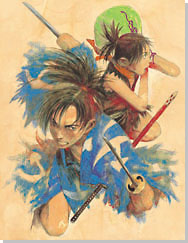
Product and edition
SEGA’s launch interview identifies the Japanese PlayStation 2 release on 9 September 2004. Kenichi Imaeda directs this action-adventure interpretation. The game follows the premise of recovering forty-eight lost body parts while supplying its own conclusion to a manga that did not resolve every thread. That ending belongs to the game; it is not a retroactive final chapter by Osamu Tezuka. The later 2007 performed film and twenty-four-episode 2019 television anime remain distinct productions. This page concerns the named Japanese console edition. It does not assign an unverified international release date or present an English regional package as the same physical item.
Gameplay and story
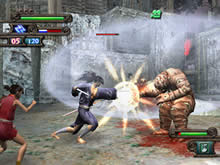
The director distinguishes Hyakkimaru’s built-in arm blades, which develop through use, from swords acquired as the story progresses. Recovery also changes the character’s capabilities. Our reading of this structure is that the body becomes more than the object of a quest: it can become the visible record of progress. The selected SEGA frame places an attack beside status information rather than showing only a dramatic illustration of injury or determination. A player may therefore encounter the central premise as a series of changing possibilities. This is a comparison of the documented design and the supplied frame, not a firsthand claim about balance, speed or responsiveness. It offers a reason to compare the game with the manga’s treatment of dependence and the anime’s presentation of movement without assuming their scenes match one for one.
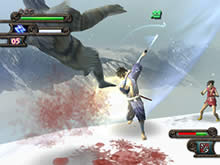
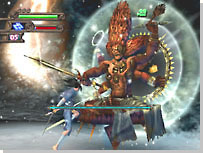
The second SEGA frame keeps the sword strike, the surrounding space and the interface together. The additional Tezuka Productions frame shows a different creature encounter in the pre-release promotional material. Our interpretation is that a recovery story takes on a practical dimension when action and a changing body must share the same view. The player sees both a person confronting an obstacle and information needed to negotiate it. Retaining the complete frames also keeps the observations modest. The pictures establish that these are interactive combat presentations; they do not establish the length of every stage, the difficulty of a particular enemy or how a controller feels. Their original archival resolution is small. We preserve that limitation instead of replacing old art with anime stills or manufacturing sharper imagery that was never supplied by the producers.
Choosing this route
Choose this route for an optional interactive reading of Hyakkimaru and Dororo’s relationship. Choose a named manga edition or one of the television versions if your priority is those specific narratives. The game does not need to be inserted after an invented anime episode number. Our editorial question is how a story about loss changes when recovery becomes a system of actions as well as a subject of dialogue. A visible status display can organize attention around what has changed, while a companion’s presence keeps the journey from appearing entirely solitary. The source and each adaptation can give those elements different weight. Comparing them is useful; treating the game’s resolution as universal canon would erase the distinction the launch interview itself makes. No exact page-to-stage correspondence, ending revelation or hands-on verdict is supplied here.
Platforms and access
This is a historical Japanese PlayStation 2 product. The linked 2004 launch interview verifies release history, not a present digital storefront or compatibility with newer hardware. Check the language and region of the actual package before purchasing a physical copy. The small original publisher images remain at native dimensions, with full HUD and composition visible. The Tezuka gallery explicitly identifies its screenshots as material from development; its pre-release notice is supported separately by SEGA’s dated launch interview. Promotional images can reveal enemies and environments, but this guide does not disclose the game’s final resolution. The original release is also distinct from a later budget reissue or an international edition with different packaging. Neither a current resale listing nor a fan recreation establishes a newly licensed remake.
Sources and credits
- SEGA · launch-day director interview
- SEGA · mechanics, exact release and original gameplay frames
- Tezuka Productions · original game artwork and pre-release gallery
Facts are drawn from the identified publisher and developer records. The story lens is editorial interpretation, not a hands-on review, performance test or audience rating.