Watch TV episodes 1–25, then optionally the OVA. Read the ten main light novels for the original source. Manga is a separate adaptation; English volume 12 is scheduled for April 27, 2027.
Reviewed 3 October 2026 · Opening premise and adaptation relationships. Major endings withheld; linked catalog summaries and discussions may contain spoilers. · Licensed access varies by country.

The source and screen branches

Novel, manga and anime are alternative routes, not consecutive seasons. OVA and Spin-off books are optional. Manga editions have different release dates; games stay outside this map.
- WATCH · television: Episodes 1–25 · OVA · optional companion
- READ · original prose: Light novel 1 → Main novels · through 10
- READ · manga adaptation: Manga volume 1 → Continue published volumes
- OPTIONAL · companion prose: Three Spin-off books · Check edition and language
A partnership built around the people they think they want
Ryuji Takasu looks intimidating but is comfortable cooking and keeping a home in order. Taiga Aisaka looks small but has a reputation for explosive reactions. Their first connection unsettles both public impressions. When each discovers the other’s romantic interest, cooperation seems useful: they can help one another approach someone else. The opening question is whether they understand their own needs as clearly as they understand that arrangement.
For television, begin with episode one and follow the original twenty-five episodes in numbered order. The licensed complete collection also includes an OVA. That additional episode is optional companion viewing, not episode twenty-six of a second season. Watching it after the television run is a straightforward first-view recommendation without imposing an unverified exact insertion point.
For the original source, choose Yuyuko Takemiya’s ten main light novels, illustrated by Yasu. Zekkyo’s manga is a separate adaptation of that prose source. Anime, manga and novel therefore offer alternative ways into the same central story; they are not three consecutive stages that must all be completed to reach the next part.
Ten main novels, a separately paced manga and optional prose companions
The licensed English distributor’s light-novel series catalog runs from volume one through ten and identifies the last book as the conclusion. Its first-volume record credits Takemiya and Yasu and explicitly describes the novel as the source of the manga and anime. The original novel-ten publisher record dates the Japanese book to March 2009. Neither a later English printing nor an adaptation’s new installment extends that main ten-book source sequence.
Three Japanese Spin-off prose volumes sit alongside the main novels. They are companion material, not main novels eleven, twelve and thirteen. Their availability in Japanese does not by itself establish an English license for the same books. A visitor should check the language and exact title before buying a similarly numbered volume from a different format.
The manga follows its own publication pace. The publisher-supplied Japanese bibliography lists manga volume twelve in April 2026, while the English distributor schedules its volume twelve for April 27, 2027. Those are different edition dates for an adaptation. Do not mistake an English preorder for a book already released or infer a final manga volume from the completed novel count.
Complete television packaging does not create a new season
King Records’ complete-box inventory enumerates twenty-five television episodes, then places the OVA and other extras on a separate disc. Its 2018 anniversary package also includes music and promotional material. Some peripheral music descriptions use a twenty-six-episode range, but the actual television inventory ends at twenty-five. Counting the OVA separately resolves the useful viewing question without treating inconsistent catalog shorthand as a new story installment.
The current MediaOCD product page schedules an English-language Blu-ray collection for October 27, 2026. At this October 3 review it is a forthcoming physical edition, not an already released product or an announcement of season two. Its specification includes the original twenty-five episodes and OVA with Japanese and English viewing options.
For source comparison, start the novels at volume one. We have not performed an edition-specific scene audit that establishes a lossless post-anime volume or chapter handoff. The manga’s independently paced adaptation makes a single universal continuation number even less useful. Games, promotional videos, radio and music remain separate discoveries; none supplies a missing bridge between the main prose books.
Original visual reference
Helping someone can also postpone an honest conversation
Our reading of Toradora begins with the usefulness of its initial agreement. Helping another person pursue romance gives Ryuji and Taiga a reason to spend time together while allowing both to name the relationship as practical. That explanation can feel safer than asking why the other person’s comfort has started to matter. Cooperation consequently becomes both genuine care and a way to defer examining that care.
Ryuji’s domestic competence changes what a romantic scene can look like. A prepared meal or an orderly room is less theatrical than a declaration, but can reveal attention to a need that somebody else has missed. The distinction is not between action and words as universal rivals. It is whether either form of communication gives the recipient freedom to acknowledge what is happening rather than creating a debt.
Taiga’s aggression similarly requires more than a label for a familiar character type. An abrupt reaction can protect embarrassment, yet the injury it causes still matters. A useful comparison asks when the story lets vulnerability become visible and whether other characters respond with patience, avoidance or their own defensive performance. Understanding a reaction does not make every consequence disappear.
The friends are participants with their own expectations, not simply obstacles arranged around the central pair. Minori, Kitamura and Ami can make different aspects of the same interaction visible. Group knowledge is uneven: someone may recognize a feeling that its owner has not admitted, or misread an exchange because the public explanation remains convincing. This makes timing and perspective central to the romantic tension.
Prose can dwell within an interpretation before the next action arrives. Animation has to communicate comparable uncertainty through speech, framing, a pause or an interrupted gesture. Manga supplies another rhythm through panel spacing and held expressions. When comparing adaptations, ask what evidence the audience receives about an intention, rather than assuming that the version with more spoken explanation is automatically the more emotionally complete one.
Separate the original author from the television’s performance choices
TV Tokyo credits Takemiya for the original prose and Yasu for its illustrations. Tatsuyuki Nagai directs the anime, Mari Okada handles series composition, and Masayoshi Tanaka designs the animated characters. J.C.STAFF is the animation studio, with GENCO credited for production. These roles explain how a written source becomes an ensemble television performance without confusing anime character design with the novel illustrator’s work.
The original Japanese cast identifies Rie Kugimiya as Taiga, Junji Majima as Ryuji, Yui Horie as Minori, Hirofumi Nojima as Kitamura and Eri Kitamura as Ami. King’s complete-box page also credits Yukari Hashimoto for music and Jin Aketagawa for sound direction. Changes in vocal emphasis and the space around a reply contribute to whether an exchange lands as banter, embarrassment or an attempt to be understood.
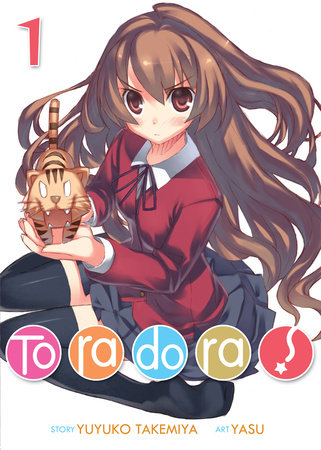
Zekkyo is the manga illustrator, credited separately by the licensed distributor. A cover using Yasu’s art identifies a prose edition, while another drawing style may identify manga or animation. The original anime promotional artwork and licensed English novel-one cover included here make that difference visible without pretending that cover art alone proves a scene’s chronological placement.
A helpful old discussion can contain an outdated release forecast
The linked Toradora community discussion asks how many manga and novel books exist. Its replies help distinguish ten main novels from three companion volumes, but also speculate about future English manga timing and an eventual final book. That illustrates why a useful fan answer needs a date: the currently verified English volume-twelve listing points to April 2027, rather than the earlier forecast offered in that thread.
Community discussion can identify the question visitors are trying to solve, including why the manga has fewer available books than expected or whether an OVA is required. It cannot replace the publisher’s edition record for a present release date. We preserve the discussion as an audience perspective and route readers to the current primary catalog for the factual purchasing decision.
The named AniList television entry was checked on October 3, 2026. Its weighted audience average is 77 out of 100, normalized to 7.7 out of 10. This describes the original twenty-five-episode anime entry. It is neither our editorial score nor an average across light novels, manga, OVA and games; linked community comments are not added as extra votes.
A returning physical edition is evidence of a product, not measured profit
The 2018 Japanese box and forthcoming October 2026 English Blu-ray demonstrate distinct physical-edition activity around an older television work. Their contents, languages and release dates are useful commercial facts. They do not establish how many people purchased the series, the original production budget, streaming revenue or the profit earned by a particular participant.
Likewise, the publisher’s novel-ten record and the distributor’s English manga-twelve preorder establish publication milestones. They do not make all volumes equally available in every territory. Stock, shipping and digital access should be checked on the named platform when choosing an edition. An archived anniversary campaign is historical context, not a live offer for its original merchandise.
No verified work-specific financial statement is available in the sources used for this guide. We therefore avoid deriving a fictional return on investment from the number of adaptations or from the survival of a catalog page. The useful comparison remains concrete: source or adaptation, language, main-story contents, optional supplements and whether a listed release is past or still forthcoming.
Choose a starting format before comparing the routes
Use the television route for a performed introduction and the ten main novels for the original prose sequence. The OVA can follow the television run as an optional companion. The manga starts at volume one and continues through its published adaptation books; its endpoint should be updated from publisher records as new volumes appear.
Consult TV Tokyo for the original staff and characters, King for the explicit episode and extras inventory, and MediaOCD for the forthcoming licensed Blu-ray specification. For English prose and manga, the distributor’s records distinguish the completed ten-novel sequence from a future manga volume. The Japanese volume-twelve bibliography supplies a separate edition date rather than contradicting the English schedule.
Lovely Complex and Kare Kano offer other perspectives on public assumptions, private uncertainty and learning to communicate. Those recommendations are separate stories, not connected continuity. Future verified publication changes can update this guide without changing its basic source hierarchy: novel first, two distinct adaptations, optional companion material and games outside the reading-and-watching roadmap.
Primary sources and useful navigation
- TV Tokyo · official television staff
- TV Tokyo · original characters and cast
- King Records · original anime artwork
- King · 2018 complete box, twenty-five episodes and separate OVA
- MediaOCD · licensed Blu-ray scheduled October 27, 2026
- Penguin Random House · licensed first light novel and original cover
- Penguin Random House · ten-book main light-novel series
- Penguin Random House · English manga volume twelve, April 2027 schedule
- Hanmotocom · publisher-supplied Japanese manga volume twelve bibliography
- KADOKAWA · original main novel ten
- AniList · named anime audience score
Community and catalog routes
- MyAnimeList · named anime catalog
- Reddit · novel count, manga questions and dated publication forecasts
The production and publisher links support project facts. Catalog and community pages are secondary navigation and may reveal later events.
Explore related story guides
Original series imagery is reproduced under permission asserted by the site owner; the source and rights credits are retained. The route diagram is Animeteor’s own explanatory graphic.
Production and edition updates
Toradora Portable — Japanese PSP product, 2009
Bandai Namco’s original BNOURS Vol.12 product pages identify Toradora Portable for PSP and list 30 April 2009. They credit the Toradora rights holders and Namco Bandai Games. The publisher’s magazine is historical product evidence, not a current downloadable edition or a new 2026 release.