Watch the 26-episode TV series in order. Read the completed manga in 21 standard volumes or 10 comic bunko books; no exact post-anime chapter jump is verified.
Reviewed 3 October 2026 · Opening premise and adaptation relationships. Major endings withheld; linked catalog summaries and discussions may contain spoilers. · Licensed access varies by country.

The source and screen branches

The manga editions are alternatives, not sequels. The 2019 remaster and newly edited PR video are product/reference material, not another anime season. No exact chapter handoff is verified.
- WATCH · original television: Episode 1 · Yukino and Arima → School life and changing relationships → Episode 26 · television endpoint
- READ · alternative source editions: Standard manga · 21 volumes · Comic bunko manga · 10 books
- REFERENCE · optional production material: 2019 Blu-ray booklet and extras
A perfect student meets someone who sees the performance
Yukino Miyazawa has worked hard to appear exceptional: grades, manners and the approval of everyone around her form a carefully maintained public identity. Soichiro Arima arrives as a rival who seems to achieve that ideal more naturally. Their encounter becomes a romance about being seen beyond the reputation each has built. Begin at episode one or manga volume one, where the competition supplies the context for their changing relationship.
The television adaptation is a 26-episode run. King Records preserves the original numbered episode descriptions alongside its later Blu-ray edition. Watch those episodes in order for the animated route. The manga is the completed source route, with a wider narrative scope. A finished broadcast run should not be mistaken for a complete adaptation of every development in the collected source.
Choose animation if expressive timing, voices and experiments with the screen are central to your interest. Choose manga if you want control over the pace of introspection and the full source progression. Neither choice requires a prior romance franchise or another director’s work. The appeal begins with two students whose public success does not give them an easy vocabulary for private uncertainty.
Twenty-one standard books and ten comic bunko books
Masami Tsuda’s manga is published by Hakusensha. The licensed Japanese Hulu comic catalog lists the standard series in twenty-one volumes. Hakusensha separately marks comic bunko volume ten as the final book of that edition. These are alternative collected editions of the source, not twenty-one books followed by ten sequel books. Record the edition name before comparing reading progress with another reader.
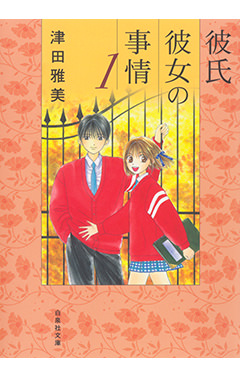
The publisher image inside this article is comic bunko volume one, identified by ISBN 9784592890010. The final bunko record uses ISBN 9784592890102 and a November 15, 2011 publication date. That date describes a collected edition, not the launch of a television continuation. The word bunko here describes the manga’s book format; it does not establish a light-novel adaptation.
This guide verifies anime and manga routes. It does not add a mandatory prose branch on the strength of a small-format cover, an art collection or a promotional booklet. Likewise, a rights catalog and a licensed Japanese comic store serve different purposes: one documents an adaptation, while the other offers a particular reading edition. Neither is a blanket promise of current English availability worldwide.
The television endpoint is not a manga handoff formula
King’s final-episode synopsis remains within school life and developing personal relationships. The television run does not provide the entire completed manga journey. For a source reader who wants the full context, start with the first volume of the chosen manga edition. We have not verified a precise read-from-this-chapter instruction through a scene-by-scene comparison of the final animation and a named source edition.
That distinction matters because page count is not an adaptation map. Dividing twenty-six episodes by twenty-one volumes would assume uniform coverage, matching scene order and identical emphases. It would also fail immediately for the ten-book bunko edition. A trustworthy selective jump would identify corresponding scenes and account for earlier material that was condensed, reshaped or left out.
Enoki’s export catalog displays some episode listings with additional parenthetical numbering. We retain the original twenty-six-episode route documented by King rather than treating those export labels as proof of a shorter original series. Similarly, King’s 2019 newly edited promotional video belongs to the Blu-ray campaign. A newly made advertisement is not an additional narrative season.
Original visual reference
Self-presentation becomes part of the form
Our reading begins with Yukino’s labor of appearing effortless. Her achievements are real, but her presentation controls what other people are allowed to see. Arima makes that arrangement unstable because rivalry creates attention she cannot simply direct. The opening comedy therefore does more than introduce an imperfect heroine. It makes the gap between a person’s public performance and private priorities visible.
The animated approach gives that gap a changing visual rhythm. Written thoughts, emphatic graphic interruptions and shifts in the density of an image can interrupt the smooth surface of ordinary school life. Instead of asking only whether a scene contains more movement, ask what receives emphasis: a spoken answer, a private thought or the sudden embarrassment of being understood. These are editorial observations about the adaptation’s expressive choices.
Romance then becomes an exercise in sharing information rather than merely winning attention. Being admired from a distance can preserve an ideal image; being known closely threatens it. That tension gives small exchanges weight even before larger conflicts arrive. Compare a manga conversation with its animated treatment by noticing pauses, competing thoughts and whose interpretation controls the scene, rather than assuming that identical dialogue produces an identical emotional effect.
The changing circle of friends also matters. A relationship formed around two carefully defended identities must eventually coexist with other people’s needs. Classroom and festival material can test whether honesty remains possible outside a private agreement between the leads. This perspective makes the ensemble part of the central question, rather than treating every supporting character as a delay on the route to a confession.
Credits and archival material offer a better starting point than rumor
King’s official listing credits Masami Tsuda’s LaLa manga, director Hideaki Anno, character designer and chief animation director Tadashi Hiramatsu, and music by Shiro Sagisu. Its episode records identify different contributors across the run, including Kazuya Tsurumaki and Hiroyuki Imaishi. Those credits support looking at individual episodes as collaborative work rather than assigning every visible choice to one person.
The 2019 Blu-ray campaign describes a hundred-page booklet with character material, sound-related documents, audition material, initial composition notes and opening storyboards. It also identifies interviews with members of the production team. For a reader interested in the making of the series, these are documented archival contents. They belong beside the story as reference material, not after episode twenty-six as another chapter of fiction.
Online explanations of the late episodes often connect their form to production disputes or resources. This article does not turn an unattributed explanation into a verified budget or personnel history. The official credits establish who is credited, while the archival interviews may supply more specific testimony. A claim about why a sequence looks a certain way needs evidence beyond the sequence looking unusual.
A recommendation should name the experience being recommended
The linked AnimeCollectors discussion is a small, self-selected conversation about an older DVD set. Participants praise the series and discuss its unusually demanding English subtitle presentation. That is useful as a lead about edition experience: translated on-screen writing can matter alongside spoken dialogue. It is not evidence that every release handles that material identically, or that all viewers rank the series the same way.
A practical recommendation should therefore mention both the romance and the presentation. Someone seeking an entirely conventional, fully closed animated adaptation may have different priorities from someone interested in experiments with school-romance storytelling. Neither preference can be settled by a single average. Our role is to show the format and coverage clearly enough that a visitor can decide which route suits the experience they want.
The displayed external score comes from AniList’s named 1998 television entry: 76 out of 100, shown as 7.6 out of 10 when checked on October 3, 2026. It is an audience aggregate for that animation entry. It is not our editorial grade, a manga score or an average across editions. MyAnimeList and the community discussion remain separate discovery links; spoiler-heavy comments should be opened deliberately.
A remaster campaign documents a product, not profitability
King’s Blu-ray box was released on March 27, 2019. Its campaign promotes a remastered presentation, archival booklet and video extras. Those details describe why that particular product differs from an older television or disc presentation. They do not establish a new story release, current inventory in every territory or the total money earned by the adaptation.
For buyers, edition checks are more useful here than an unsupported financial estimate. Verify the language options, treatment of written screen material, region compatibility and included extras on the actual edition being considered. The manga requires a similar check: standard-volume numbering and comic bunko numbering organize the same source differently. A used-book listing that omits the edition can make a collection appear incomplete when it is simply numbered another way.
No verified series-wide production budget, break-even calculation or adaptation profit statement is available in the primary records used for this article. A catalog price would not fill that gap: revenue depends on units and distribution arrangements, while profit also depends on costs. We keep the concrete product history and reading choices visible without inventing a commercial success percentage from the continued existence of a catalog page.
Use each source for the question it can answer
King’s official Blu-ray page supplies episode numbering, credits and the scope of the remaster product. Hakusensha supplies manga edition records and the correctly identified publisher cover. The licensed Hulu comic catalog confirms the twenty-one-volume standard listing. Enoki preserves a rights-catalog introduction and original television artwork. Together these sources establish the relationship between the source, adaptation and later editions without making the promotional dates part of the plot.
Use AniList and MyAnimeList for the named anime record, then approach the linked collector conversation as discussion rather than authority on the complete franchise. Community enthusiasm can suggest a useful question about subtitles or pacing; it should not overwrite a publisher’s edition information. Catalog synopses and comments can reveal later developments, so the opening-level description on this page is the safer starting point for a first visit.
For another source-and-adaptation comparison, the Fruits Basket guide separates its original television version from the later adaptation. That is a discovery connection, not a shared universe or required next step for Kare Kano. Finish this route by choosing either the twenty-six-episode animation or a complete manga edition. Future verified editions or adaptations can be added without changing those existing identifiers or silently rewriting the television endpoint.
Primary sources and useful navigation
- King Records · 26 episodes, credits and 2019 Blu-ray campaign
- Hakusensha · comic bunko volume one
- Hakusensha · comic bunko volume ten, final
- Hulu Japan · licensed standard manga, 21 volumes
- Enoki Films · original television rights catalog and art
- AniList · named anime audience score
Community and catalog routes
The production and publisher links support project facts. Catalog and community pages are secondary navigation and may reveal later events.
Explore related story guides
Original series imagery is reproduced under permission asserted by the site owner; the source and rights credits are retained. The route diagram is Animeteor’s own explanatory graphic.