Start with the 48 television episodes or manga volume one. The eight OVAs are optional; distinguish the 1988 alternate-treatment film from the 1996 adaptation of a 1994 novel.
Reviewed 3 October 2026 · Opening premise and adaptation relationships. Major endings withheld; linked catalog summaries and discussions may contain spoilers. · Licensed access varies by country.
The source and screen branches

Begin with television or manga. OVAs and the first film are optional branches; the studio confirms the later film adapts the 1994 novel. Games and live-action stay separate.
- WATCH · television: Episode 1 · school introduction → Episode 48 · television endpoint
- WATCH · optional animation: Eight OVAs · episodic companions · 1988 film · alternate treatment
- READ · manga and later prose: Source manga · volumes 1–18 · 1994 novel · later story → 1996 film · novel adaptation
A supernatural advantage cannot make a decision for Kyosuke
Kyosuke Kasuga moves to a new town with a family whose supernatural abilities must remain secret. He becomes interested in Madoka Ayukawa, while her friend Hikaru Hiyama approaches him with a confidence he cannot easily match. The result is a school romance built around hesitation, secrecy and different interpretations of the same encounter. Begin with television episode one or manga volume one, where the triangle is introduced without needing later outcomes explained.
The original 1987 television entry contains forty-eight episodes. Watch those in episode order for the main animated introduction. The eight original video episodes are optional additional adventures, and the two feature films need their identities stated separately. A box labeled OVA plus Movie does not contain the entire television series or both feature films. Its packaging is a useful inventory, but cannot replace a route description.
Choose manga for Izumi Matsumoto’s source storytelling, anime for the voices, music and extended school-life atmosphere. The Japanese source route finishes at volume eighteen. Prose becomes relevant to the later New Kimagure Orange Road material; it is not a novel that must be read before the original manga or television opening. Our map gives that later relationship its own branch.
Original manga, digital color and later prose are different reading choices
Shueisha’s first-volume record introduces the school triangle and credits Matsumoto. Its final digital color volume identifies volume eighteen as the completed endpoint. The color edition is a presentation of the manga, not a newly written sequel after the monochrome books. Check edition and language before comparing a volume count from a collector set against the eighteen-volume source route used here.
The first-volume digital record distinguishes its electronic publication from the original paper release. That matters for catalog research: a 2017 digital date is not the manga’s first appearance. The official source cover reproduced inside this guide identifies the Japanese edition rather than suggesting that an English translation with identical packaging is currently available everywhere.
Studio Pierrot explicitly identifies the 1996 film Summer’s Beginning as an adaptation of a newly written novel published in 1994. The Shizuoka municipal library also records a second Jump J Books prose installment, credited to Matsumoto and Kenji Terada and published by Shueisha in 1995. These establish genuine prose companions. We do not treat unavailable publisher-page shells as proof of a complete modern English novel catalog.
Separate the first film’s alternate outcome from the later novel adaptation
Pierrot describes I Want to Return to That Day as an original feature whose treatment of the three central relationships differs from both manga and television. It premiered on October 1, 1988, with a listed running time of sixty-nine minutes. Watch it after familiarity with the television cast, but understand that a different handling of the triangle is part of its identity. It is not simply the source manga’s missing final chapters converted into animation.
The original video collection contains eight installments, as confirmed by Discotek’s licensed product record. Pierrot’s OVA archive gives examples of additional situations including a ski trip, Hawaii and a pretend relationship. These offer optional episodic discovery. For a first viewing, keeping the collected OVA order is easier than interrupting the television run with an unverified scene-by-scene chronology. The map does not force the later-produced OVAs to occur after the first film’s outcome.
Summer’s Beginning is the separate 1996 feature, directed by Kunihiko Yuyama and based on the 1994 prose work. Its adult-era premise involves a time displacement between 1991 and 1994. Finish the introductory television experience before approaching it, then compare novel and film as a source-and-adaptation pair. We do not promise that reading one late chapter supplies every difference between the original manga ending, first film and later prose.
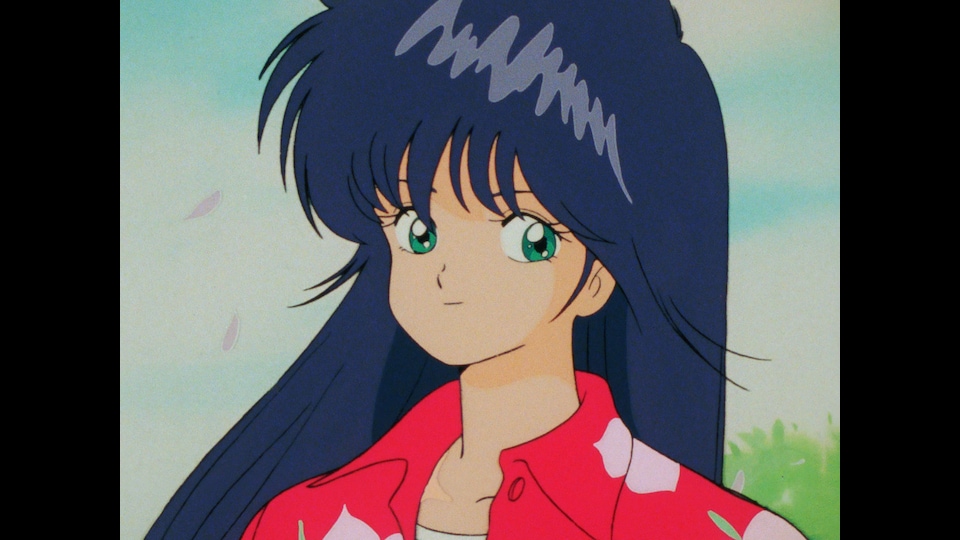
Original visual reference

Power makes avoidance easier without making it kinder
Our reading starts with the mismatch between extraordinary ability and ordinary responsibility. A character may be able to escape an awkward physical situation while still being unable to give someone an honest answer. The supernatural element therefore need not function as a ladder toward increasingly powerful opponents. It can magnify the familiar temptation to delay a difficult conversation until circumstances appear more convenient.
The triangle also works through unequal information. A person who sees affection as settled may interpret a gesture differently from someone still considering possibilities. Kyosuke’s hesitation becomes consequential because it allows incompatible expectations to persist. A useful comparison across versions asks who understands a promise, who merely assumes it exists and whose feelings become the price of preserving ambiguity.
Television comedy can repeatedly return to this uncertainty, producing a recognizable rhythm of discovery and retreat. A feature film concentrates attention differently: a shorter duration gives an unresolved relationship greater pressure to change. Pierrot’s own description confirms that the first film takes a different route. The viewer can therefore examine what each version considers necessary for closure without treating the most decisive version as the only legitimate account.
The later novel adaptation shifts the question toward time and adulthood. Looking at an older self makes the consequences of earlier choices visible in another register. That does not erase the school comedy’s appeal, but it changes the kind of uncertainty being explored. Compare what someone knows about the future with what they are willing to communicate now; a timeline device cannot perform that emotional work on their behalf.
The same franchise changes collaborators across its formats
Bandai Channel’s television credits identify Matsumoto’s Weekly Shonen Jump manga, director Osamu Kobayashi, series composition by Kenji Terada and character designs by Akemi Takada. Animation production is Studio Pierrot. The licensed cast includes Toru Furuya as Kyosuke, Hiromi Tsuru as Madoka and Eriko Hara as Hikaru. These are the original television credits, not a blanket assignment of every later film role.
The 1988 feature has Tomomi Mochizuki directing, Terada writing the screenplay and Takada designing characters. Pierrot credits Shiro Sagisu for its music. The 1996 novel adaptation instead names Yuyama as director, Takayuki Goto for character design and Yuki Kajiura for music, while Terada remains the screenwriter. Recording these differences helps explain why a later entry can feel distinct even when central cast voices return.
Terada’s presence across television scripting and the prose relationship is particularly useful for discovery. It connects production and authorship without making the novel the original source of the earlier manga. A visitor interested in staff can follow each credited version separately. Games and live-action, when documented on the site, remain separate adaptation discoveries and do not become links that must be followed to complete this animated route.
Collectors discuss versions as well as characters
The linked Reddit conversation begins with a collector disappointed by the lack of expected DVD extras. Replies compare editions and describe features remembered from Blu-ray sets. The exchange shows that returning to an older anime can involve translation notes, promotional material and the experience of a physical edition, not merely buying the same episodes again. This is a small collector discussion, not a controlled image-quality comparison.
Claims in that thread about transfers, production economics or future reprints are not adopted as official facts. A reader should compare a named edition’s licensed specification before spending money. Someone’s enthusiasm for VHS or Blu-ray tells us about their priorities, but it cannot guarantee the condition of a secondhand disc, subtitle options or the availability of stock in another country.
The named AniList television entry was checked on October 3, 2026, at 71 out of 100, displayed here as 7.1 out of 10. That weighted audience score applies to the original forty-eight-episode anime. It does not average the manga, OVAs or films into one franchise verdict. For someone deciding whether to start, the premise and viewing commitment provide a clearer practical guide than an isolated decimal.
Two licensed box descriptions do not guarantee present stock
Discotek maintains separate catalog pages for its television Blu-ray and the OVA-plus-first-film collection. The latter explicitly identifies eight original video episodes and I Want to Return to That Day. Use that distinction to avoid purchasing a companion set while expecting the television introduction, or assuming Summer’s Beginning is included because the packaging contains the word Movie.
A legacy catalog page establishes an edition’s existence and described contents. It does not automatically establish current retail stock, worldwide delivery or a future repress date. The publisher and retailer should be checked at purchase time. Manga discovery has the same issue: a verified Japanese digital listing and a historical paper publication are not promises that a particular English paperback can be bought new today.
The reviewed primary records do not provide a work-specific production budget or audited profit. A collector’s price, an old suggested retail figure or a fan’s recollection of distribution cannot supply those missing accounts. The commercially useful conclusion is narrower: identify which narrative and edition a product contains, then evaluate language, access and condition. Longevity in a catalog is evidence of continued discovery, not a revenue total.
Use the map to choose, then the source pages to identify the edition
For the main introduction, follow Bandai Channel’s licensed television record and the original forty-eight-episode identifier. For manga, Shueisha’s first and eighteenth digital volume records provide the source entry and endpoint, with color presentation clearly labeled. Reading from volume one is the reliable comparison offered here; a precise anime-to-chapter handoff has not been established by a complete edition-specific scene audit.
For optional animation, use Discotek’s eight-OVA inventory and Pierrot’s individual production descriptions. The 1988 feature should retain its alternate narrative treatment, while the 1996 feature should retain its documented 1994 novel relationship. The library record supplies independent bibliographic identification of another prose installment without turning a library holding into a worldwide sales link.
The Maison Ikkoku guide offers a separate long-form romance comparison, particularly useful for thinking about delay and responsibility. It is not part of this franchise’s continuity. Future verified editions can expand the discovery links without rewriting the core map unnecessarily. Keep each new item labeled as source, adaptation, optional episode or edition so that a larger catalog gives visitors more choice rather than more confusion.
Primary sources and useful navigation
- Bandai Channel · licensed television credits and original image
- Shueisha · original digital manga volume one
- Shueisha · digital color final volume eighteen
- Discotek · original television Blu-ray catalog
- Discotek · eight OVAs and first film inventory
- Studio Pierrot · first film and alternate narrative description
- Studio Pierrot · original video episode descriptions
- Studio Pierrot · Summer’s Beginning and 1994 novel relationship
- Shizuoka municipal library · second Jump J Books prose installment
- AniList · named anime audience score
Community and catalog routes
The production and publisher links support project facts. Catalog and community pages are secondary navigation and may reveal later events.
Explore related story guides
Original series imagery is reproduced under permission asserted by the site owner; the source and rights credits are retained. The route diagram is Animeteor’s own explanatory graphic.
A separately documented historical computer game
Microcabin’s own development catalog identifies a Kimagure Orange Road computer game: its PC-8801/PC-9801 entry is dated September 1988, with a separate MSX2 entry in the October portion of the 1988 catalog. These computer editions are outside the manga, TV, OVA and film story routes. The historical listing does not certify a current Windows edition, official English localization or present digital sale.