Watch the original 96 television episodes. Explore the film and specials afterward as optional companions. Read the source in 15 Japanese new-edition volumes or 10 English Collector’s Edition books.
Reviewed 3 October 2026 · Opening premise and adaptation relationships. Major endings withheld; linked catalog summaries and discussions may contain spoilers. · Licensed access varies by country.

The source and screen branches

Finish the main television run before optional companions. Film, side story and compilations are different products, not a chain of sequels. Manga editions are alternatives; games and live-action stay separate.
- WATCH · original television: Episode 1 · the new manager → Episode 96 · television endpoint
- WATCH · optional companions: Final Chapter · late-story film · Island side story · additional fiction · Seasons / Prelude · recap or special discovery
- READ · alternative source editions: Japanese new edition · 15 volumes · English Collector’s Edition · 10 books
A boarding house turns private uncertainty into public comedy
Yusaku Godai is preparing to retake college entrance examinations while living at Ikkoku-kan, a boarding house whose other tenants make quiet study difficult. Kyoko Otonashi arrives as the new manager, and Godai’s interest in her gives him another reason to remain. She is a young widow with a history that cannot simply be replaced by his enthusiasm. Begin with episode one or manga volume one, where that uneven starting point becomes part of everyday life.
The original television route contains 96 episodes. Bandai Channel divides its digital-remaster listing into first and second sections, while AniList identifies the full original television work as a single 1986 entry. Follow the original episode numbers through the run. Platform section labels do not establish a newly produced sequel or a different fictional continuity.
Choose television if you want the extended rhythms of the house, the voices and the changing musical atmosphere. Choose manga for Rumiko Takahashi’s source composition and a reading pace you control. The source is complete in fifteen Japanese new-edition volumes or ten English Collector’s Edition books. Those are alternative collections; neither must be read after the other to reach a missing ending.
The English Collector’s Edition is a new presentation of a completed source
Shogakukan’s official comic store identifies the fifteen-volume new edition as complete. VIZ marks its tenth Collector’s Edition volume as the final book. Its September 2020 editorial introduction explains that the collector release has a new translation, color inserts and ten books. This provides a concrete reason to identify the edition before comparing volume numbers, even when the work’s title remains unchanged.
VIZ also provides a licensed digital chapter library. That is a source-reading route with its own access conditions, not an anime episode list. A chapter displayed in an app and a numbered collected volume are different progress markers. Check whether a reading instruction refers to the collector books, an older English edition or the Japanese fifteen-volume collection before deciding that a volume is missing.
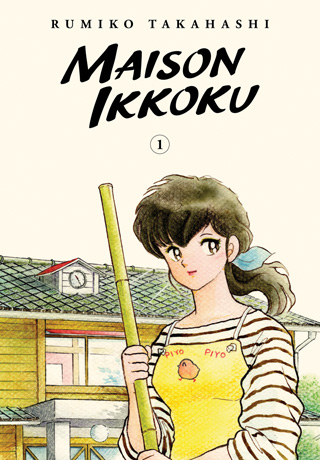
The original anime image at the top of this page comes from Bandai Channel’s licensed title catalog. The inner manga image is VIZ’s Collector’s Edition volume-one cover, deliberately chosen as an introductory edition reference. We do not classify a larger collected manga, a remaster disc or a music collection as a prose novel. The verified core relationship remains manga source and television adaptation.
A film called Final Chapter should not erase the television finale
The television run has its own final episode. The later film Kanketsu-hen, commonly cataloged in English as Final Chapter, is an optional animated addition for viewers who already know the television story. The licensed retail inventory for the film-and-OVA set describes its late-story setting. For a first visit, finish the numbered television run, then explore the film rather than using its title as a command to skip the series ending.
The same product inventory separates Ikkoku-tou Nanpa Shimatsu-ki, a shipwreck side story, from Utsuriyuku Kisetsu no Naka de, a compilation. The first is additional fiction; the second revisits the relationship through previously established material. Their presence on one disc does not make them two chronological sequels. Prelude is another separately cataloged special, which this guide leaves as optional discovery after the main experience rather than rearranging the first viewing around its title.
Reading the manga from the beginning is the reliable source route offered here. We have not verified a precise chapter handoff by comparing every scene around the television endpoint in a named edition. Nor do live-action or games become bridges between television and manga. They belong on separate adaptation pages and cannot settle which source scenes were condensed or reorganized for animation.
Original visual reference
The neighbors are part of the relationship’s pressure
Our interpretation begins with the boarding house as an unreliable boundary. Godai has a room, but its privacy is repeatedly interrupted. Studying, sleeping and trying to express a feeling become activities that other people can observe or disrupt. This gives the comedy a recurring physical structure: he is trying to build a future in a place that continually turns his plans into shared entertainment.
The same structure makes misunderstandings difficult to contain. A half-heard exchange or an awkward arrival can become a group’s interpretation before either of the central characters has explained it. The neighbors therefore do more than supply jokes between romantic scenes. They influence when information circulates and how a person’s conduct is understood, turning private hesitation into a social event.
Kyoko’s widowhood creates a different experience of time from Godai’s uncertainty about examinations and work. He imagines a future he has not secured; she has already lived a relationship whose absence remains present. Treating both as merely obstacles to a confession would flatten the story. A useful reading asks when someone listens to that difference and when they assume affection grants them the right to decide how quickly another person should move.
Long-form comedy can make delay frustrating and meaningful at once. Repeated routines allow a later change in behavior to stand out, but the viewer may also feel how often the characters fail to communicate. Comparing manga and animation means noticing whether a pause gives someone emotional space or simply prolongs confusion. The question is not just how fast the couple progresses, but what responsibilities they become able to recognize along the way.
The licensed credits distinguish the television collaboration
Bandai Channel credits Takahashi’s Big Comic Spirits manga, published by Shogakukan, and lists Kitty Film for television production. Its directing and episode-treatment credits include Kazuo Yamazaki, Takashi Anno and Naoyuki Yoshinaga among the contributors. The named original television catalog on AniList identifies Studio DEEN. These records describe complementary production roles rather than interchangeable claims that one company performed every task.
The licensed cast record identifies Sumi Shimamoto as Kyoko and Issei Futamata as Godai, with Shigeru Chiba as Yotsuya, Yuko Mita as Akemi and Kazuyo Aoki as Ichinose. Those distinct voices make the boarding house’s interruptions recognizable as relationships, not simply background noise. The humor can depend on who intrudes and how much familiarity the audience has acquired with that person’s habitual behavior.
Pony Canyon’s official music catalog offers a collection of television themes, character songs and background music. It supplies a verified companion discovery for visitors drawn to the anime’s musical atmosphere. The album is a music product with a release date and track inventory, not additional narrative coverage. Its existence also does not tell us how much the animation cost or how music licenses were divided across every international edition.
A rewatch can be about ordinary details rather than the destination
The linked MaisonIkkokuAnime discussion concerns a reader deciding between a group rewatch and a later anniversary-paced viewing. Replies discuss leaving enough time to forget smaller details, and one participant corrects the remembered starting date of the watch party. This is a small conversation, but it shows a useful distinction: a fan-organized schedule can change the experience of watching without becoming official release information.
The attraction of returning to a long domestic comedy may lie in recognizing everyday behavior before it becomes significant. An early joke can acquire a different feeling once the viewer understands a character’s uncertainty. That is our interpretation, not a measured audience-wide result. A first-time visitor should still be told the length of the commitment: ninety-six episodes offer sustained familiarity, but someone seeking a brief romance may prefer to sample the opening or begin with a manga preview.
The external score belongs to AniList’s original 1986 television entry, checked on October 3, 2026: 78 out of 100, displayed as 7.8 out of 10. It does not average the film, specials and manga together. MyAnimeList and the subreddit are separate navigation links. Comments and final-volume summaries can reveal outcomes, so the opening-level explanation here is the safer guide to deciding whether to begin.
A remaster is a release history, not a new narrative
Bandai Channel’s March 1, 2013 announcement connects the digital-remaster campaign for several Takahashi adaptations with Shogakukan’s ninetieth anniversary. It explicitly distinguishes the planned HD Blu-ray presentation from the SD streams being introduced at that campaign’s launch. The historical announcement therefore cannot be used as proof that every present platform stream is identical to a Blu-ray master.
VIZ’s Collector’s Edition has its own publishing history: the first English book was released on September 15, 2020, and the publisher later marks book ten as final. Its new translation and color material are documented product features. Current digital access, print stock and a secondhand seller’s condition are separate questions. An older edition can remain readable without being identical in formatting or translation to the collector release.
These sources do not establish a Maison Ikkoku-specific production budget or profit statement. Takahashi’s author page discusses her wider career, so any author-wide circulation or recognition should not silently become a revenue figure for this one work. The practical commercial information here concerns edition identity and legal discovery routes. It helps a reader choose a product without manufacturing a profitability claim from a long-running catalog presence.
Choose one main route before exploring the companions
Use Shogakukan’s fifteen-volume completion record for the Japanese new edition and VIZ’s final-volume listing for the ten-book English collector route. VIZ’s editorial introduction explains the translation and presentation changes, while its chapter library offers licensed digital discovery. Bandai Channel supplies the television introduction and credited contributors; the full television identifier preserves the ninety-six-episode scope across platform sections.
The film-and-OVA inventory is useful for distinguishing late-story fiction, a side story and a compilation. It is a product listing rather than a current global viewing guarantee. The separately cataloged Prelude entry remains optional, and none of these companions is required before the first episode. Music discovery belongs beside them as a different kind of experience, with the official Pony Canyon album record identifying the product.
Takahashi’s other works, including Ranma 1/2 and Inuyasha, are author discoveries rather than steps in Maison Ikkoku’s chronology. The Honey and Clover guide offers a separate comparison of work, uncertainty and relationships. Future editions can be added with their language and identifier recorded. The main map will continue to distinguish original television, optional animation and alternative source editions so that a new catalog label does not create an invented sequel.
Primary sources and useful navigation
- VIZ · official manga and creator introduction
- VIZ · Collector’s Edition first-volume preview and original cover
- VIZ · Collector’s Edition final book ten
- VIZ · 2020 editor introduction and new-translation features
- VIZ Manga · licensed source chapter library
- Shogakukan · completed fifteen-volume new manga edition
- Bandai Channel · first television catalog section and original artwork
- Bandai Channel · later television catalog section
- Bandai Channel · March 2013 remaster announcement
- Tower Records · film-and-OVA product inventory
- Pony Canyon · themes, character songs and BGM companion catalog
- AniList · named anime audience score
Community and catalog routes
- MyAnimeList · named anime catalog
- AniList · optional Prelude catalog discovery
- Reddit · discussion of anniversary rewatch pacing
The production and publisher links support project facts. Catalog and community pages are secondary navigation and may reveal later events.
Explore related story guides
Original series imagery is reproduced under permission asserted by the site owner; the source and rights credits are retained. The route diagram is Animeteor’s own explanatory graphic.
A separate performed film and historical computer-game record
The National Diet Library’s held-disc record identifies the 1986 performed Apartment Fantasy film directed by Shinichiro Sawai, with screenplay by Yozo Tanaka and Mariko Ishihara and Ken Ishiguro among its cast. Toei Video’s DVD DSTD-02482 was published in July 2005; the disc month is not the original theatrical premiere day. This performed product remains outside the anime route.
Microcabin’s development history lists Maison Ikkoku for PC-9801 in December 1986, further computer ports and a June 1989 PC Engine entry. These are distinct historical versions; the history does not supply exact release days, current availability or original interactive image packs.