Choose the 1988 feature or manga volume 1. After the film, begin the manga from its opening; an exact edition-specific continuation chapter is not certified.
Reviewed 3 October 2026 · Opening premise and adaptation relationships. Major endings withheld; linked catalog summaries and discussions may contain spoilers. · Licensed access varies by country.
The source and screen branches

The film and manga are distinct presentations. No exact post-film chapter handoff is certified; edition and restoration dates do not create a sequel.
- READ · source manga route: Named story volume 1 → Continue six-volume sequence
- WATCH · animated feature: Akira · 1988 film → Restoration is the same feature
Choose the feature or begin the six-volume manga from its opening
Akira offers two substantial entry routes: Katsuhiro Otomo's manga and the animated feature he directed. The film is a single 1988 production, with a 124-minute running time identified by theatrical distributor Piece of Magic. The manga's named Kodansha Hardcover Collection follows a six-volume structure. Choose the feature for one complete film presentation, or volume one for the reading route.
The two share a city, an initiating encounter and central people, but a film-to-chapter continuation requires more evidence than recognizing an event in both versions. This guide has not certified an exact jump after the film. Start the manga at its own beginning if moving from screen to page, allowing the book to establish its relationships and progression.
The opening premise involves Kaneda, Tetsuo, a motorcycle incident and forces linked to government experimentation in Neo-Tokyo. We leave the later transformations and final outcome unexplained. The original visual reference below is discussed only for framing and reactions, not used to identify the cause of the pictured event or to turn the guide into an ending recap.
The current Hardcover Collection specifies its reading direction
Kodansha's first Hardcover Collection record specifies right-to-left reading, Otomo's hand-drawn Japanese sound effects, and updated translation and lettering associated with the 35th Anniversary box edition. It identifies individual books within a six-volume presentation. These are useful edition facts for an English-language buyer; they do not describe every older printing that uses the same Akira title.
Check whether the product is a single volume, a set, an older differently presented printing or a book of supplementary material. A collector item's cover can be recognizable while its contents serve a different purpose. Begin the numbered story books at one and follow their own sequence rather than translating a remembered film moment into an assumed page number.
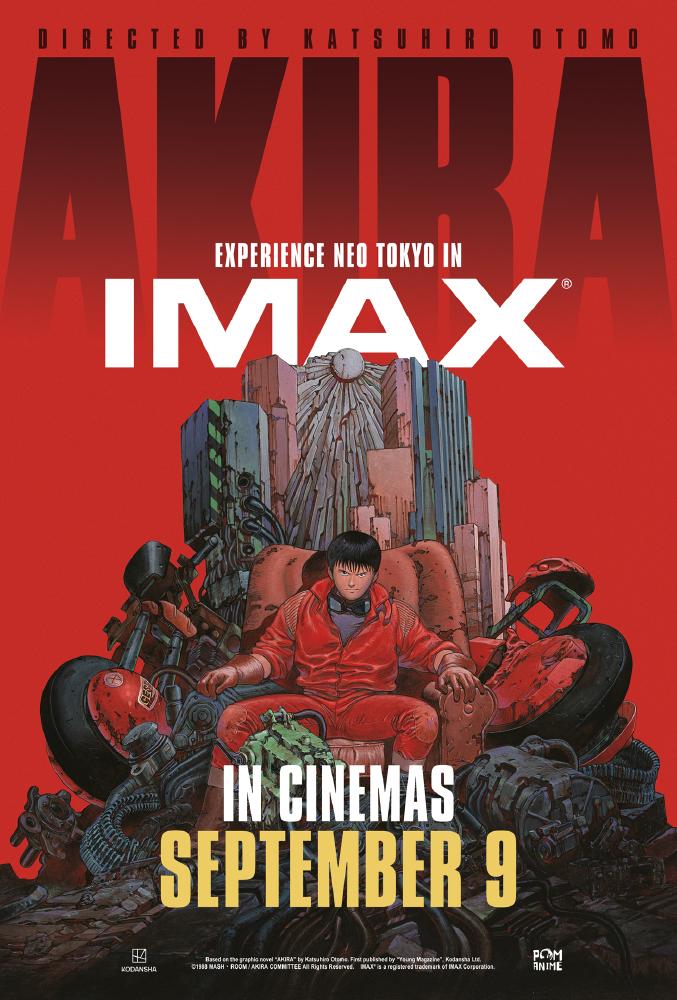
The distributor's restoration page lists a September 9, 2026 release and supplies the poster reproduced here. That is a dated distributor listing for a restored presentation of the 1988 film, not a new narrative sequel or proof of a currently available screening in every country. The page does not establish a universal streaming date, and its advertised cinema format should not be transferred to unrelated home-video editions.
| Presentation | Start | Edition check |
|---|---|---|
| 1988 animated feature | Beginning of the film | Language and actual restoration specifications |
| Six-volume manga route | Story volume 1 → 6 | Edition’s numbering and reading direction |
| Hardcover Collection | Individual numbered story book | Right-to-left and original sound effects specified |
| 2026 restored cinema listing | Same named feature | Distributor-specific date, not worldwide availability |
A seated figure and three startled faces offer opposing appearances of control
The original restoration poster above seats a red-clothed figure among heavy machinery and architectural forms. Its typography advertises the theatrical presentation. The distributor's film reference below instead shows three people with open mouths and widened eyes, the central red-clothed figure closest to the viewer, against a dark space and a large indistinct form.
Our interpretation follows the difference between composed authority and visible reaction. The poster organizes machinery around a stationary central body; the film reference directs attention toward faces responding to something outside the viewer's complete knowledge. That observation comes from the inspected assets. It does not establish that the poster depicts a literal scene or that the two images occur next to each other in the story.
The contrast makes a productive viewing question: when does apparent command become a response to forces a person cannot fully understand? We intentionally leave the reference's exact position and cause unnamed. The still can support a reading of scale, gaze and bodily reaction, while a detailed account of the event would require a separately marked spoiler analysis of the actual sequence.
Original visual reference

Neo-Tokyo’s reconstruction does not settle who controls its future
The distributor's premise locates the film in a rebuilt metropolis preparing for an Olympic event while gangs and military experimentation shape other parts of urban life. Our reading asks how a city's promise of progress coexists with experiences of disorder and exclusion. Rebuilding a physical space does not automatically produce agreement about what that space is for.
A motorcycle gang's movement through streets offers one relationship to the city, while the laboratory offers another. One makes space available through mobility and local belonging; the other manages people and information behind institutional boundaries. Follow how the film changes the viewer's access between those spaces rather than treating every city image as decorative cyberpunk scenery.
The poster's mixture of body, architecture and machinery gives a compact visual invitation into that question. What appears as a central seat can also look surrounded by accumulated systems. This is an interpretation of composition, not evidence for a particular building's engineering or a complete political history. The manga can develop its urban world through its own page sequence, which should be read before making a detailed adaptation comparison.
A friendship becomes harder to read when power changes its balance
The opening premise gives Kaneda and Tetsuo a connection before the incident that brings Tetsuo into military custody and extraordinary power. Our interpretation asks how an existing relationship changes when one participant gains an ability others do not understand. Familiar habits can become unstable even before a character consciously decides to change them.
For a first viewing, follow who offers help, who defines another person's condition and who decides what protection should look like. These are different forms of control. A rescue can be experienced differently by the person trying to act and the person receiving that action. The guide keeps the question open rather than supplying the final judgment of either character's decisions.
The three faces in the selected reference are useful for discussing reaction without narrating the surrounding event. They make vulnerability visible in a presentation otherwise famous for technological and bodily spectacle. A future sequence analysis could compare gestures and dialogue across the named editions, but this entry guide does not claim a complete manga-to-film panel match from one distributor image.
Otomo’s authorship connects the media without making their forms equivalent
Kodansha credits Otomo for the manga and the theatrical distributor identifies him as the film's director. The named AniList film entry identifies Tokyo Movie Shinsha as its studio. These establish creator and production connections that a reader can follow while keeping a comic's authorship distinct from the collaborative work of an animated feature.
The same creator working across media is a reason to examine choices, not a reason to assume there were no choices. A page can distribute attention through panel arrangement and a reader's pace; a film organizes duration, sound and movement. Whether a particular moment changed its emphasis requires inspection of the actual scene and corresponding named pages, not simply the shared author credit.
For creator discovery, Kodansha's current book description also names other Otomo works, including Memories, Steamboy and Domu. Those are optional creative connections, not additional Akira chapters or prerequisites. Complete the selected Akira route first, then follow the particular medium or creative contribution that interested you.
Reader advice about a continuation chapter is not a verified handoff
The AniList audience score displayed here belongs to the 1988 animated feature. It does not include the six-volume manga or automatically score the restoration's technical quality. A visitor deciding whether to read a lengthy comic after a single film should consider that scope before treating one number as a combined verdict on both experiences.
The linked 2023 Reddit question about where the film ends in the manga contains differing reader estimates involving different volumes and disconnected portions. Those comments illustrate why a convenient chapter answer needs checking; they do not certify one. Our safe recommendation remains volume one because this guide has not completed an edition-specific scene-to-page handoff audit.
The encyclopedia and work-specific community links are optional deeper navigation. They can disclose later events immediately, particularly when answering ending questions. First-time readers can stay with the opening premise and edition table, then return for adaptation debate after seeing how each presentation develops its own relationships. A personal preference for the film or manga is not evidence that the other must be skipped.
Restoration notices and collector formats do not establish profit
The distributor's 2026 restoration record and Kodansha's individually available Hardcover Collection identify different ways of returning to an older work. One is a cinema presentation; the other describes a book edition. Compare the actual territory, language, contents and advertised specifications for the product being considered rather than treating an anniversary or restoration label as sufficient information.
No audited production budget, net profit or current franchise valuation was verified for this guide. The visibility of Akira, the number of editions and the film's catalog response cannot responsibly be converted into a financial total. The useful commercial comparison for a visitor is whether a release clearly supplies the selected story route and reading or viewing format.
Choose the feature or manga volume one, complete that presentation, and revisit the other medium from its beginning if interested. Keep restoration and supplementary books distinct from narrative continuation. Patlabor 2 offers another older film about institutional power and a threatened city, while RahXephon supplies a different relationship between an ordinary urban beginning and an unfamiliar system outside Akira continuity.
Primary sources and useful navigation
- Kodansha · current Hardcover Collection volume one
- Kodansha Japan · original numbered volume six
- Piece of Magic · feature premise, restoration listing and original imagery
- AniList · named anime audience score
Community and catalog routes
- MyAnimeList · named anime catalog
- Wikipedia · Akira film navigation, spoilers possible
- Reddit · 2023 film-to-manga question, ending spoilers
- Reddit · Akira community
The production and publisher links support project facts. Catalog and community pages are secondary navigation and may reveal later events.
Explore related story guides
Original series imagery is reproduced under permission asserted by the site owner; the source and rights credits are retained. The route diagram is Animeteor’s own explanatory graphic.