Watch the 2020 anime in episodes 1–12, or enter Yako Kureishi’s source manga at volume 1. Coamix lists six Japanese collected books and an ended publication; this does not certify that all planned narrative questions were resolved.
Reviewed 2 October 2026 · Opening premise and format relationships; major ending revelations withheld. Linked publisher summaries and discussions may reveal later events. · Licensed access varies by country.
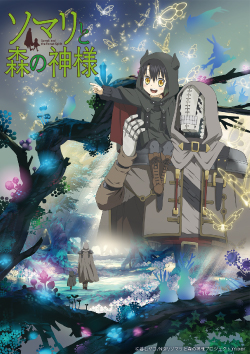
The source and screen branches

Published routes, not an exact chapter concordance. No verified novel branch is inserted; ended publication is not used to promise complete narrative closure.
- READ · original manga: Source manga · volume 1 → Six Japanese collected volumes · publication ended
- WATCH · 2020 television: Episode 1 · Traveling Parent and Child → Continue through episode 12
A manga journey and its twelve-episode screen adaptation
Somali and the Forest Spirit originates in Yako Kureishi’s manga. Coamix’s Japanese catalog lists six collected volumes and identifies the title as an ended publication. The 2020 television version has twelve main episodes. These are distinct publication records, not a reason to divide six books into twelve equivalent pieces.
Begin the comic at volume 1 for the source presentation, or watch episodes 1–12 in order for the screen route. No independently verified novel edition is established in the primary records inspected here. The map consequently contains manga and anime branches without an invented prose origin.
An ended publishing run does not by itself prove that every planned narrative question received a complete resolution. We describe the six books that the publisher actually lists, rather than promise a fully resolved future for the characters. A visitor can choose the existing material without being sold a conclusion the catalog does not demonstrate.
| Route | Verified starting point | What this confirms |
|---|---|---|
| Manga | Volume 1 → six Japanese collected books | Source publication; catalog marks title ended |
| TV anime | Episode 1 → 12 | 2020 screen adaptation |
| Novel | No confirmed edition in this review | No speculative reading lane |
| After TV | Return to manga volume 1 | No exact continuation chapter certified |
Six Japanese books do not establish every language edition
The Coamix series page identifies the creator and the Japanese collected-book count. Its links to physical and digital stores describe available products within that catalog. They do not establish that an English publisher has issued the same six-book set, with the same dates, bindings or supplementary material.
Coamix’s April 2019 new-release notice includes volume 6. That is a dated publisher record for a real book, rather than an estimate derived from fan chapter lists. A retailer’s translated title still needs its own publisher, language and ISBN before it can be presented as a verified localized edition.
We also avoid assigning a reason for the publication ending from an unattributed social-media explanation. Creator circumstances deserve a directly inspected statement if they are included at all. The useful information here is the supported catalog state and how to enter the material, without speculating about personal events.
A beautiful television ending is not a chapter concordance
This review has not matched the entire final anime episode against an identified manga edition to establish a precise after-anime chapter. The recommended source entry is therefore volume 1. Twelve television installments and six collected books provide no reliable arithmetic shortcut to a continuation point.
A proper handoff would need to identify the last incident shared by the two versions, compare the characters’ circumstances and record any earlier scenes omitted or rearranged for television. It should also distinguish a chapter number from its location in a particular binding. Those are useful editorial checks rather than a promise that all episodes adapt equal amounts.
Starting again is a recommendation with a clear cost: some situations will be familiar. Its benefit is that the visitor encounters the source’s own timing and transitions. If a directly inspected concordance is added later, this section can offer a shorter route while retaining the beginning as an alternative.
Somali’s curious face inside a dangerous world
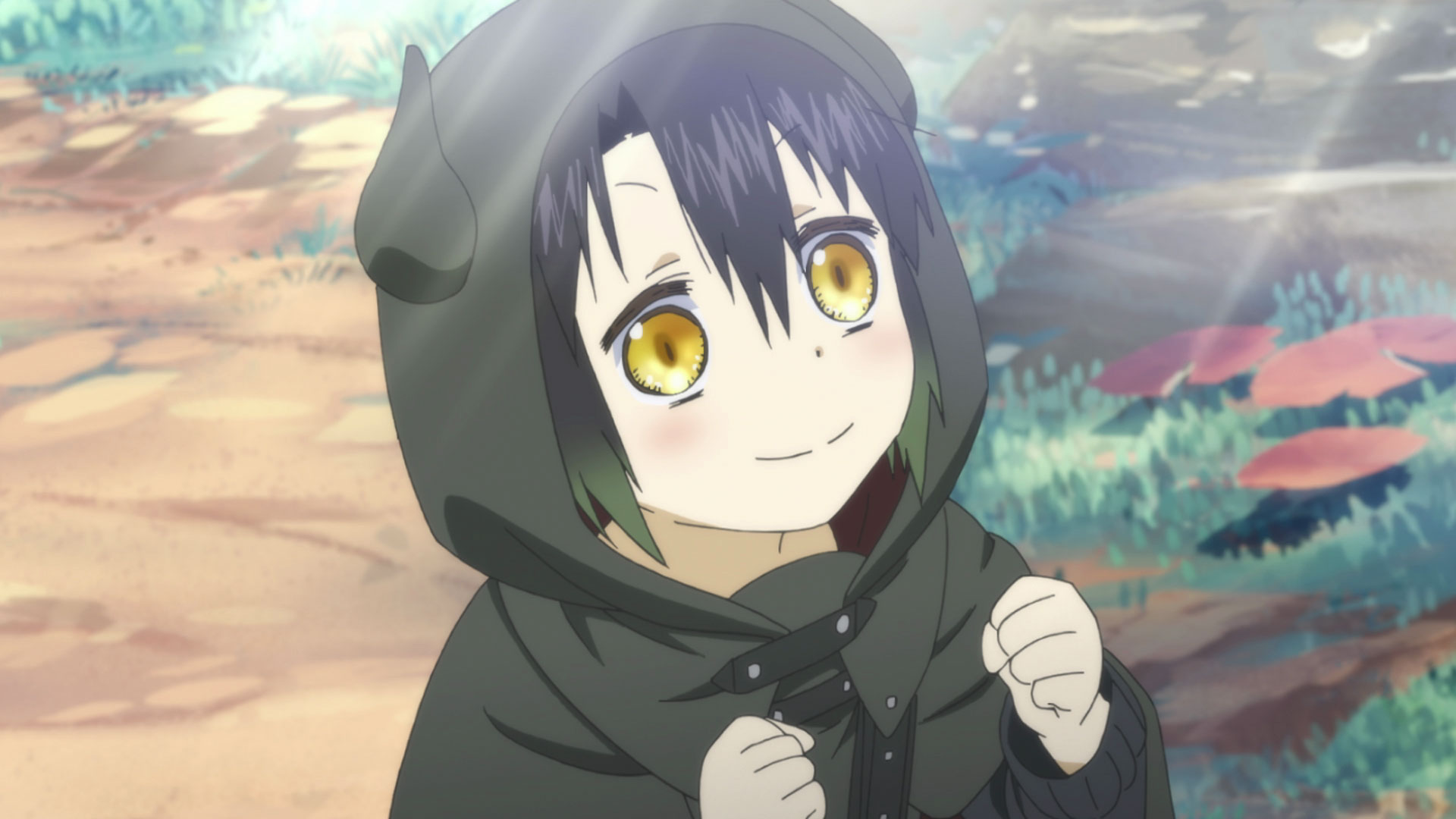
The selected original first-episode frame shows Somali beneath a dark hood, her large golden eyes and hand held near its fastening, against brightly colored surroundings. The intact 1920-by-1080 image retains the setting around her instead of isolating her face into a portrait card.
The distributor’s opening synopsis describes the Golem taking Somali on a journey to find humans, their arrival in a city and her curiosity drawing her away in the crowd. The studio’s premise explains why her humanity must be concealed. Our interpretation of the still is that the expressive face and saturated setting make exploration attractive before the viewer weighs its danger.
That visual reading does not identify an unseen threat just outside the frame or certify a matching manga panel. The official synopsis supplies the situation; the still supplies the composition and color. Keeping those kinds of evidence separate makes an illustrated analysis more precise than attaching a plot claim to every decorative image.
Original visual reference
Protection changes when the protected person has a voice
The opening premise brings a forest guardian and a human child together in a world hostile to humans. Our reading is that the relationship becomes interesting when protection must respond to a child’s curiosity. Concealment can preserve safety while also restricting how Somali learns about the people and places around her.
A useful question for the journey is who gets to explain a decision. The guardian can recognize risks that a child cannot assess, but an instruction alone does not make the unfamiliar world understandable. Scenes of explanation, waiting and reassurance can show care as repeated work rather than a title one character possesses.
This also gives ordinary travel actions narrative weight. Holding a hand, managing an absence or answering a question can reveal dependence more clearly than a declaration of affection. We leave later outcomes undisclosed; the opening already offers a way to watch how a practical protective role develops into a relationship.
A picture-book appearance can complicate a threat
The colorful forests and unusual inhabitants invite the visitor to look closely. Our interpretation is that the inviting surface creates a useful tension with the premise’s persecution. An attractive world is not automatically an accepting one, and unfamiliar beings should not be judged solely by whether their designs appear friendly.
That tension can also make an encounter more nuanced. If every danger looked obviously monstrous, the characters would have less need to assess conduct, promises and motives. A journey through appealing places can ask whether trust follows appearance or something a person actually does.
For viewers expecting continuous combat, the movement between places and relationships may be the more relevant attraction. This guide belongs alongside other travel-and-care stories for that reason. The comparison is about the work of accompanying somebody through uncertainty, rather than claiming that all fantasy road stories have the same pace or emotional effect.
Adaptation credits and a bounded audience response
The production records name Kenji Yasuda as director, Mariko Mochizuki for series composition and Ikuko Ito for character design; Satelight lists the project among its works. These screen roles are distinct from Kureishi’s authorship of the comic. A studio portfolio is evidence of production involvement, not proof that the studio wrote the source story.
On Bandai Channel, the user kinsyachi’s 13 January 2020 response appreciates the picture-book appearance while questioning the values implied by the guardian’s relationship with nature and intervention. This is one viewer’s early interpretation. It gives a useful counterpoint to simply praising the attractive scenery, without establishing a consensus or the meaning of the entire series.
Our analysis treats that question as something to examine through decisions in the story: when does observing become responsibility? The displayed AniList audience score belongs to the 2020 twelve-episode TV entry. It is not a rating of the source manga, an English translation or an aggregate of every product using the title.
Publication and distribution evidence have a narrower scope than profit
The publisher’s six-book catalog, dated volume notice, studio portfolio and licensed distributor’s episode records demonstrate that the property reached readers and viewers through separate channels. They do not provide an audited title-level revenue total, production budget or net profit. We do not convert the existence of books and streaming into a financial success figure.
For practical navigation, use Coamix to inspect the original publication and the licensed distributor for the screen version’s episode identities. Regional availability can change; an episode page is not a promise of access from every country. Language-specific purchases require an edition record beyond the Japanese catalog checked here.
Choose the anime for its timed visual and vocal presentation or the manga for the source’s own page rhythm. The travel-and-care collection offers other companions and journeys to compare after this guide. Future maintenance can add a confirmed localized edition or directly inspected handoff, while preserving the distinction between a ceased publication and a promised complete narrative resolution.
Primary sources and useful navigation
- Coamix · original manga, creator and six-book catalog
- Satelight · official production portfolio and premise
- Bandai Channel · licensed series, credits and reader responses
- Bandai Channel · opening episode and original image
- Bandai Channel · final numbered episode
- Coamix · April 2019 release notice including volume six
- AniList · named TV audience score
Community and catalog routes
The production and publisher links support project facts. Catalog and community pages are secondary navigation and may reveal later events.
Find this work in our thematic collections
Original series imagery is reproduced under permission asserted by the site owner; the source and rights credits are retained. The route diagram is Animeteor’s own explanatory graphic.