Start novel one or the first Slayers television series. Follow NEXT, TRY, REVOLUTION and EVOLUTION-R as named screen productions; keep films, OVAs and manga as separately identified branches.
Reviewed 2 October 2026 · Opening premise and format relationships; major ending revelations withheld. Linked publisher summaries and discussions may reveal later events. · Licensed access varies by country.

The source and screen branches

The TV route continues from TRY into REVOLUTION and EVOLUTION-R. Source volumes and optional productions do not share a certified one-to-one chronology.
- READ · prose: English novel · volume 1 → Continue named novel editions
- WATCH · classic TV: Slayers → NEXT → TRY
- WATCH · later TV: REVOLUTION → EVOLUTION-R
- OPTIONAL · branches: Named films / OVAs / manga · Not a certified novel handoff
Begin with Lina’s first novel or the first television series
Slayers offers a source-prose route and a separately organized animated route. J-Novel Club identifies Hajime Kanzaka as author and Rui Araizumi as illustrator of its English novels. Begin with volume one if you want the source’s own introduction and narrative voice. A later volume synopsis may spoil earlier events.
For television, follow the named series: Slayers, NEXT, TRY, REVOLUTION and EVOLUTION-R. King Records’ edition catalog and TV Tokyo’s production archive distinguish these titles. The release sequence is a useful screen route, but it should not be read as five consecutive blocks matching five consecutive source volumes.
Films, OVAs and separately titled manga are optional branches requiring their own product labels. Choose a particular branch rather than insert every item between television episodes. This guide does not certify a post-anime novel volume or a single chronology containing every Slayers product. Games stay outside the core roadmap.
Digital novels and screen boxes use different numbering
J-Novel Club’s series page lists individual English volumes through seventeen at this review. Its chapter-part subscription interface is distinct from complete ebook volumes: a reading part is not necessarily a separately published novel. Check the product and access terms when deciding between a purchase and a subscription.
King Records lists separately named television Blu-ray boxes. Their catalog dates describe those Japanese editions, not the original story’s first publication or a newly announced television sequel. REVOLUTION and EVOLUTION-R share a box while retaining different production titles, so the package count and the installment count differ.
A source comparison should also identify the translation used. Older editions and a maintained publisher’s current products can have different presentation and numbering. This guide points to the verified English prose catalog instead of assuming a used copy and a current ebook have identical extras or a matching page layout.
A treasure theft puts Lina’s self-image under comic pressure
J-Novel Club’s first-volume introduction places Lina in trouble after taking bandit treasure and encountering a dangerous artifact. Its first-person promotional voice foregrounds confidence and irritation. The selected official English cover belongs to that novel; the television box campaign image belongs to a separate screen presentation.
Our reading asks how an apparently assured storyteller explains a situation that has escaped her control. The comic tension lies between the identity she claims and the inconvenience unfolding around her. This is a useful entry point to the series without requiring disclosure of the artifact’s eventual consequences.
The case compares the licensed publisher’s introductory framing with original edition artwork. It does not reproduce an episode scene or certify identical dialogue across formats. A full comparison would need the named translated passage and its actual television counterpart, rather than infer scene-level faithfulness from recognizable characters on a cover.
Original visual reference
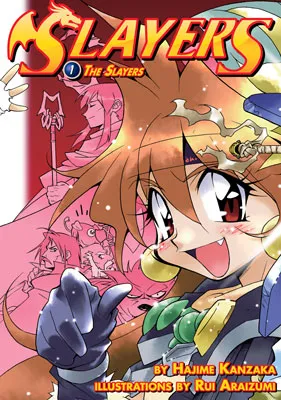
Confidence can be both competence and a storytelling tactic
Our interpretation treats Lina’s confident presentation as something to examine rather than simply accept or dismiss. A narrator can be capable while arranging a story to make their decisions look reasonable. Humor emerges when the audience notices a difference between explanation and consequence.
In prose, track the words used to describe an inconvenience or another person’s behavior. Does the narrator acknowledge responsibility, minimize it or redirect attention toward the next obstacle? Those choices create a relationship with the reader, who is invited to enjoy the performance without believing every self-assessment equally.
Animation can redistribute that effect through timing, reaction shots and other characters’ responses. The comparison is about how confidence is communicated, not a claim that one medium inherently gives a truer Lina. A specific judgment needs the corresponding licensed material; the introductory voice merely establishes a productive line of inquiry.
A travel companion is more than a missing skill in the party
A party can be described through abilities, but our reading considers what happens when its members interpret the same situation differently. A person useful in combat may misunderstand an ordinary exchange. Somebody with knowledge may still need assistance. That unevenness keeps companionship from becoming a simple inventory of strengths.
Notice who explains a plan, who interrupts and who changes their mind. Comic friction can reveal how a group negotiates its priorities. Disagreement is not automatically a failure of friendship; it may be the means by which one character’s confidence is challenged before it becomes everybody’s problem.
This also changes the way a newcomer approaches a long series. The pleasure may come from familiar people responding to a new predicament rather than a constantly larger enemy. Edition and season labels help locate those encounters, while character analysis explains why returning to the group can remain rewarding.
Comedy does not remove the consequences of magical power
Our interpretation asks how far comic exaggeration carries a viewer before the setting demands a more serious response. A spectacular spell can be amusing because of its scale while also establishing that the characters possess consequential power. The change of tone matters more than a list of attack names.
Track what happens after the punchline. Does somebody repair damage, apologize, leave or face a new obligation? Those responses indicate whether the joke has suspended consequences or postponed them. A close reading can find tension in that transition without treating every light scene as meaningless filler.
Different adaptations can balance comedy and danger differently. That is an editorial comparison to explore, not a universal statement that all prose is serious or all animation is slapstick. The named publisher and television records identify versions; evidence from scenes is needed before assigning an entire format one fixed emotional character.
Author, illustrator and the first television audience remain identifiable
J-Novel Club credits Kanzaka, Araizumi and translator Elizabeth Ellis in its English series record. King Records and TV Tokyo provide production and edition navigation for the screen branch. Those sources distinguish prose authorship, visual illustration and audiovisual production instead of making a studio the author of the original novels.
The displayed AniList score belongs to the 1995 first television series only, checked on 2 October 2026. It does not combine NEXT, TRY or the novels. A property-wide average would erase differences between versions and audiences, so it is not created here.
The linked Reddit discussion asks whether to start with animation or prose. Its replies offer preferences about tone and editions. They are individual experiences rather than verified source coverage. Use those questions to decide what interests you, then confirm the named edition through the official links before making a continuation claim.
A rescue edition and a box release need product-specific interpretation
A maintained English prose catalog and Japanese television boxes serve different audiences and buying decisions. Their existence shows ongoing publication routes, not a verified count of active fans or an automatic revival of the television story. Repackaging and a new narrative installment should remain separate labels.
No audited title-level profit or complete production budget was verified. Publisher availability, retail price and an audience rating are not a substitute for those measures. A later commercial analysis can compare licensed editions only after keeping dates, regions and the reported units visible.
Begin novel one for the prose voice or the first television series for the screen ensemble. Follow the named television sequence, then explore separately identified films, OVAs or manga according to your interests. A future update can add an exact inspected source comparison without turning optional side material into mandatory viewing.
Primary sources and useful navigation
- KADOKAWA · Rui Araizumi comic edition
- J-Novel Club · novels, translation credits and volume list
- King Records · television Blu-ray edition catalog
- King Records · named series products
- TV Tokyo · five named television productions
- AniList · named adaptation audience score
Community and catalog routes
- MyAnimeList · named adaptation catalog
- Reddit · prose versus animation discussion
- Wikipedia · secondary manga and special-title navigation
The production and publisher links support project facts. Catalog and community pages are secondary navigation and may reveal later events.
Explore related story guides
Original series imagery is reproduced under permission asserted by the site owner; the source and rights credits are retained. The route diagram is Animeteor’s own explanatory graphic.
A separate Japanese short-story collection and historical console game
Slayers Spirit: The Prince, the Princess and the Dragon is the separately titled Japanese collection released on 19 March 2025. Its identity does not extend the main novel sequence to volume 18 or announce another anime season.
KADOKAWA’s archived original product page dates the Japanese PlayStation Slayers Royal 2 to 1 July 1999. It describes a separately devised game story supervised by Hajime Kanzaka. This historical edition is distinct from Saturn releases and stays outside the television order.