Read manga 1–72 or watch Naruto before Shippuden. Companion novels and Boruto are later choices; the October 10 panel is an upcoming announcement.
Reviewed 3 October 2026 · Opening premise and adaptation relationships. Major endings withheld; linked catalog summaries and discussions may contain spoilers. · Licensed access varies by country.
The source and screen branches

Boruto is a separate next-generation continuation. Games and live-action are outside this map; the upcoming new-anime panel has not established a premiere date.
- READ · complete main source: Manga · volume 1 → Volume 72 · conclusion
- WATCH · main route: Naruto · 220 episodes → Shippuden · 500 episodes
- READ · optional companions: Named prose books · Check each book’s later setting
Start with Naruto before Shippuden
Begin with manga volume one or the original Naruto television series. The complete main manga runs through volume seventy-two. The original 220-episode anime introduces Naruto, his village and Team Seven; the 500-episode Shippuden project follows it. Starting with Shippuden means encountering relationships whose formation the earlier story already dramatized.
Naruto Uzumaki wants recognition from a village that treats him as an outsider. Training gives him a practical way to seek that recognition, but his ambition also depends on learning what other people need. The opening makes belonging a personal problem before the later story expands the political and historical stakes.
The prose books are named companion routes with individual authors and settings. They are not the source from which Kishimoto adapted the manga. Boruto follows another generation and should be approached as a separate continuation after Naruto’s main story, rather than a requirement for understanding its first episode.
A complete manga and two successive screen projects
VIZ identifies Masashi Kishimoto as the source creator and publishes the main manga’s concluding volume seventy-two. Those numbered volumes give readers a stable complete route. Collected editions may package several volumes together, so compare covered source volumes rather than assuming every box or omnibus has the same numbering.
The animated route has more room for episodes, recaps and additional material. The presence of a scene on screen alone does not identify its manga chapter. This guide provides the dependable project order, not a purported chapter-by-chapter equivalence that has not been independently checked against the licensed source.
The official franchise site separates Naruto, Naruto: Shippuden and Boruto under distinct anime headings. That separation is useful even when a distributor places them in one interface. A sequel’s first episode can be a new catalog beginning while continuing a relationship established years earlier within the story.
A new-anime announcement is not an episode premiere
The official September 29, 2026 news notice schedules a New York Comic Con panel for October 10. It promises information about a completely new anime. At this October 3 review, that is an upcoming announcement, not proof that a newly announced series or special has already premiered.
The same notice includes a separate card-game announcement. That product does not belong in the manga-to-anime roadmap. We will revise the release information when the panel supplies concrete details, while keeping the already completed main manga and older screen projects clearly distinguishable from future plans.
For existing episodes, check the numbering system used by the destination. The official Shippuden staff record includes cumulative episode references such as seven hundred, whereas a standalone Shippuden catalog uses five hundred episodes. Different totals can describe the same screen history with different starting points; do not add them into an invented third series.
Original visual reference
Recognition becomes meaningful when it changes an obligation
Our interpretation begins with the difference between being noticed and being trusted. Naruto’s early wish for attention can be expressed loudly, but trust requires another person to believe that he will follow through. Watch what an encounter asks him to do after it has given him an opportunity to prove himself.
The team structure makes individual ambition depend on cooperation. Naruto, Sasuke and Sakura do not enter with identical desires or social positions. Their differences make a joint task more than a contest of strength. A successful action may require someone to understand a teammate’s weakness instead of simply demonstrating their own talent.
Kakashi’s position as instructor also makes knowledge uneven. The pupils want immediate results, while a lesson can be designed to reveal an assumption they have not recognized. Compare how an early test distributes information between teacher, students and audience. The suspense can lie in interpreting the task rather than winning a fight.
Rivalry brings admiration and resentment into the same relationship. Naruto can measure himself against Sasuke while also wanting connection with him. This tension helps explain why a simple ranking of who is stronger misses the emotional work of their encounters. Ask what each participant believes victory would actually settle.
The village gives belonging an institutional dimension. A person can be welcomed by a friend while remaining constrained by a role or inherited reputation. The story’s expansion from school and team to larger conflicts makes those competing definitions more visible. Our reading follows that expansion without revealing the major resolutions.
Animation can extend the wait before recognition through repeated gestures, pauses and remembered moments. Manga controls that rhythm through page turns and panel relationships. Compare a single early decision in both media and notice what happens before the decisive action. Added duration may change how doubt or determination is experienced.
Keep source authors and installment staff identifiable
Kishimoto receives the original story and art credit on the official franchise record. The Shippuden staff page lists Hayato Date and also identifies specific directors and writers for later named material. Its character-design credits include Tetsuya Nishio and Hirofumi Suzuki. A long television run should not be reduced to one undifferentiated staff list.
Studio Pierrot is the named animation studio in the checked television catalog. The official record also credits novel authors where named prose material is adapted. That is a concrete connection between formats, but it does not mean that every Naruto novel became a television episode or that all books share one writer.
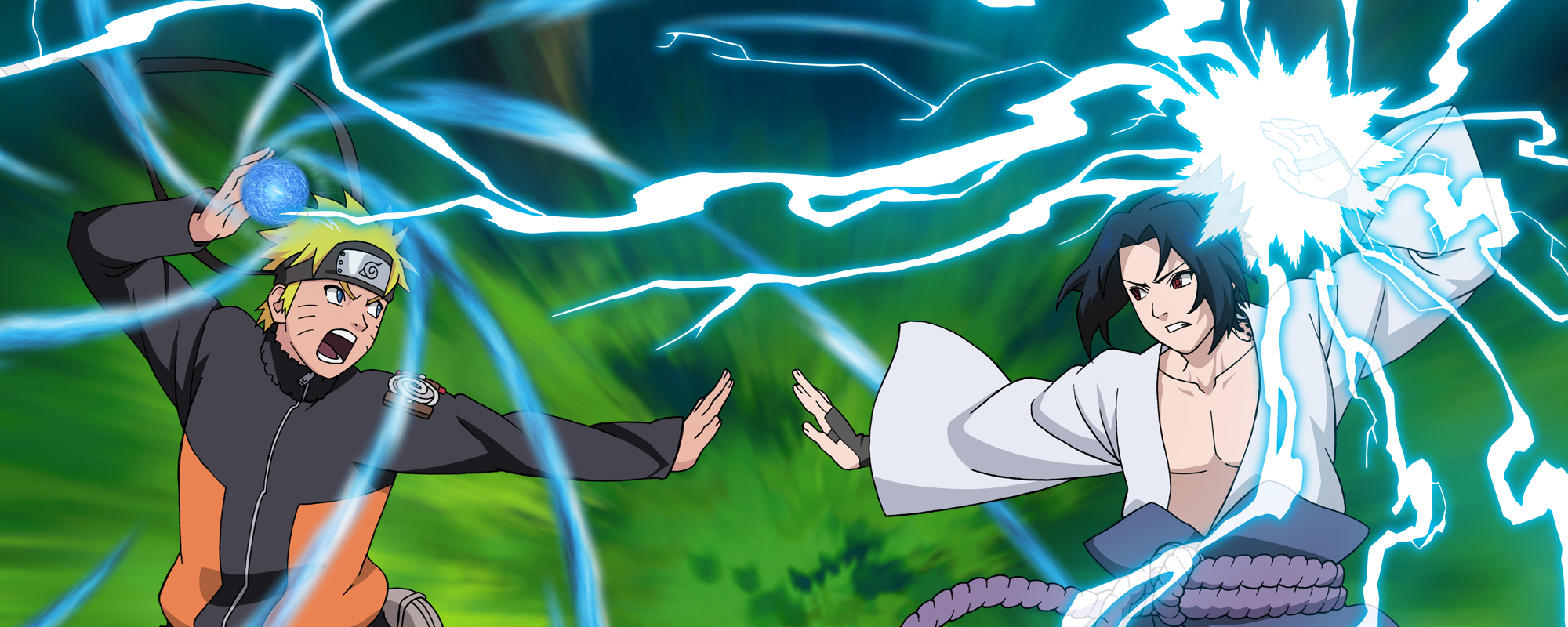
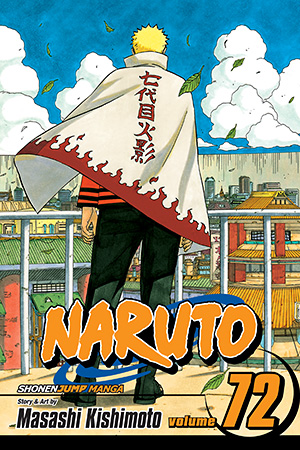
VIZ’s Naruto’s Story—Uzumaki Naruto and the Spiral Destiny credits Kishimoto for the original concept and Jun Esaka as the writer. Use that author distinction when choosing prose. The image captions likewise distinguish Shippuden promotional art from the final main manga cover rather than presenting them as interchangeable editions.
The score covers the original television entry
AniList’s original Naruto television record has a weighted average of 80/100, shown here as 8.0/10 on October 3, 2026. It covers the 220-episode first project. It is not an average of Shippuden, manga, novels, films and Boruto, and the site does not collect a competing local user vote.
Reddit and the fan wiki below are useful destinations for discussing adaptation additions, character readings and source comparisons. They can expose later plot outcomes. Their classifications are not a substitute for the publisher’s book records or the official project’s staff and release announcements.
A useful discussion specifies which part of Naruto it means. A judgment about the opening team dynamic and a judgment about late Shippuden pacing concern different portions of a very long adaptation. Naming the episode, medium and desired spoiler level makes the exchange more informative than a franchise-wide approval or rejection.
Check coverage before buying a long-series package
A manga set can cover only part of the seventy-two-volume route, and an anime package can stop well before the end of its named project. Compare volume or episode coverage, audio languages, subtitles and disc compatibility. A familiar cover character or a large episode count does not establish that a package is complete.
VIZ’s checked Spiral Destiny record is an English prose edition released March 28, 2023, with 224 pages. Its catalog date belongs to that book, not to a new anime season. Its late-world premise makes it a companion choice after the main route, rather than a recommended starting point for a new reader.
No verified production budget or net-profit figure was established in this review. Games, merchandise and card products show a broad commercial ecosystem, but individual product prices cannot measure the anime’s profitability. Those adaptations and products can receive separate pages without entering Naruto’s core reading order.
Trace a change from attention to responsibility
For a manageable first analysis, choose one early team task. Identify what Naruto hopes others will notice, what the task actually requires and how another character responds. Compare the page and screen treatment of that response. This method connects action to belonging without summarizing hundreds of episodes.
Finish the main manga or the two-project animated route before selecting late companion novels or the next-generation branch. A format switch needs a verified source handoff if the reader wants to avoid repetition or missed material. Where that comparison has not been made, restarting from source volume one remains the dependable recommendation.
The main publisher anchors the complete source, the official franchise site anchors project relationships and future announcements, and the named catalog anchors the displayed score. Those records can be updated separately. New publicity should refine the guide without turning an announced event into an already released installment.
Primary sources and useful navigation
- VIZ · licensed source and franchise
- VIZ · concluding manga volume
- Official · anime project navigation
- Official · Shippuden staff and story
- VIZ · Spiral Destiny prose and author
- Official · October 10 announcement panel
- AniList · named anime audience score
Community and catalog routes
The production and publisher links support project facts. Catalog and community pages are secondary navigation and may reveal later events.
Explore related story guides
Original series imagery is reproduced under permission asserted by the site owner; the source and rights credits are retained. The route diagram is Animeteor’s own explanatory graphic.
Games and live-action adaptations
- Naruto: Lionsgate announced film — Live action: Announced film · pre-production
- NARUTO SHIPPUDEN: Ultimate Ninja STORM 4 — Game: Arena action · separate base game
- NARUTO TO BORUTO: SHINOBI STRIKER — Game: Online team action · character customization
Separate games and a verified maintenance notice
The two linked game guides cover STORM 4’s exact PC product and the distinct team-action Shinobi Striker. Neither becomes a required step in the manga or anime route. The 30 September 2026 STORM CONNECTIONS version 1.71 notice fixes rank displays and qualifying rewards for a different game.
Verified version 1.71 news record
The official 21 August 2026 Ninja Cards launch notice identifies a separate mobile card game launched worldwide except Japan and mainland China. That historical launch does not establish a new anime production or availability in the excluded regions.