Manga-centered screen entry: Ultimate I–X. Alternate TV: 2001, 13 episodes. Manga: standard 1–10 or Deluxe 1–3. The Dawn: optional animated bonuses.
Reviewed 3 October 2026 · Opening premise and adaptation relationships. Major endings withheld; linked catalog summaries and discussions may contain spoilers. · Licensed access varies by country.
The source and screen branches

Ultimate is a separate manga-centered adaptation, not season two. Deluxe numbering is different; three Dawn bonuses are not OVA XI–XIII.
- WATCH · Ultimate: OVA I → X → The Dawn · optional bonus parts 1–3
- WATCH · 2001 TV: GONZO television → Episodes 1–13 · separate route
- READ · manga: Kohta Hirano · main manga → Standard volumes 1–10 OR Deluxe 1–3
Start Ultimate at I, or choose the separate 2001 television version
For the manga-centered screen route, begin Hellsing Ultimate at installment I and continue through X. The official Japanese site presents that ten-part OVA adaptation separately from GONZO’s 13-episode television series, broadcast in 2001–2002. Ultimate is not a second television season beginning after episode 13. You can choose it without completing the older screen version first.
The original manga by Kohta Hirano is another direct entry. Read a named standard edition from volume one through ten, or choose Dark Horse’s three-volume Deluxe collection. Both approaches require attention to edition numbering. Ten OVA installments and ten standard manga volumes do not imply a verified one-installment-to-one-book correspondence, so our map does not invent that conversion.
The Dawn’s three animated bonus parts appear in the official anniversary Blu-ray contents and are optional after the main OVA route. Their bonus placement is clearer for a first encounter than forcing prequel material ahead of the main introductions. Fan-made abridged comedy is not an official adaptation route, and no game or live-action material is inserted into this map.
| Choice | Begin and continue | Important boundary |
|---|---|---|
| Hellsing Ultimate / Japanese HELLSING OVA | I → X | Separate from the 2001 television route |
| 2001 television anime | Episodes 1–13 | Do not continue with Ultimate XI |
| Standard manga edition | Volumes 1–10 | Choose one edition; chapter numbering reviewed separately |
| Dark Horse Deluxe | Volumes 1–3 | Collected edition, not three volumes of a ten-book purchase |
| The Dawn animated bonus | Optional after the main OVA | Three bonus parts; not OVA XI–XIII |
The Deluxe edition changes the package rather than adding a sequel
Shonengahosha’s official search lists Hirano’s ten standard manga volumes. Dark Horse’s current second-edition volume one record describes revised translation and graphic design, and credits Duane Johnson as translator. That information identifies an edition change. It does not mean that a new numbered volume one restarts the story as a sequel or establishes a new screen adaptation.
The Deluxe volume-one record specifies chapters 1–27 drawn from standard volumes 1–4. The third Deluxe record specifies chapters 63–88 from volumes 8–10, along with extras, and describes the manga’s conclusion. These are publisher-confirmed collected-edition boundaries. They demonstrate why someone owning Deluxe volume three should not be told they still need standard volumes four through ten to finish the main manga.
We recommend starting the selected reading edition at its opening for an adaptation comparison. No precise chapter handoff after a selected television episode is certified here. NBCUniversal’s illustrated About page identifies the OVA project as following the manga, but that relationship is not permission to flatten differences in performance, pacing and image construction into an identical reading experience.
Visual case: an eye, a glove and a weapon build an unequal encounter
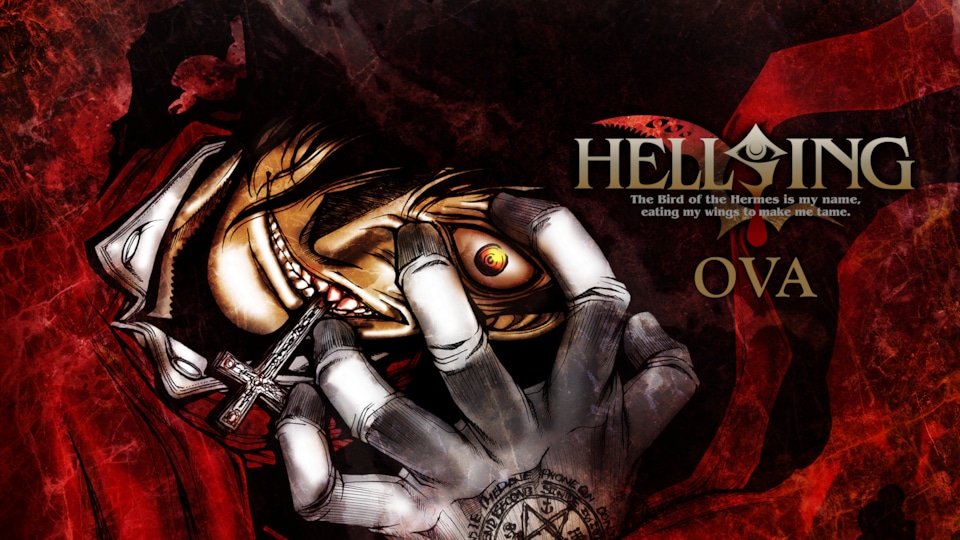
The licensed OVA artwork makes Alucard’s face large, with one orange eye visible beside a pale glove raised close to the viewer. A handgun crosses the face, and the red textured field leaves little suggestion of ordinary daylight. Our reading is that the composition turns seeing and being watched into a threat: the viewer is positioned near a creature who appears comfortable controlling the encounter.
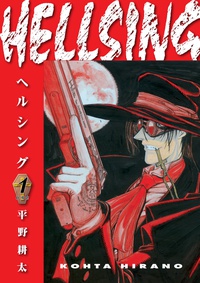
The second-edition manga cover shows the recognizable red coat, hat and glasses with a raised weapon beneath large white title lettering. Its portrait arrangement gives costume and silhouette more room than the OVA image’s compressed eye-and-hand emphasis. These are cover and promotional compositions. They do not establish an exact panel-to-shot match, an episode number or the outcome of a depicted confrontation.
Ask how much of a face must remain visible for confidence to become menace. Hiding the eyes can make a pose unreadable; revealing a single intense eye can instead make it invasive. The images support that focused visual question without requiring gore as illustration. Actual scene timing, voice and sound need examination of the moving production rather than assumptions drawn from its advertising.
Original visual reference
A monster serving an institution does not make its authority simple
The opening premise places a vampire inside an organization defending Britain from supernatural threats, under Integra’s command. This creates a useful contradiction: the institution uses the kind of power it exists to oppose. Our analytical question is how the story distinguishes authorized violence from monstrous violence when both can depend on intimidation and overwhelming force.
Seras offers another perspective on becoming part of that system. The interest is not only whether a character gains strength, but what remains difficult to choose after a transformation. Compare the language of orders with the language of personal commitment. Obedience can look efficient while concealing the cost to someone who must carry out a decision she did not originate.
The work includes graphic violence, wartime imagery and extremist antagonists. Those elements belong to a horror conflict, rather than an invitation to admire an ideology. Our analysis asks whether spectacle exposes cruelty, creates distance from it or risks making it attractive. A decisive victory cannot by itself answer which boundaries the victors respected or what kind of humanity the story values.
Keep GONZO television credits distinct from the OVA’s installment teams
GONZO’s television record names Umanosuke Iida as chief director, Yasunori Urata as director, Chiaki J. Konaka for series composition and Toshiharu Murata for character design. That is a specific television production. It should not be described as the sole production history of Ultimate simply because the two share a title, premise and several voice actors.
The OVA’s official installment-X staff page names Yosuke Kuroda for series composition and screenplay, Hideyuki Kurata for screenplay, Ryoji Nakamori for character design and chief animation direction, and Hayato Matsuo for music. It credits Graphinica for that installment’s animation. Earlier installments have separate staff records; we avoid projecting X’s entire team onto every earlier OVA.
Hirano is also the creator of Drifters, as the publisher biography confirms. That is a separate work to investigate for another approach to violent historical fantasy, not a Hellsing sequel. When comparing screen adaptations, focus on a chosen interaction or confrontation and identify the edition first. A familiar performer’s voice can link recognition without making the scripts or visual priorities interchangeable.
Atmosphere and manga coverage can lead to different preferences
The selected August 2023 community soundtrack discussion contains viewers favoring the older television music and others finding Ultimate’s music better suited to its tone. A selected November 2024 thread includes both recommendations for the older version and strong reservations. These are individual reactions, often with spoilers, rather than a poll proving that the audience agrees on one superior edition.
Our recommendation is Ultimate when you want the official manga-centered OVA route, and the 2001 series when you want to examine a separate television interpretation. Compare how a scene organizes tension, not just how quickly it reaches a familiar event. A viewer can prefer an adaptation’s atmosphere while still recognizing that its relationship to the source differs.
The displayed 8.1/10 external snapshot belongs to AniList’s ten-part Hellsing Ultimate entry, normalized from its 100-point average. It is not a local vote, not the 2001 television score and not a combined manga/anime quality measure. Fan-made abridged productions are also excluded from that score. Name the actual version before using a rating to decide what to encounter.
Edition features are verifiable even when profitability is not
NBCUniversal’s 2018 anniversary Steel Limited listing specifies OVA I–X, Japanese and English 5.1 audio, and a bonus disc containing The Dawn parts 1–3. It also distinguishes a regular box without the limited extras. These are useful edition specifications; the old limited-release page is not a guarantee that the same package remains available from every retailer today.
The official site’s July 2023 streaming notice lists Japanese services. The linked licensed Bandai Channel pages identify the OVA and television entries separately. Use those links to verify the current offer for the relevant territory rather than treating an older announcement as permanent worldwide access. One service’s subscription listing does not certify language tracks or rights in another country.
The Deluxe manga gives a different purchase choice: fewer, larger collected books with publisher-stated contents and extras. This guide does not claim an audited anime budget, franchise revenue or profit margin. Identifiable releases show how the work is packaged and maintained commercially; popularity, an audience rating and a premium cover cannot supply the missing financial evidence.
Finish one route before using another as a comparison
For Ultimate, watch I through X and then consider the three animated Dawn bonuses. For television, start episode one and finish its thirteen-part route if you choose that production. Do not splice the two simply because they share an opening premise. A comparison is more useful when you can identify what each version builds within its own sequence.
For the manga, choose standard volumes one through ten or Deluxe one through three, and keep that edition name visible in notes or recommendations. Read the publisher’s coverage before buying a replacement or continuation. No verified post-television chapter shortcut is supplied. Optional bonus material is labeled as bonus so that a missing extra does not appear to be a missing main-story installment.
Our Black Lagoon and Basilisk guides offer independent comparisons of institutional violence and deadly group loyalties. They share analytical questions rather than continuity. Future updates should change this guide only when a named edition, confirmed production or actual source correction changes the route. A fresh social-media debate does not require rewriting a completed map or presenting a new season as announced.
Primary sources and useful navigation
- GONZO · 2001 television staff and episode count
- NBCUniversal · official OVA series site
- NBCUniversal · illustrated About page and manga relationship
- NBCUniversal · installment X staff
- NBCUniversal · anniversary box and Dawn bonus coverage
- NBCUniversal · dated 2023 Japanese streaming notice
- Bandai Channel · licensed OVA catalog and artwork
- Bandai Channel · separate television catalog
- Shonengahosha · ten standard manga volumes
- Dark Horse · second-edition volume 1 and original cover
- Publisher/distributor · Deluxe volume 1 coverage
- Publisher/distributor · Deluxe volume 3 conclusion and extras
- AniList · named anime audience score
Community and catalog routes
- MyAnimeList · named anime catalog
- Wikipedia · franchise and adaptations; spoilers
- Hellsing Wiki · community navigation; spoilers
- Reddit · selected August 2023 soundtrack discussion; spoilers
- Reddit · selected November 2024 adaptation preferences; spoilers
The production and publisher links support project facts. Catalog and community pages are secondary navigation and may reveal later events.
Explore related story guides
Original series imagery is reproduced under permission asserted by the site owner; the source and rights credits are retained. The route diagram is Animeteor’s own explanatory graphic.
Publisher-confirmed live-action development, without a release claim
Shonengahosha’s preserved announcement confirms a Hellsing live-action project involving Amazon Studios and Derek Kolstad, identified through his John Wick writing work. The source does not supply a release date, cast list or completed production. This historical development notice is not new October 2026 breaking news and does not establish that a film is currently available. No production image or film review is inferred from manga/anime artwork.