Ping Pong (2002) — live-action film guide
LIVE-ACTION GUIDE · Sources checked 3 October 2026 · Opening-premise spoilers; publicity and linked summaries may reveal later material.
The 2002 film casts Yosuke Kubozuka as Peco and ARATA as Smile. Fumihiko Sori directs this adaptation of Taiyo Matsumoto's table-tennis manga.
- Format / status
- Live-action feature · released
- Japanese theatrical release
- July, 20th, 2002
- Runtime
- 114 min
- Director
- SORI Fumihiko
- Selected cast
- KUBOZUKA Yosuke ── Peco; ARATA ── Smile; TAKENAKA Naoto ── Coach
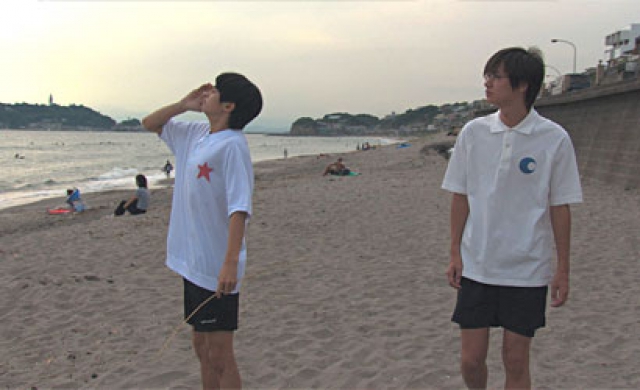
Production and edition
Two childhood friends share a table-tennis club while approaching the game with different ambitions. The film adapts Taiyo Matsumoto's manga and predates the 2014 television anime.
An adaptation lens
A match can reveal a relationship as well as a result. Peco and Smile give the sport two different meanings, so the useful question is what playing lets each of them express or avoid. Watch how an ordinary exchange outside competition changes the meaning of a later encounter at the table.
Live-action sport makes a body, a playing surface and an opponent share an immediate space. A comparison can focus on how a version directs attention between those elements. A spectacular rally is only one possible emphasis; hesitation, preparation and a response to losing can carry different parts of the story.
Choosing this route
The 2002 film and the later anime are separate adaptations of the manga. Choosing the feature does not place a reader partway through the anime's episode route. Use the main guide to explore that relationship without assuming shared matches have identical narrative functions.
Release and access
The facts panel records the Japanese theatrical release, not a current worldwide streaming offer. Use an authorized distributor or local catalog to check availability, subtitles and edition in your territory. The historical release date does not establish present access.
Sources and credits
The production facts above come from the identified official records. The adaptation lens is Animeteor editorial interpretation, not a scored review or an exhaustive scene comparison.