Urusei Yatsura: Endless Summer — game guide
GAME GUIDE · Sources checked 04 October 2026 · Opening-premise spoilers; original promotional screenshots can reveal creatures and environments.
Ataru spends a month in Tomobiki in Marvelous Interactive’s historical Nintendo DS adventure. Nintendo’s original archive preserves the Japanese product and its separate reading and touch-screen presentation.
- Publisher at release
- Marvelous Interactive — now Marvelous
- Japanese cartridge release
- 20 October 2005
- Platform / players
- Nintendo DS / one player
- Format
- Tomobiki life adventure; summer events and relationships
- Image edition
- Japanese original game screens — 256 × 192
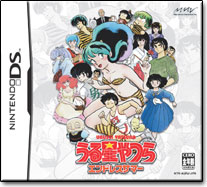
Product and edition
Nintendo’s manufacturer-supplied Japanese archive identifies うる星やつら エンドレスサマー, released on 20 October 2005 by Marvelous Interactive, now Marvelous. It labels the genre as a Tomobiki life adventure and lists one player. This is the Nintendo DS product, not a later television adaptation, a mobile game or another console’s similarly named title. The archived premise puts Ataru in the town for one month of summer holiday, with events and relationships to pursue. The preserved screenshots belong to this exact product and retain their small original 256-by-192-pixel screen resolution.
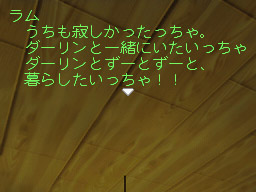
Gameplay and story
The lead reading screen shows Lum’s Japanese dialogue against a background, with a small advance marker at the bottom. Its complete composition makes the format visible without replacing it with an anime still. Nintendo’s gallery labels this as the game screen and separately labels the accompanying character image as the touch screen. That separation matters on Nintendo DS: the archived product uses two displays for different parts of an encounter. The guide presents individual original screen files rather than assembling a new mock console or pretending that one image contains the entire hardware display. The frame supports an observation about reading and presentation; it does not prove the exact input needed to advance or establish that every line comes directly from a particular manga chapter.
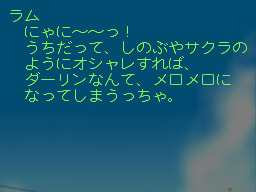
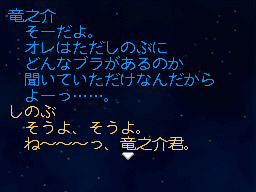
The first additional reading frame gives Lum another Japanese conversation against an outdoor sky, while the second presents an exchange between Ryuunosuke and Shinobu with a different background and text arrangement. These are distinct supplied in-game frames rather than three crops of a single dialogue. Nintendo’s description explains that the player can move through Tomobiki, participate in events and approach characters during the summer month; it also describes touch interactions whose responses depend on developing affection. Those are documented product features, not an assessment of relationship balance. The small archival images remain at native size so their typography is not falsely sharpened or enlarged. Full dialogue composition is preserved; the guide does not translate the complete copyrighted conversations or infer later relationship outcomes from them.
Choosing this route
Choose Endless Summer for an optional interactive visit to the cast and town, with daily-life events and character reading instead of the episode timing of television. Start the manga or one selected anime adaptation for the main narrative route. The game predates the 2022 television production and should not be described as an adaptation of that remake’s new animation. Its summer-month premise does not establish an exact required place between numbered source chapters or television episodes. Nintendo’s preserved screen pairs provide useful evidence of the game’s presentation, while the manufacturer description supplies its broad systems. Neither substitutes for a played review of responsiveness, completion time or route quality. Promotional screens can expose character encounters, so the article keeps written discussion to the setup and documented interface.
Platforms and access
The archive verifies the original Japanese Nintendo DS cartridge release and single-player format. It is a historical product record, not proof of a currently offered digital download, a new reissue or stock in any region. The supplied interface is Japanese; no licensed English release is established by this source. The preserved 256-by-192-pixel screen files are displayed without exceeding their native width. Check an authorized current hardware or edition record separately before selecting another product.
Sources and credits
- Nintendo — manufacturer-supplied product archive
- Nintendo — original reading and touch-screen pair 1
- Nintendo — original screen pair 2
- Nintendo — original screen pair 3
Facts are drawn from the identified publisher and developer records. The story lens is editorial interpretation, not a hands-on review, performance test or audience rating.