School Rumble Second Semester: Summer Camp — game guide
GAME GUIDE · Sources checked 05 October 2026 · Opening-premise spoilers; original promotional screenshots can reveal creatures and environments.
The 2006 School Rumble Second Semester PS2 game takes the tea club on a summer trip with a mansion, ghosts and a treasure map. Its original adventure lets the player choose viewpoints and partners rather than following one fixed television episode sequence.
- Full original product
- スクールランブル二学期 恐怖の(?)夏合宿! 洋館に幽霊現る!? お宝を巡って真っ向勝負!!!の巻
- Platform / product code
- PlayStation 2 / SLPS-25670
- Original standard Japanese release
- 20 July 2006
- Publisher archive
- Marvelous; original publicity credits Marvelous Entertainment
- Separate budget edition
- Best Collection: 28 June 2007 / SLPS-25795
- Story / systems
- Original summer-camp adventure; viewpoint and partner choices

Product and edition
The standard Japanese product is separately identified by Marvelous’s SLPS-25670 catalog entry. Its 20 July 2006 date belongs to the original disc, while the separately listed Best Collection package has a June 2007 date and another code. The preserved official website advertises a completely original adventure, with the tea-club trip turning toward a mansion and treasure-map mystery. This guide concerns the standard 2006 edition pictured here, not a second title for the 2005 Neru Ko wa Sodatsu game or a claim that the budget package adds an anime season.

Gameplay and story
The viewpoint-selection screen puts a familiar character in a practical role: deciding whose perspective will organize the next episode of the game. The publisher says that the player can keep one viewpoint or use several, and that the same situation can produce different scenes for Tenma and Harima. As an editorial lens, this uses the franchise’s unequal knowledge as a form of participation. The player’s choice of perspective changes access to an encounter, while the screenshot alone does not establish how many routes or hours are required to see every outcome.
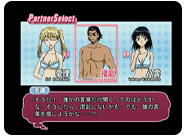
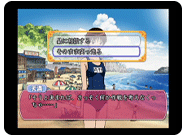
Partner selection is a different choice from viewpoint selection. The official systems page connects partners and event choices with changes in affection and the pursuit of endings. Its original promotional screens show a selection interface, dialogue and a reply menu. Together they distinguish deciding who accompanies an event from deciding how to answer inside it. A visual-novel interface can make a misunderstanding playable, but that is an interpretive comparison with School Rumble’s comic relationships, not proof that the game rewrites a particular manga chapter. These publicity frames do not substitute for a hands-on balance or route-completion review.
Choosing this route
Choose this route for an original holiday adventure and changes of perspective. Choose the manga and named television productions when the aim is the corresponding continuous story. Second Semester in a game title identifies the anime-linked product family; it does not make completing the game equivalent to watching all twenty-six television episodes. The 2005 dream-and-keyword game stays separately linked from the main analysis. No verified chapter handoff follows from either interactive ending, and the later budget edition should be selected by its own product identity rather than mistaken for a sequel.
Platforms and access
This is a historical Japanese PlayStation 2 release. Marvelous’s original and budget-edition catalog entries establish the dates and product codes, without confirming present retail stock or a modern digital port. Check the exact authorized edition, language and compatible hardware. The original small publicity screens retain their full publisher framing and native proportions; they are not enlarged into reconstructed imagery.
Sources and credits
- Marvelous — original standard edition and product code
- Marvelous — distinct Best Collection edition
- Official developer systems and original interface screenshots
- Official product website — game-original story
Facts are drawn from the identified publisher and developer records. The story lens is editorial interpretation, not a hands-on review, performance test or audience rating.