MY HERO ONE’S JUSTICE 2 — Quirks, arena fights and edition choices
MY HERO ONE’S JUSTICE 2 translates a superhero cast into a three-dimensional arena fighter. The useful question for a My Hero Academia fan is how a Quirk becomes something you operate rather than something you watch. This guide separates the publisher’s promises, the Steam mode record and our interpretation of the adaptation idea, with particular attention to the edition you actually buy.
- Developer / publisher
- BYKING / Bandai Namco Entertainment
- Steam release
- 12 March 2020
- Modes on Steam
- Single-player; online PvP; shared/split-screen PvP
- English on Steam
- Interface, subtitles and full audio
- Platform family
- PS4, Xbox One, Nintendo Switch and PC listed by publisher
A Quirk as an interaction
The publisher presents a fighter built around recognizable heroes, villains and their abilities, including a Plus Ultra meter. Our interpretation is that the adaptation succeeds conceptually when a power changes a player’s decisions. A distinctive movement or attack relationship is more meaningful than simply replacing a generic fighter’s appearance with a familiar face.
For that reason, inspect footage of your favorite character doing ordinary actions as well as the largest special move. The basic movement and repeated exchanges will occupy more of your time than a showcase animation. This article does not claim that every character is equally balanced or that we have tested the roster; it gives you a focused way to evaluate the official demonstrations.
What the “2” does and does not establish
Bandai Namco identifies the product as a sequel to MY HERO ONE’S JUSTICE and describes its story as picking up after that game. That product relationship does not turn it into an extra season of the television anime. The main My Hero Academia guide remains responsible for anime and source decisions.
The store, character names and story demonstrations may expose material beyond a new viewer’s current progress. A playable roster is not a spoiler-free index. If discovering powers and identities in the story is important to you, consider the trailer itself part of your spoiler decision rather than assuming a game page can be browsed without consequences.

The visual example: movement and spectacle

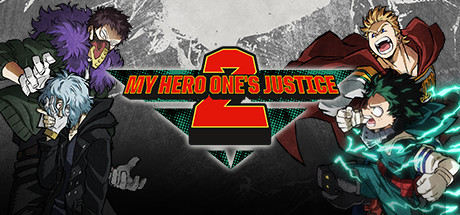
The unchanged Steam image shows Midoriya moving through an arena with bright green effects. Its useful role is identification: this is the game’s rendition of Deku, with its own rendered environment and presentation. We use a game-specific composition rather than repurposing a television still and implying that it represents gameplay.
The image does not settle control responsiveness, frame rate or readability during a crowded match. Those questions depend on the platform and build. For a prospective player, compare the official footage with your own priorities: recognizable powers, local duels, competitive practice or a way to revisit favorite encounters. Different priorities can lead to different decisions about the same product.

Local play and paid character bundles
Steam explicitly lists shared/split-screen PvP, making the PC mode record relevant to a local-versus plan. Its edition descriptions also distinguish the base game, Deluxe and Ultimate packages and separately sold character passes. A larger bundle is only useful if it includes characters or extras you want; a discount percentage alone does not answer that question.
Check the included items against what you already own. The store itself warns about overlapping purchases, and a bonus connected with earlier-game save data should not be confused with a universal entitlement. Prices are regional and temporary, so we link the maintained listing rather than inventing a permanent value score or sales-based quality ranking.
Sources and further discussion
Editorial scope: documented product features and original interpretation. No hands-on performance score or exhaustive scene comparison is claimed.
Steam community discussions — player reports, not primary production evidence