Fushigi Yugi DS — game guide
GAME GUIDE · Sources checked 05 October 2026 · Opening-premise spoilers; original promotional screenshots can reveal creatures and environments.
Fushigi Yugi DS collects two separately complete romance adventures in one Japanese DS product. Its choice-based stories are optional game branches beside Yuu Watase’s manga and the animated adaptations.
- Original title
- ふしぎ遊戯DS
- Publisher
- IDEA FACTORY
- Japanese release
- 25 June 2009
- Platform / players
- Nintendo DS / one player
- Included games
- Genbu Kaiden Gaiden: Kagami no Miko; Suzaku Ibun
- Scope
- A DS collection of two distinct complete stories
Product and edition
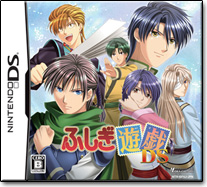
Nintendo’s official archive identifies the 2009 Japanese DS release and names the two adventures collected on its cartridge. The manufacturer describes a transfer of the earlier games’ events and voice performances. This guide concerns that DS compilation, rather than treating its two included titles as a new television season. Nor does the compilation erase their separate identities: each has a complete story of its own. The archive’s claim that newcomers can enjoy either is a description of the product, not evidence that either retells every chapter of the original manga.
Gameplay and story
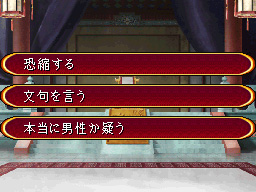
The original screenshots make the interaction visible through choices and dialogue. A list of replies asks the player to decide how to respond, while a character portrait and text window establish the next exchange. That offers an editorial way to compare the game with reading a page: attention moves from observing a relationship to participating in a response. A selected answer is not proof that the manga characters made the same decision. The image captions identify interface evidence without claiming a measured route length or a hands-on assessment of the branching outcomes.
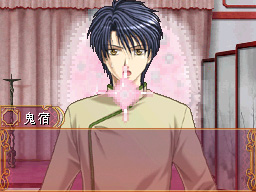
Keeping the two included stories distinct makes the collection easier to choose. Genbu and Suzaku are labels for the identified game branches here, not instructions to jump from an anime episode to a particular source volume. The publisher describes both stories as independently complete. The compilation therefore works as a choice between interactive presentations, with its own voiced scenes, rather than a missing numbered installment that must be inserted into the main reading sequence. Even familiar names in a dialogue window do not establish identical chapter coverage.
Choosing this route
Choose the DS route for the interaction of replies, portraits and voiced exchanges. Choose the original manga, Genbu Kaiden or Byakko Senki when the aim is to follow Watase’s corresponding reading line. The television and OVA productions remain separately named screen routes in the main analysis. Finishing one game story does not yield a verified manga chapter at which to resume; the useful handoff is to the intended format and its own beginning. The package pictured below belongs to this exact DS product, and does not advertise a current mobile port.
Platforms and access
This is a historical Japanese Nintendo DS cartridge release. Nintendo’s preserved archive establishes the original edition and single-player classification; it does not confirm current retail stock, a digital reissue or localization into another language. Check the identified authorized edition and compatible hardware. The original 256-by-192 promotional interface images retain their full composition and native proportions, with no invented high-resolution replacement.
Sources and credits
- Nintendo — exact DS product, manufacturer facts and original package
- Nintendo — original choice interface screenshots
- Nintendo — original dialogue screenshots
Facts are drawn from the identified publisher and developer records. The story lens is editorial interpretation, not a hands-on review, performance test or audience rating.