DS Dengeki Bunko ADV: Baccano! (2008) — Nintendo DS guide
GAME GUIDE · Sources checked 04 October 2026 · Opening-premise spoilers; original promotional screenshots can reveal creatures and environments.
MediaWorks’ railway adventure makes the 1931 train material an interactive reading branch, with choices and more than fifty endings.
- Exact product
- DS Dengeki Bunko ADV: Baccano!
- Publisher
- MediaWorks
- Japanese release
- 28 February 2008
- Platform / players
- Nintendo DS · one player
- Genre
- Multiple-viewpoint railway adventure
- Source scope
- 1931 Local / Express novel material
- Product distinction
- More than fifty endings; a separate interactive branch
Product and edition
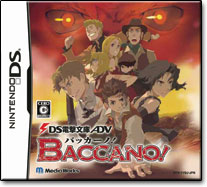
Nintendo’s manufacturer-supplied catalog confirms the Japanese release on 28 February 2008. The anime site’s older January plan is an advance schedule, not the final date. Its product description connects the game with the two 1931 novels and identifies additional alternative endings. This cartridge is distinct from the thirteen television episodes and three supplementary DVD installments. No current English edition or downloadable rerelease is established.
Gameplay and story
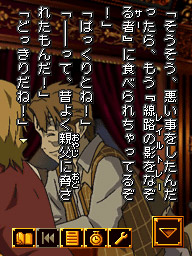
The prose screen makes reading itself a visible activity: Japanese vertical text shares space with navigation controls. Our interpretation is that a branching presentation changes the reader’s responsibility. A television episode can withhold the next viewpoint; an interactive reading interface can invite the reader to make a choice before seeing its consequence. The still demonstrates a presentation, not the length or quality of every branch.
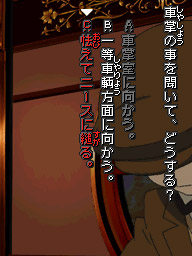
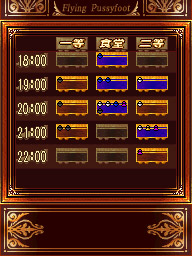
The decision screen and character/time interface make two different questions visible: what should happen next, and whose part of the event should be followed? That is a useful contrast with the anime’s arrangement of its ensemble. The screen does not certify that every possible option is equally substantial, nor does its clock convert the whole franchise into an exact chronological checklist. Native screen dimensions and orientation are preserved so that the interface remains recognizable.
Choosing this route
Choose this game for a separate experiment in perspective and choice. Begin the source novels at their own opening when seeking the larger prose sequence; use the complete anime route for its edited screen presentation. An alternative ending is a product feature, not evidence that the main novels require several contradictory outcomes. This guide has not played and compared all endings, so it supplies no canonical-ending claim or completion ranking.
Platforms and access
This is a historical Japanese Nintendo DS cartridge record. Check lawful physical availability, language and compatible hardware independently. The old publisher demo link does not establish an operating online demo today. The small original promotional screens are displayed at their native scale; enlarging them with AI would manufacture detail. There is no inferred current digital store, English translation license or active network service.
Sources and credits
- Nintendo — released product, manufacturer facts and screenshot gallery
- Nintendo — original reading-screen gallery
- Nintendo — original choice-screen gallery
- Nintendo — character/time navigation gallery
- Official anime — source relationship and historical advance schedule
Facts are drawn from the identified publisher and developer records. The story lens is editorial interpretation, not a hands-on review, performance test or audience rating.