Samurai Champloo: Sidetracked — PlayStation 2 game guide
GAME GUIDE · Sources checked 04 October 2026 · Opening-premise spoilers; original promotional screenshots can reveal creatures and environments.
Grasshopper’s PlayStation 2 action-adventure tells a separate Hokkaido story. Music changes attack combinations; Mugen and Jin offer different starting campaigns.
- Product
- Samurai Champloo: Sidetracked
- Developer
- Grasshopper Manufacture
- Platform
- PlayStation 2
- Japanese release
- 23 February 2006
- North American release
- 12 April 2006, as listed by the developer
- Story relationship
- Original game story; optional alongside the anime
Product and edition
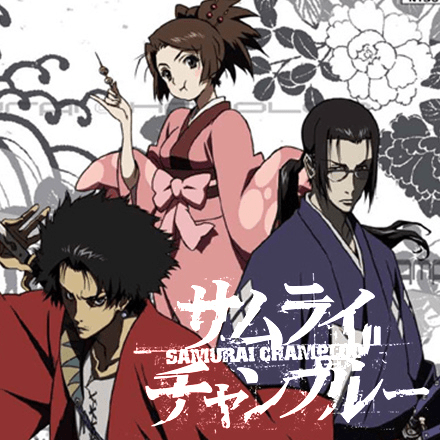
This guide identifies the PlayStation 2 game, rather than a new television installment or the two-volume manga adaptation. Grasshopper’s own catalog lists the Japanese edition on 23 February 2006 and the North American edition on 12 April 2006. Those dates describe different regional releases. Its named publisher is Bandai Namco Entertainment. The developer describes an original story in old Hokkaido, with Mugen or Jin as initial campaigns and Worso Tsurumaki’s campaign unlocked by completing either. A game campaign is its own narrative unit: finishing one does not certify which anime episodes have been covered. The reader can therefore recognize the product without converting its campaign names into a television watch order.
Gameplay and story
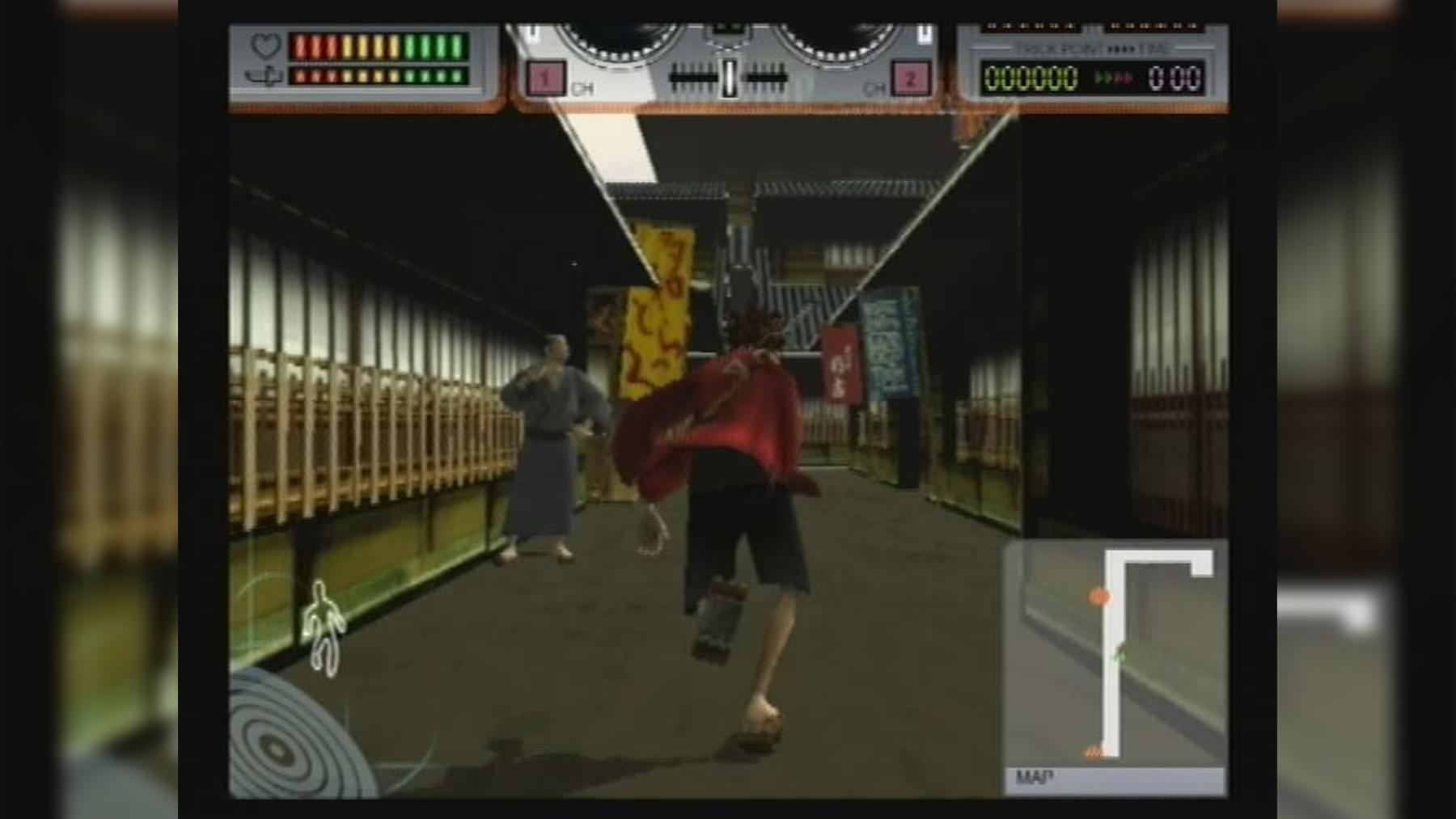
The developer connects changing the background music to changing attack combinations. Our reading of that design is that a soundtrack can become a choice about action, rather than remaining only a mood behind it. In the selected street frame, the interface puts track controls above the moving character while the minimap occupies a different corner. Looking at this arrangement, the player is being given more than a dramatic view of a swordsman: navigation and the current action setup share the screen. This is an observation of the supplied image, not a measurement of input response or difficulty. It suggests a useful comparison with animation, where the viewer hears a finished rhythm without selecting the next attack sequence. A viewer drawn to the anime’s meeting of music and period imagery may find that relationship an interesting reason to investigate this optional game.
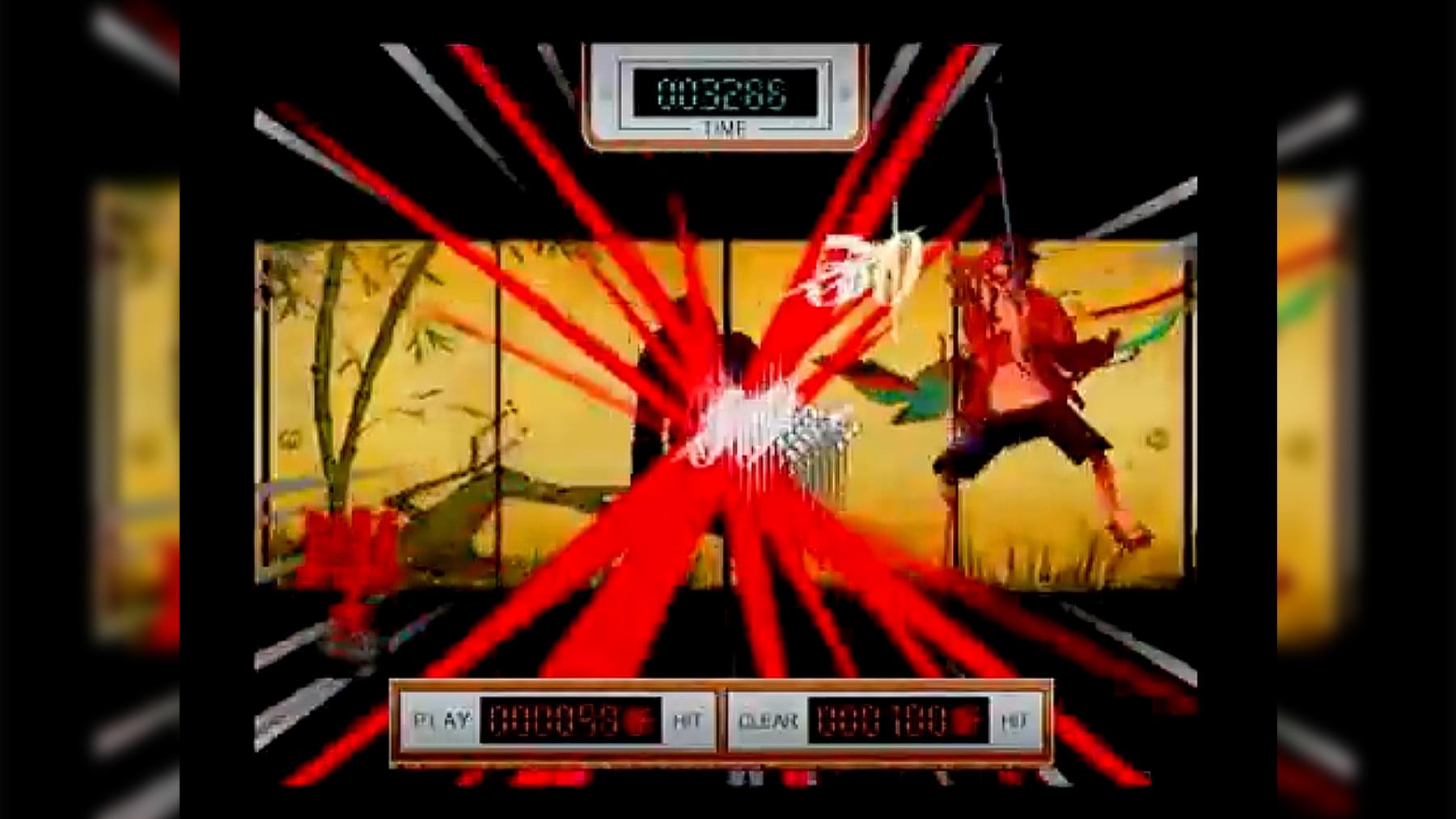
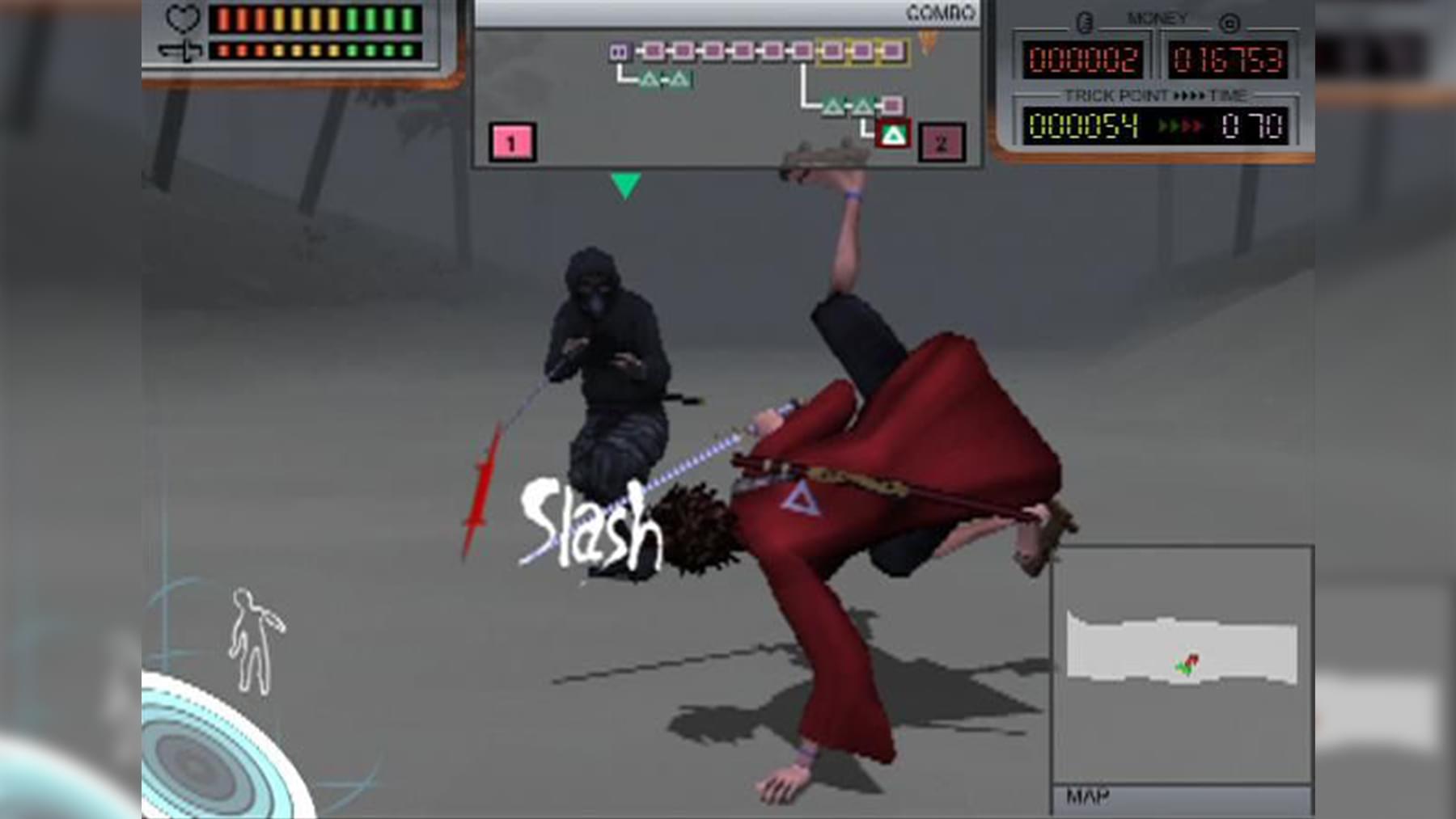
The two additional original frames preserve their different presentations. One places a timed confrontation inside a strongly stylized red-and-yellow composition. The other keeps a combo display above Mugen and a map beside the encounter. Our interpretation is that the interface participates in the spectacle instead of disappearing behind it. A sword movement can consequently be read both as an expressive gesture and as part of a visible sequence of inputs. The images do not establish which campaign is most demanding, a complete list of techniques or a guaranteed strategy. Nor do they justify a claim that every encounter resembles these selected moments. Keeping the whole frames lets a reader see those boundaries: a promotional image can demonstrate how a mechanic is represented while leaving the experience of controlling it open. The developer gallery’s supplied side borders remain present; no new background was constructed to make an old console image look modern.
Choosing this route
Choose this branch for an interactive variation on the property, especially if the connection between musical tracks and sword action interests you. Choose the television route first if your priority is the released animated narrative. This separation avoids a common confusion: an original story using familiar characters does not automatically become a required chapter between two anime episodes. Our editorial lens is adaptation through participation. The player’s attention can move between the character, the visible route and the active combination, whereas a television shot has already chosen what to emphasize. Those are different ways of organizing a journey, even when costumes and personalities make the relationship immediately recognizable. This guide does not certify shared continuity, an exact episode placement, a canonical ending or firsthand play quality. The main analysis remains the place to compare the animated production and its separate print adaptation.
Platforms and access
The identified product is a historical PlayStation 2 release. Check the region of the physical edition and compatible hardware before treating the two catalog dates as interchangeable. The developer catalog verifies identity and release history; it does not establish a current digital purchase offer, a modern-console remaster, emulator compatibility or a continuing online service. No present-day price is republished here. English and Japanese regional products should be distinguished by their packaging and language information, rather than by this page’s English title alone. Promotional battle images can reveal environments and enemies; the article keeps the discussion to the opening relationship between the game and its parent work.
Sources and credits
- Grasshopper Manufacture · exact product, regional dates and original gallery
- CESA · developer Goichi Suda’s historical 2006 production record
Facts are drawn from the identified publisher and developer records. The story lens is editorial interpretation, not a hands-on review, performance test or audience rating.