NANA: Live Staff Daiboshū! (2007) — Nintendo DS game guide
GAME GUIDE · Sources checked 04 October 2026 · Opening-premise spoilers; original promotional screenshots can reveal creatures and environments.
The 2007 KONAMI Nintendo DS game follows a newcomer to Tokyo who has three months to find a professional ambition while meeting the members of BLAST and TRAPNEST.
- Original title
- NANAライブスタッフ大募集!~初心者歓迎~
- Japanese release
- 21 June 2007
- Publisher / maker
- KONAMI
- Platform
- Nintendo DS
- Players
- 1
- Premise
- A newcomer has three months to find her ambition
- Image edition
- Original Japanese DS screens; upper/lower screens individually labelled
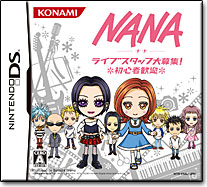
Product and edition
The Japanese title is NANAライブスタッフ大募集!~初心者歓迎~, a single-player Nintendo DS simulation from KONAMI, released on 21 June 2007. Nintendo describes its category as an industry-specialist simulation. This guide covers that exact DS product, not a PlayStation 2 game, a PSP game or a limited-time collaboration inside another publisher’s game. Its newcomer protagonist and work-focused premise make it a separate way to engage with Ai Yazawa’s setting rather than an additional manga volume.

Gameplay and story
The publisher premise places the player in a familiar social environment without asking them to replace either of the two central Nanas. The protagonist is a girl who has moved to Tokyo but has not found her direction. Meeting members of BLAST and TRAPNEST motivates her to try again before returning home. Nintendo specifies a three-month window and points to professions such as hair-and-makeup artist and fashion stylist. Editorially, this shifts the lens from witnessing the bands’ relationships to imagining the support work around their performances. The dialogue screenshot establishes a character conversation interface, but it does not prove a complete adaptation of a particular manga chapter.

The official paired-screen examples distinguish presentation from input. One upper screen shows character dialogue; another example shows a dressed character above a lower-screen clothing inventory. The lower screen offers selectable categories and garments rather than simply displaying an illustration. A further conversation example includes an on-screen date and time. These are separate original screens supplied by Nintendo; the article labels which screen is shown and retains each full frame. It does not fabricate a single combined DS capture or stretch these small original images into a purported high-resolution remaster. The relationship between dialogue, scheduling and styling is useful for understanding the documented premise, but these limited examples cannot establish a complete daily routine or every career system.

Choosing this route
Choose this product for the documented newcomer-and-backstage perspective. Read the manga or watch the television adaptation for their own narrative routes; the DS game does not resolve the manga’s publication hiatus or certify an anime-to-manga handoff. Its historical existence also does not imply a new 2026 game announcement. This is a newly added guide to an older verified product. The comparison above is editorial interpretation based on the publisher description and original screens, with no claim of hands-on play, measured balance or an audience rating. The official Japanese description and screenshots can expose opening encounters, and any fuller plot or character-route investigation should be treated as potentially spoilery.
Platforms and access
The Nintendo archive establishes a Japanese Nintendo DS retail release in 2007. It does not establish a current digital download, remake or English-language edition. Confirm cartridge language, region and compatibility through an authorized source; this guide makes no current stock or price claim. Original screenshots are individual 256 × 192 DS screens.
Sources and credits
- Nintendo — KONAMI product, premise, date and platform
- Nintendo — dialogue and touch-screen examples
- Nintendo — clothing selection screens
- Nintendo — dated dialogue screen
Facts are drawn from the identified publisher and developer records. The story lens is editorial interpretation, not a hands-on review, performance test or audience rating.