Read main manga 1–74 or start the older 366-episode anime before Thousand-Year Blood War. October finale installments are still scheduled; post-war novels are optional.
Reviewed 3 October 2026 · Opening premise and adaptation relationships. Major endings withheld; linked catalog summaries and discussions may contain spoilers. · Licensed access varies by country.
The source and screen branches

Current finale dates are scheduled as checked October 3, 2026. The displayed score covers older television only; films, games and live-action are separate.
- READ · complete main source: Manga · volume 1 → Volume 74 · conclusion
- WATCH · main screen route: Original television · 366 → Thousand-Year Blood War → Final October installments · scheduled
- READ · optional post-war prose: Can’t Fear Your Own World · 1–3 · After the main source war
Finish the main route before choosing the novels
Begin Bleach with manga volume one or the original television anime. Tite Kubo’s main manga concludes at volume seventy-four. The older 366-episode anime and the later Thousand-Year Blood War adaptation are successive screen projects; the later title is not a replacement first episode for Ichigo’s introduction.
Ichigo Kurosaki can see spirits, and an encounter with Soul Reaper Rukia draws him into protecting people from Hollows. The opening connects supernatural work with obligations he already feels toward family and friends. A new ability does not automatically explain the institutions governing it, which gives the story room to examine rules as well as battles.
The Can’t Fear Your Own World novels form a separately named three-book prose route after the main manga’s war story. They are optional further reading, not source volumes inserted between the manga’s early arcs. Film, game and live-action products remain distinct from the main reading and watching sequence.
Seventy-four manga volumes are the stable complete source
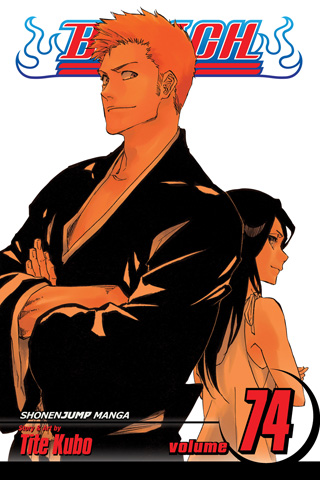
VIZ’s final-volume record identifies the conclusion of the main manga and gives October 2, 2018 as the English volume-seventy-four release date. That is a publishing date for a specific edition, not the date the current anime necessarily finished. The complete source is the most dependable route for a reader whose priority is reaching the written ending.
Kubo’s visual storytelling gives entrances, silhouettes and changes of posture considerable force. Our reading suggestion is to notice what an image reveals before a technique is explained. A battle can establish confidence or uncertainty through distance and framing before it supplies a technical rule.
VIZ separately credits Kubo and Ryohgo Narita on Can’t Fear Your Own World. The novel series uses a different focal route and publication format. Read the main source first to avoid encountering later-world information too early; shared terminology does not make the novels an alternative beginning for Ichigo’s story.
The final anime schedule still has future installments
The official September 12, 2026 notice identifies scheduled broadcasts for Thousand-Year Blood War episodes forty-nine and fifty in October. At this review on October 3, those listed dates are still ahead. A planned finale event or the phrase final cour must not be converted into a statement that every episode has already aired.
Our map labels the older anime before the later war adaptation and keeps the latter’s current release status visible. The number used for the external rating is the original television catalog’s 366 episodes. It is not the current war adaptation’s cumulative numbering.
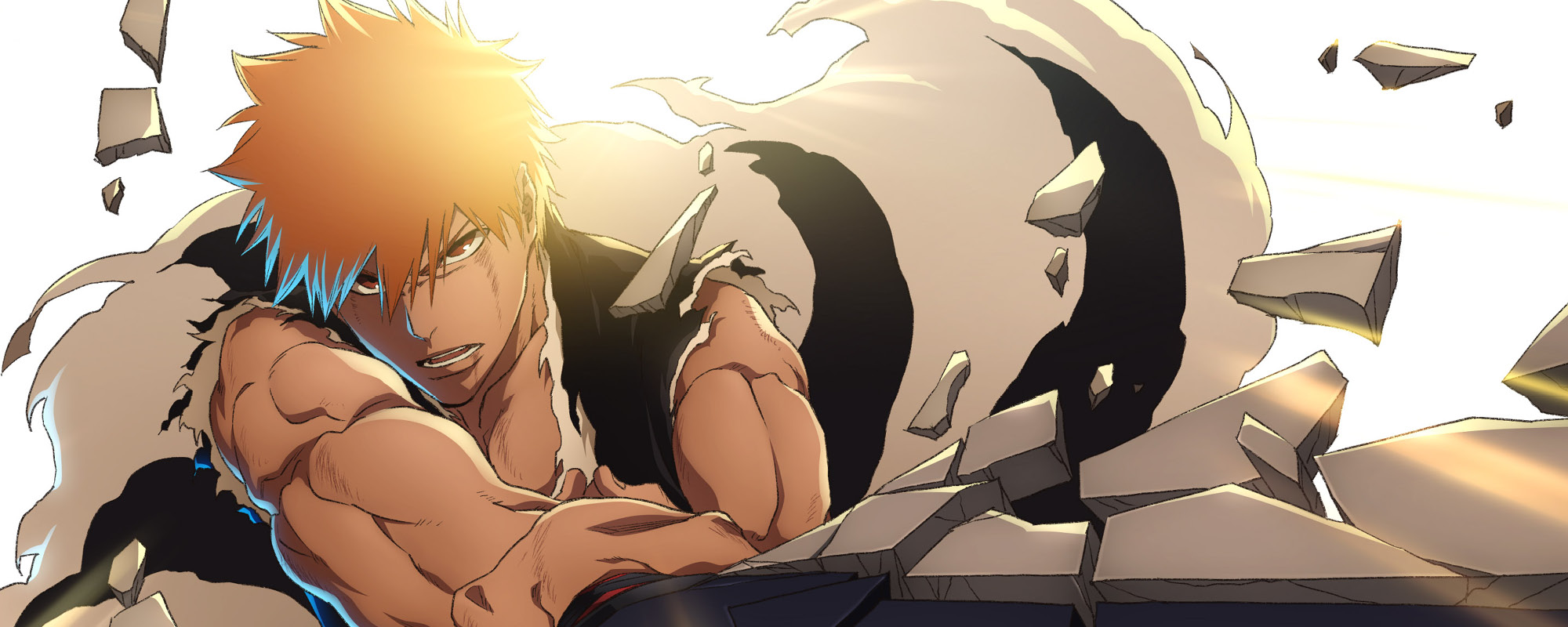
The original war-project promotional art and final manga cover below identify two different objects. The cover confirms a source edition; it cannot confirm screen completion. We do not assign an exact manga handoff after a newly aired episode without comparing the licensed chapter and the actual episode content.
Original visual reference
Protection can become a challenge to an institution
Our interpretation begins with Ichigo’s practical desire to protect someone. That desire can clash with an organization whose rules define what protection is allowed to mean. The conflict becomes more interesting when a character’s immediate obligation and an institution’s declared order point in different directions.
Rukia’s role makes knowledge uneven. One participant understands supernatural customs that the newcomer does not, while the newcomer brings relationships those customs may not fully account for. Watch when instruction helps someone act and when a rule becomes something they must question. Exposition is also a negotiation of authority.
The fighting system connects identity with the expression of power. A named weapon or technique is not only a numerical upgrade; its presentation can change how a person understands their own capacity. Compare what a character can demonstrate publicly with what they can accept privately, without searching for late revelations first.
Kubo’s use of sharply legible figures and spacious compositions can make a confrontation feel ceremonial. An entrance or a held pose asks the viewer to recognize a relationship before the exchange begins. In animation, duration, sound and voice supply another form of that emphasis. A faithful-looking image can still acquire a different rhythm.
The larger ensemble creates competing obligations. Allies do not necessarily agree about the right action even when they share an enemy. Track what a participant is protecting, who has the authority to speak and what a victory leaves unresolved. This gives a battle analysis substance beyond a ranking of attack strength.
The optional novels offer another route for investigating the world after the main conflict. Their altered focus can make institutional questions more visible than a summary centered solely on Ichigo. We recommend them as further reading once their premise can be encountered without spoiling the source’s war outcome.
The older anime and current production have different records
Kubo is the manga creator credited by VIZ. The named original television catalog identifies Studio Pierrot, while the current war-project staff page credits PIERROT FILMS. Use the actual installment’s staff record rather than assigning the newest branding and roster backward to every older episode.
The official current project credits roles such as series composition, character design and music separately. Those distinctions support a more precise investigation than saying the studio alone decided every adaptation change. Our interpretation of protection and institutional order remains editorial analysis rather than a staff quotation.
The credited VIZ promotional illustration depicts the later war project; the source cover depicts manga volume seventy-four. Captions make those scopes visible. The explanatory route diagram is Animeteor’s work and deliberately excludes unrelated game or live-action chronology.
The displayed number belongs to the original television anime
AniList’s checked original television record has a weighted average of 79/100, displayed as 7.9/10 on October 3, 2026. It covers the older 366-episode entry. It does not average the current war adaptation, films, prose books and manga into one franchise rating.
The community and wiki destinations below support discussion of characters, source differences and named prose books. They can reveal major endings. We do not treat a fan’s use of the word canon as a verified publisher statement about every related product.
A useful adaptation discussion names the precise episode, chapter or novel volume. Otherwise a disagreement about what the anime added can actually be a disagreement about which anime project is under discussion. Our route and score labels make that scope visible before the reader reaches the external links.
Published source, ongoing screen release and future events are separate
The complete manga and three-volume novel series are published books, while the official anime notice still schedules future October installments. A finale celebration planned for a later date is an event product and does not replace the actual broadcast schedule. Check the local licensed distributor for current access.
Collected manga packages and anime bundles can divide the same work differently. Compare covered volumes or episodes, language options and player compatibility before buying. A current discount does not identify the best starting point, and a visually similar package may belong to the newer war adaptation.
No verified production budget or net-profit figure was established here. Game announcements, merchandise and events show a wider commercial ecosystem, but their prices cannot prove anime profitability. These products can have separate pages linked from the main guide without entering its core roadmap.
Ask what a victory permits a character to protect
For a first close analysis, choose an early confrontation and identify the immediate person at risk, the rule being invoked and the action Ichigo considers necessary. Then compare the page and screen framing of that decision. The result can reveal an adaptation choice without requiring a full arc recap.
Complete the source or the available main animated route before choosing the post-war prose branch. Later anime schedule checks can refine the guide, but a scheduled installment should remain scheduled until publication is verified. This avoids making readers search for an episode that has not appeared.
The publisher’s final-volume and novel records anchor reading scope. The official anime schedule anchors current broadcast status, and the named catalog anchors the external score. Community links offer further discussion; future changes can update release details without collapsing these separate publication histories.
Primary sources and useful navigation
- VIZ · licensed franchise and source products
- VIZ · final main manga volume
- VIZ · Can’t Fear Your Own World volume three
- Official · October episode schedule notice
- Official · current staff and production
- AniList · named anime audience score
Community and catalog routes
- MyAnimeList · named anime catalog
- Reddit · Bleach community
- Fan wiki · installment and character navigation
The production and publisher links support project facts. Catalog and community pages are secondary navigation and may reveal later events.
Original series imagery is reproduced under permission asserted by the site owner; the source and rights credits are retained. The route diagram is Animeteor’s own explanatory graphic.
Games and live-action adaptations
- BLEACH — Live action: Film · 2018
- BLEACH Rebirth of Souls — Game: Arena fighting game
- BLEACH Brave Souls — Game: 3D action · character-team RPG
- BLEACH Mirrors High — Game: Character-team action · avatar customization
Separate mobile game status
Brave Souls and Mirrors High have separate product guides linked above. Bandai Namco’s Mirrors High portal remains in pre-registration and labels its visuals as development material; it describes an original story after the Thousand-Year Blood War. A beta report does not establish full launch. The game’s story premise does not announce another television season or alter the source-map sequence.