Read English Deluxe Edition 1–5 for the complete source. The 1998 OVA and later Quiet Country Cafe are selected adaptations; the Japanese novel is optional companion reading.
Reviewed 3 October 2026 · Opening premise and adaptation relationships. Major endings withheld; linked catalog summaries and discussions may contain spoilers. · Licensed access varies by country.
The source and screen branches

OVAs do not cover the entire manga. The novel is a later companion. Historical ongoing-manga wording is not current publication status.
- READ · complete English source: Deluxe Edition · volume 1 → Volume 5 · chapters 112–140
- WATCH · selected adaptations: 1998 OVA · 2 parts → Quiet Country Cafe · 2 parts
- OPTIONAL · Japanese prose: 2008 companion novel · Separate related reading
Read the complete quiet world, or sample its animation
Yokohama Kaidashi Kikou begins with Alpha, an android who runs a coastal café in a future Japan undergoing slow environmental change. The English Deluxe Edition collects the complete manga across five books. Start with volume one for the fullest route; the short animated adaptations are selected visits to the world rather than a complete substitute for its ending.
The first two-part OVA is a possible animated introduction. Quiet Country Cafe is a later two-part animation project with a separate production record. Explore them in release order if interested, but do not read their limited runtime as evidence that the source has only four installments of story.
A Japanese prose companion also exists: the publishing bibliography identifies a 2008 novel by Teruha Katsuki based on Hitoshi Ashinano’s work. It is an optional related reading object, not the manga’s original source. The chart keeps the complete manga, selected animation and prose companion visibly distinct.
The five English books reach a verified conclusion
The official distributor’s first-volume description identifies the Deluxe Edition as a five-volume collection. Its final-volume record identifies chapters 112 through 140 as the conclusion. These two ends anchor a complete English reading route without making a reader infer completion from the most recent cover they happen to see.
Ashinano’s manga gives recurring places room to change gradually. Our suggested reading practice is to notice a familiar road, shoreline or room when it returns. A difference that initially seems incidental can become a way of measuring time. Reading only a plot synopsis would flatten that experience into a list of events.
The prose companion’s bibliography lists 215 pages and an October 2008 publication under Kodansha. That identifies a particular Japanese book, not a newly announced English novel. We do not assign it a mandatory position between manga volumes or claim that it replaces the source’s final chapters.
An old anime description contains old manga information
Aniplex’s retained Quiet Country Cafe page describes a two-volume OVA project after the earlier animation. It also says the manga was ongoing with nine collected volumes at that time. That is historical promotional wording, not the manga’s status in October 2026. The complete English collection’s current endpoint is established separately.
The same official project description explains a journey related to rebuilding Café Alpha after storm damage. It acknowledges animated original material. That makes an exact chapter handoff especially unsuitable: a selected screen adaptation and a complete page-based route have different coverage.
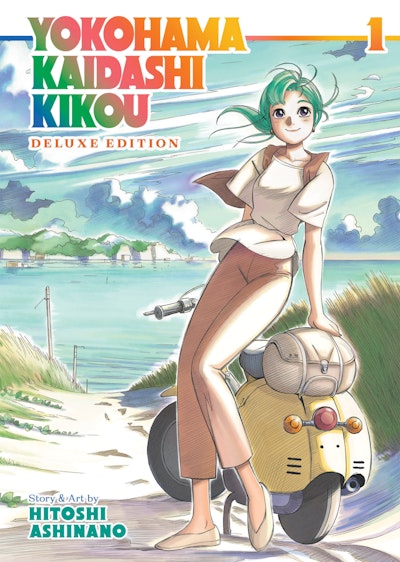
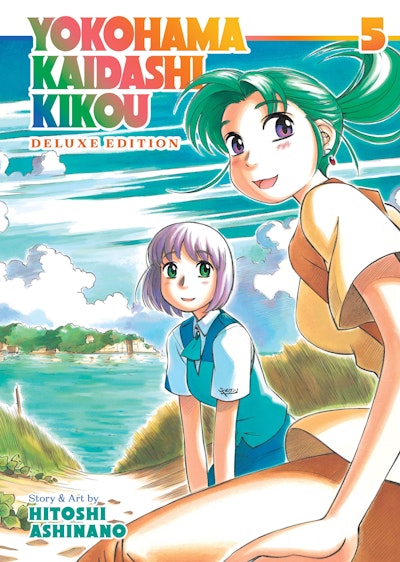
The checked 1998 AniList entry covers the earlier two-part OVA, not Quiet Country Cafe. The score on this page therefore cannot be mistaken for a combined verdict on both animation projects. The original first and final Deluxe Edition covers identify the actual complete reading objects.
Original visual reference
An ending world can still contain a meaningful afternoon
Our interpretation starts with scale. Environmental change gives the setting a large historical horizon, while Alpha’s café supplies small immediate encounters. The story does not need to turn every conversation into a direct attempt to reverse the catastrophe. The relationship between those scales gives an ordinary visit an unusual emotional weight.
Alpha’s continued attention to people and places lets the reader experience change through familiarity. A landscape is not simply an illustration between plot points; it is something the characters inhabit and remember. Compare what a returning image invites you to recognize with what it quietly reveals has become different.
The café makes hospitality a practical activity rather than an abstract virtue. Someone arrives, pauses and spends time in a place another person maintains. Those acts can matter even when the world offers no guarantee of permanence. Notice whether an encounter changes what Alpha expects from a day or how she remembers a visitor.
The android premise also complicates the experience of time. Different inhabitants do not necessarily face change on the same schedule. Without revealing late developments, track which experiences can be shared immediately and which become visible only through return. This approach helps discuss loss without reducing the series to a single prediction about humanity.
Quiet Country Cafe’s adaptation creates a different sensory route into that atmosphere. Ambient sound and music can suggest distance, weather and duration that a manga page leaves to the reader. A slow scene is not simply a page rendered at a fixed speed; it gives another form to the experience of waiting and noticing.
The selected animation can therefore be valuable without being complete. It offers an encounter with the world’s texture, while the manga develops repeated places over a longer reading route. Compare one ordinary movement through a landscape rather than demanding that a short OVA carry the source’s entire historical arc.
The source and later adaptation have documented voices
Hitoshi Ashinano is the manga creator identified by the English publisher and distributor. The checked first-OVA catalog identifies Ajia-do as its animation studio. Quiet Country Cafe belongs to a later project; Aniplex explicitly describes a changed staff rather than presenting it as the same production repeated.
The later project’s official production report describes recording dialogue before shaping animation to it and collecting natural wave and wind sounds on location. These are concrete production practices relevant to a discussion of pacing and atmosphere. They do not establish that every shot was drawn from a specific location photograph.
The credited first and final manga covers on this page come from the distributor’s publisher records. They preserve the work’s own imagery. Our route illustration is a separate editorial navigation aid, while the source novel’s authorship remains attributed to the bibliographic record.
Name the OVA before reading its score
AniList’s checked 1998 two-part OVA entry reports a weighted average of 74/100, displayed as 7.4/10 on October 3, 2026. This is an external score for that specific animated object. It does not rate the complete manga, the later OVA or the Japanese prose book.
The linked YKK community is a place to discuss landscapes, editions and reading experiences. Stock and reprint conversations can become obsolete quickly, and an enthusiastic post cannot establish publisher availability. We keep those destinations as supplementary navigation rather than sources for the core chronology.
Our description of the work’s melancholy and attention is an editorial reading, not a claim that every reader finds it soothing. A person can feel comfort, unease or both in a scene where ordinary life continues amid change. That openness is better discussed through a particular encounter than through an invented audience consensus.
Different territories can date the same book differently
The Australian distributor lists the final English Deluxe Edition book for August 13, 2024. Other territories may use a different local date. We identify the distributor and edition rather than silently treating every publication date as the original Japanese serialization ending.
Before collecting, check that the books belong to the same five-volume English package and that the intended format is available locally. Historical anime promotions and a 2008 prose bibliography do not guarantee current licensed access. The verified manga endpoint remains useful even when a particular shop has no copy.
No verified animation budget or net-profit calculation was established here. A later collection demonstrates a renewed publishing route, but its selling price cannot reconstruct the cost of a decades-old OVA. Related games or live-action products would remain outside this source and animation map.
Return to a place and measure what has changed
For a first close reading, select a café visit or journey along a familiar route. Note what the character attends to and what the image asks you to linger over. On a later return, compare the place before interpreting the change as a statement about the whole world.
After the complete manga, explore the two animation projects and the named Japanese prose companion as separate perspectives. The short screen routes are worthwhile visits, not a source-completion shortcut. Reading the manga from its beginning is more dependable than an unsupported chapter number after an OVA.
The publisher-linked edition records, historical anime project and production report below support different parts of this guide. The bibliographic record establishes the prose object. Community and wiki links offer discussion with spoiler caution; future licensed releases can refine access information while leaving these distinctions intact.
Primary sources and useful navigation
- Publisher distributor · first Deluxe Edition and five-book scope
- Publisher distributor · final Deluxe Edition
- Aniplex · historical Quiet Country Cafe project
- Aniplex · actual adaptation production report
- Japanese publishing bibliography · prose companion
- AniList · named anime audience score
Community and catalog routes
The production and publisher links support project facts. Catalog and community pages are secondary navigation and may reveal later events.
Explore related story guides
Original series imagery is reproduced under permission asserted by the site owner; the source and rights credits are retained. The route diagram is Animeteor’s own explanatory graphic.