Start with the original anime’s 26 full acts. The two-volume manga is a separate adaptation; catalog segmentation can produce a different episode count.
Reviewed 3 October 2026 · Opening premise and adaptation relationships. Major endings withheld; linked catalog summaries and discussions may contain spoilers. · Licensed access varies by country.

The source and screen branches

Official full-act sequence differs from segmented broadcast counts. Manga is an adaptation of the original project; soundtracks and concept books are supplementary.
- WATCH · original story: Full acts · 1–13 → Full acts · 14–26
- READ · separate adaptation: Manga · volume 1 → Volume 2 · conclusion
- OPTIONAL · production study: Storyboards / concept material · Soundtrack · separate listening
Begin with the original animated fairy tale
Princess Tutu is an original anime, so the manga is an alternative adaptation rather than a source you must finish first. Our recommended first route is the animated story in its full twenty-six-act presentation. The later manga has two volumes and its own conclusion. Keep those routes separate instead of inserting the books midway through a television episode list.
Ahiru is a duck who can become a girl and the ballerina Princess Tutu. She seeks the scattered pieces of a prince’s heart in a world where storytelling has unusual power over the inhabitants. The opening asks whether helping another person also gives the helper control over that person’s future. It supports a fairy-tale adventure and a more unsettling examination of assigned roles.
Choose animation if movement and music are your primary interest. Choose the manga after, or as a separate introduction, if you want to compare how the premise changes on the page. You do not need a classical-ballet education to begin, and this guide leaves the final resolution undisclosed.
The manga is a short parallel interpretation
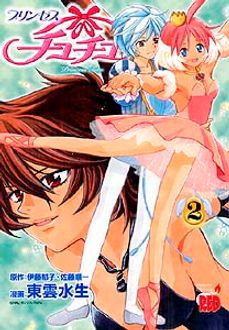
Akita Shoten’s official record identifies the second manga volume as the conclusion and credits Ikuko Ito, Junichi Sato and Mizuo Shinonome. It dates that Japanese volume to July 17, 2003. This is a reliable endpoint for the named two-volume manga, not proof that its scenes provide an exact chapter-by-chapter rendering of the animated story.
The cover reproduced below belongs to that actual concluding book. It is distinct from the anime guidebooks and from the picture-book materials included with video releases. Similar branding can make these objects look interchangeable in a search result; their purpose and contents are different.
For a comparison reading, start the manga at volume one. Record how quickly it establishes Ahiru’s problem, how dialogue replaces a danced exchange and how the relationships are framed. Do not assume that a shared character name makes two situations occupy the same point in their respective plots.
Twenty-six full acts versus segmented broadcast counting
The official King Records collection divides its story across acts one through twenty-six. Some anime catalogs, including the rated AniList record, count the segmented broadcast presentation differently. A listing of thirty-eight does not establish thirty-eight full-length narrative acts or an extra sequel season. This guide uses the official full-act sequence for practical viewing.
The home-video release also includes supplementary materials. Those can reveal how a scene was planned or how the concept developed, but they are not required intervening chapters of Ahiru’s journey. A soundtrack is a separate listening product, and an origin-concept picture book should not be mislabeled as a sequel novel.
When a platform groups shorter installments, compare act titles and collection contents rather than stopping solely because a numeric counter differs. The useful question is whether the complete animated story is present. No new broadcast season is asserted here from an anniversary release or a music collection.
Original visual reference
A performance can resist the role it appears to accept
Our reading treats ballet as a way of communicating with someone whose feelings are difficult to express directly. A danced encounter can begin like a confrontation, then make room for recognition. Notice whether the movement invites another character to respond or simply announces a victory. The emotional task is not identical to defeating an opponent.
The heart-fragment premise makes emotion something that can be recovered in pieces. That creates an uncomfortable question for a rescuer: who decides which feelings a person should have, and when? Helping Mytho is not merely assembling a harmless inventory. The effect of a recovered feeling matters to the person who must live with it.
Ahiru’s changing forms make heroic identity unstable. The impressive ballerina is not her ordinary condition, and the duck remains part of her experience rather than a disposable joke. Watch how physical awkwardness, embarrassment and persistence coexist. The contrast lets courage be an action taken under limits instead of a permanent state of elegance.
Fakir and Rue complicate any simple distinction between people who help and people who obstruct. An apparently protective response may preserve an assigned role; an apparently threatening response may emerge from fear of losing someone. Compare what a character says they want with the freedom their action leaves to another person.
The fairy-tale framing also makes repetition meaningful. A familiar setup can encourage the viewer to expect the same outcome, while a small change in a gesture or response opens another possibility. Tracking those changes is a better spoiler-light approach than searching for the ending first. It lets you notice when the story’s rules become an object of resistance.
Credit the concept, dance and sound separately
The official production record credits Ikuko Ito’s original concept and character design, Junichi Sato’s supervisory direction, Michiko Yokote’s series work, Hal Film Maker’s animation and Kaoru Wada’s music. These are different creative responsibilities. A studio name alone cannot explain every visual or musical choice.
King Records’ retained creator material is useful for investigating the project’s construction. Our analytical claims above remain interpretations of the premise and presentation, not quotations attributed to a creator. A practical next step is to compare a storyboard sequence with the finished movement while keeping the act and release edition identified.
The two original illustrations on this page are credited promotional and publishing images. The first establishes the animated project’s visual identity; the second establishes a particular manga product. Our route chart is an editorial navigation aid, not an official production diagram or a claim that the branches are identical.
The score belongs to the animated catalog entry
The checked AniList entry reports a weighted average of 81/100, displayed as 8.1/10 on October 3, 2026. It belongs to Princess Tutu’s named anime record with its catalog-specific episode count. It does not evaluate the manga, soundtrack or a Blu-ray transfer, and it is not Animeteor’s own rating.
Fan-wiki and community routes below offer places to discuss ballet references and character interpretation. They can expose late-story revelations, so a first-time viewer should approach them after the relevant acts. We do not turn individual enthusiasm or a recommendation thread into a claim that all viewers share one interpretation.
For a useful discussion, ask how the scene communicates a feeling before identifying a classical reference. Recognizing a composition can enrich the experience, but failing to name it does not invalidate an emotional reading. The page offers both production sources and discussion destinations so those two kinds of inquiry remain distinguishable.
An older collection is not a current stock promise
The official video and music pages document specific editions. They do not guarantee availability in every territory today. Check the licensed seller’s region, subtitles, audio languages and act coverage before purchasing; an attractive package can still be unsuitable for a particular player or language preference.
The manga publisher’s historical release date identifies the book’s publication. It is not evidence of a current English reprint or stock level. A used listing should be compared against the volume and ISBN rather than interpreted as a new adaptation announcement.
No verified production budget or net-profit figure was established for this review. Disc, book and soundtrack listings show related commercial products, but their retail prices cannot reconstruct animation costs. Games and any unrelated franchise products would belong outside the core viewing and manga routes.
Compare agency before comparing endings
Our recommended next question is who gains the ability to choose in a particular encounter. Follow Ahiru’s attempt to help, the response it produces and the limits of the role she is performing. This keeps the analysis grounded in a scene without requiring a summary of every late revelation.
After the animated story, read the two-volume manga as its own compressed interpretation. Compare the framing of an early relationship or a change in emotional emphasis. Avoid an unsupported exact chapter handoff: parallel adaptations should not be spliced merely because they share an opening situation.
The official act list and publisher endpoint below anchor the map. Catalogs and community pages provide supplementary navigation with their own counting conventions. Future licensed release information can update availability and packaging without rewriting the distinction between an original anime and its manga adaptation.
Primary sources and useful navigation
- King Records · official anime, full act list and production
- Akita Shoten · final manga volume and creators
- AniList · named anime audience score
Community and catalog routes
- MyAnimeList · named anime catalog
- Fan wiki · ballet and character navigation
- Reddit · Princess Tutu community
The production and publisher links support project facts. Catalog and community pages are secondary navigation and may reveal later events.
Explore related story guides
Original series imagery is reproduced under permission asserted by the site owner; the source and rights credits are retained. The route diagram is Animeteor’s own explanatory graphic.