Finish the original story before Clear Card. Read Collector’s Edition volumes 1–9 → Clear Card 1–16, or start with the original seventy-episode anime.
Reviewed 3 October 2026 · Opening premise and adaptation relationships. Major endings withheld; linked catalog summaries and discussions may contain spoilers. · Licensed access varies by country.
The source and screen branches

Clear Card follows the first story. Manga completion does not prove a new anime broadcast. Film material belongs to its animated branch; games/live-action are excluded.
- READ · source route: Collector’s Edition · 1–9 → Clear Card · 1–16
- WATCH · original television: Clow Card → Sakura Card → Original TV · complete 70 episodes
- OPTIONAL · animated films: 1999 film / 2000 follow-up · Check the film’s branch placement
- WATCH · later anime: Clear Card television · Source continuation differs
Finish the first story before entering Clear Card
Begin Cardcaptor Sakura with the original manga or the seventy-episode television anime. Clear Card is a later story, not an alternative first episode. For manga, read the complete nine-volume Collector’s Edition before the sixteen-volume Clear Card series. For animation, complete the original television run before exploring its films and the Clear Card anime.
Sakura Kinomoto releases the magical Clow Cards and becomes responsible for retrieving them with help from Keroberos. Her friend Tomoyo records and supports the adventures, while ordinary school and family life continue around the magical problem. The opening mixes responsibility with companionship rather than treating the young heroine as a solitary expert.
The manga and television routes differ in presentation and detail. This guide keeps them distinct so the reader does not assume that the end of one animated installment proves complete coverage of the corresponding source. Games are separate products and are not required stops in this map.
Two complete manga editions, with separate numbering
Kodansha’s Collector’s Edition catalog marks the original story complete and lists nine volumes by CLAMP. Its count belongs to that named edition. Older packages with different volume counts should not be mixed with it on the assumption that volume nine always covers identical material.
The Japanese publisher marks Clear Card volume sixteen as final, released April 1, 2024. The English volume-sixteen listing gives March 11, 2025. Those are edition release dates, not announcements that a new anime season has aired. A completed manga sequel and an animated continuation have separate publication histories.
Our reading suggestion is to follow both magical tools and relationships. A new card can create a practical challenge, but the emotional result often depends on who notices Sakura’s uncertainty or chooses to help. Read from the beginning of Clear Card after the original source rather than using the anime endpoint as an unverified source-page shortcut.
A later school year is a continuation, not a reboot
The official Clear Card anime description places Sakura in her first year of middle school after she has transformed the Clow Cards into her own cards. It also introduces a change to those cards and a new classmate. This establishes a sequel premise without revealing the resolution of the resulting mystery.
The original anime entry checked here is seventy episodes. The official franchise navigation distinguishes the 1999 film, the 2000 film and Clear Card. The 2000 film description begins after the Sakura Card story and identifies a new problem connected with Clow’s former home. It is an animated-branch follow-up, not a numbered volume in the manga source.
The selected Clear Card key visual demonstrates the promotional presentation of that anime project; it cannot prove adaptation coverage or the conclusion of the manga. This review does not assign an exact next chapter after Clear Card television, and does not assert a new continuation broadcast date without a confirmed official schedule.
Original visual reference

Care becomes part of magical competence
Our interpretation begins with the heroine’s dependence on others. A card-capture task can seem to demand an individual solution, yet Sakura’s confidence often develops in a network of advice, observation and practical assistance. That makes accepting help part of competence rather than evidence that she is failing to become heroic.
Tomoyo’s involvement gives the adventures an audience inside the story. Recording and costume preparation turn a dangerous task into something that can also be supported, remembered and presented with affection. Notice whether Sakura is comfortable with that attention; friendship is more meaningful when the person being supported remains visible as a person.
Everyday spaces are essential to this effect. Magical disruptions occur among familiar rooms, routes and school activities, so the problem is not only defeating an abstract threat. Sakura has to recognize when something ordinary has changed and decide how to respond without losing the relationships that make ordinary life valuable.
Cards invite a collecting mindset, but the story can be read through acts of understanding instead. Ask what behavior a magical phenomenon makes possible, whom it inconveniences and how Sakura learns its limits. An inventory of names is useful navigation; it does not replace the experience of solving a situation.
Clear Card revisits confidence after a previous achievement. Skills gained earlier do not remove every uncertainty from a new setting. The shift into another school year makes that return to learning credible. Compare how the earlier and later stories establish reassurance, while leaving the sequel’s central revelations for the actual reading or viewing route.
CLAMP’s roles and the anime team are specifically credited
CLAMP is the source creator credited by Kodansha. The official Clear Card anime page names director Morio Asaka, series composition and scripts by Nanase Ohkawa, costume and card design by Mokona, character design by Kunihiko Hamada and animation production by Madhouse. This establishes identifiable creative responsibilities rather than a generic attribution to the franchise.
The original anime catalog entry also identifies Madhouse, but shared studio identity does not establish identical staffing for every episode or film. For a closer scene comparison, use the named installment’s credits. The official 2000 film page provides its own staff and story record.
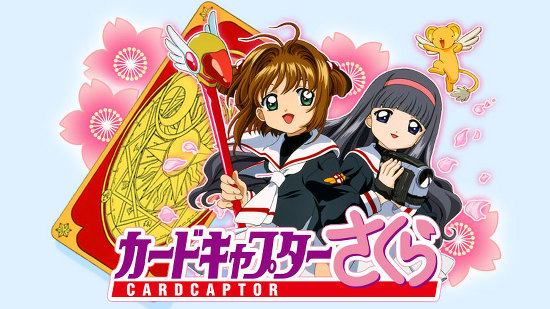
The original-series promotional visual and the Clear Card image on this page belong to the credited rights holders. They help distinguish the two projects visually. They are not screenshots selected to prove an uninspected ending, and our explanatory map remains separate from official character artwork.
One anime score, with source completion kept separate
AniList’s named original television entry has a checked weighted average of 81/100, shown as 8.1/10 on October 3, 2026. This is a rating of that seventy-episode entry. Clear Card manga and anime have their own records and are not merged into this score.
Community questions about collecting the original story often concern the difference between nine-volume and older twelve-volume packages. The linked fan and catalog routes can help a reader identify an edition, but publisher records determine the complete Collector’s Edition route used here. We do not claim a universal reader preference from those questions.
The distinction matters for contemporary expectations too. A reader can finish Clear Card in manga while still investigating animation announcements. Completion in one medium should not be used as evidence of a release in another. Our route therefore names the medium at every branch instead of labeling the franchise simply finished.
A release date belongs to a product and territory
The final Japanese Clear Card volume’s April 2024 date and its English March 2025 date refer to different editions of the same concluding source route. Their page counts and identifiers can differ without establishing that one is a separate sequel. Compare edition contents before transferring volume instructions.
The official anime pages also retain older rebroadcast and streaming information. Those lists are historical project documentation, not a guarantee that every service still operates or licenses the title in your country. Check the current local distributor when choosing where to watch.
No verified production budget or profit calculation was established in this review. Books, collectibles and games show a wider product ecosystem, but current retail prices cannot reveal production costs. Game adaptations can be discussed separately without being inserted between Clow Card, Sakura Card and Clear Card story routes.
Let each version answer its own question
Choose the manga for page timing and a complete source reading path, or the original anime for movement, voice and music. After finishing that first route, explore the sequel or the animated films according to their named branch. You do not need to splice source volumes and screen episodes into one compulsory sequence.
Useful comparison questions include how a disruption enters an ordinary place, who supplies reassurance and how a new magical tool changes a relationship. Record the exact edition and installment before comparing a scene. Similar imagery across projects does not automatically establish the same narrative position.
The sources below separate publisher completion records from anime premises, credits and film descriptions. Fandom and MyAnimeList remain discovery aids and can reveal spoilers. A later licensed comparison may refine continuation guidance; until then the complete-source route is more reliable than an invented exact handoff.
Primary sources and useful navigation
- Kodansha · complete original Collector’s Edition
- Kodansha Japan · Clear Card final volume
- Kodansha English · Clear Card volume sixteen
- Official · Clow Card anime
- Official · Clear Card premise and staff
- Official · 2000 film record
- AniList · named anime audience score
Community and catalog routes
- MyAnimeList · named anime catalog
- Fan wiki · supplementary story and edition discovery
- Reddit · edition-identification discussion
The production and publisher links support project facts. Catalog and community pages are secondary navigation and may reveal later events.
Explore related story guides
Original series imagery is reproduced under permission asserted by the site owner; the source and rights credits are retained. The route diagram is Animeteor’s own explanatory graphic.