Watch episodes 1–26 or read the complete manga volumes 1–34. The English two-in-one omnibus begins with source volumes 1–2, scheduled for November 17, 2026.
Reviewed 3 October 2026 · Opening premise and adaptation relationships. Major endings withheld; linked catalog summaries and discussions may contain spoilers. · Licensed access varies by country.

The source and screen branches

Television and manga are alternative routes. Source material continues beyond the anime. Collected editions have different numbering and release status; games and live-action stay separate.
- WATCH · television: Episode 1 · Koyuki’s introduction → Episode 26 · anime endpoint
- READ · original manga: Source volume 1 → Complete source · through 34 · Final-book companion one-shot
- READ · alternate edition: Japanese collection · 17 books · English omnibus · begins Nov 2026
A quiet teenager finds a reason to keep practicing
Yukio Tanaka, usually called Koyuki, begins with little sense of what could make his ordinary life different. An encounter with the unusual dog Beck leads him to guitarist Ryusuke Minami and to a musical world he has mostly experienced from outside. Learning to play is not an instant transformation into a confident star. It gives him a reason to return to something difficult and meet people whose expectations can both help and unsettle him.
Watch the twenty-six television episodes in numbered order for the Madhouse adaptation. TV Tokyo’s official episode archive separates its list into episodes one through thirteen and fourteen through twenty-six; those are navigation groups within the same run. They do not identify two independent seasons or a remake.
Harold Sakuishi’s thirty-four-volume manga is the original source. It contains a much longer band narrative than this television introduction. Begin at manga volume one for the full reading route. The live-action film is another adaptation, not the next anime chapter. Games likewise remain outside the source-and-anime order, even when they reuse the band name or familiar songs.
The complete digital series and forthcoming omnibus are different editions
Kodansha’s licensed English catalog identifies thirty-four digital source books and a completed series. The Japanese volume-thirty-four record marks the final collected book and also identifies a companion one-shot about Eddie Lee. That supplemental story belongs to the final source collection; it does not create an unverified volume thirty-five.
An English two-in-one omnibus edition was announced for fall 2026. The distributor’s current first-book record gives November 17, 2026, lists 416 pages and explicitly collects original volumes one and two. It also describes a revised translation and new cover and interior design. On this October 3 review date that first omnibus is forthcoming, not already available as a complete printed set.
The Japanese publisher’s April 2026 animation campaign separately describes a completed seventeen-volume new edition. That is a Japanese collected format, not evidence that all planned English omnibuses have been published. When comparing editions, identify language, included source volumes and present release status. A reduced spine count can repackage a long manga without removing half its fictional history.
The television ending is a route endpoint, not the end of all source material
Complete episodes one through twenty-six for the verified anime route. The original broadcaster archive provides numbered ordering and summaries, although later summaries contain significant story developments. The introductory map therefore gives the first and final numbers without reproducing outcome-heavy episode descriptions.
For the manga, follow the standard collection from one through thirty-four. Online discussions often identify a particular post-anime source volume, but that advice needs an edition and a scene comparison. We have not established a lossless handoff that preserves every reordered or omitted passage. A new omnibus number also cannot be substituted for an original volume number without checking its contents.
The digital source, Japanese seventeen-book edition and English omnibus plan are reading alternatives. They are not consecutive sequels. The source’s final collected one-shot is supplemental reading after the central journey is known. No live-action performance, game route or soundtrack album is required between episode twenty-six and manga reading; each belongs in separate adaptation or music discovery.
Original visual reference
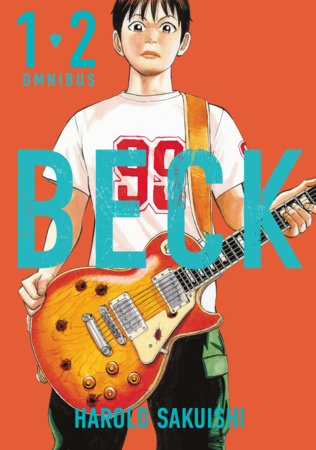
Practice makes the possibility real before it makes the player impressive
Our reading of BECK centers on the difference between wanting a musical identity and living through the work that identity requires. Koyuki does not need a fully formed personal philosophy before learning an instrument. Repetition gives a vague wish a schedule and a physical demand. Small improvements consequently matter because they turn a possible future into something he can act on today.
A band also makes confidence dependent on other people. Someone can practice privately while avoiding the risk of being heard; a rehearsal asks whether that progress can become useful to a group. Each member brings a different idea of what the band should sound like and what it should achieve. Musical cooperation is therefore a negotiation of timing, trust and ownership rather than a simple sum of talented individuals.
Ryusuke can open a door without becoming an uncomplicated model to imitate. His experience makes another world visible, but his decisions and history introduce pressures Koyuki cannot control by practicing harder. This keeps the story from treating the mentor as a shortcut around uncertainty. Learning from someone includes deciding which expectations you can responsibly take on.
A performance changes the scale of that uncertainty. Before a song begins, an audience can feel like a collection of judgments; once people respond together, it can become part of the event. The emotional movement is not only from obscurity to fame. It is from playing beside other people to discovering a moment in which those separate efforts produce something none could make alone.
Manga invites the reader to imagine sound through faces, movement and the space around a performance. Animation commits to an audible version, with a singer, instrumental balance and a particular duration. That makes soundtrack and language choices central to comparison. Ask what each version asks the audience to hear or imagine, instead of treating recorded music as automatic proof that animation has completed the source’s emotional work.
The original broadcaster identifies the people shaping the band’s sound
TV Tokyo credits Sakuishi’s Monthly Shonen Magazine manga as the source. Osamu Kobayashi is credited for direction, script and series composition, while Motonobu Hori designs the animated characters. Yukio Nagasaki handles sound direction. Madhouse is the animation studio; those television responsibilities are distinct from the original manga creator’s authorship.
Toru Hidaka of BEAT CRUSADERS is credited as overall music producer, with DefSTAR handling music production. The opening theme is performed by BEAT CRUSADERS, and the broadcaster’s ending-theme record identifies Sowelu. We identify the credited works without reproducing song lyrics or confusing an opening performance with an extra episode of narrative.
The original Japanese cast includes Daisuke Namikawa as Koyuki, Yuma Ueno as Ryusuke, Shintaro Ohata as Chiba, Kenji Nojima as Taira and Toru Nara as Saku. Voice acting and singing choices can be compared as parts of named language versions. A listener’s preference for a dub is a performance judgment, not a change to manga continuity or a separate band in the fictional chronology.
The same discussion supports different preferences about language and pacing
The linked first-watch discussion praises the way rehearsals, romance and band tensions keep several concerns active. Its author finds the interwoven narrative absorbing rather than slow. Replies nevertheless describe the series as a slow build, showing that two enthusiastic viewers can value the same experience while perceiving its pace differently.
The discussion also separates language preferences. The author favors the original performance for differences in English ability between characters, while several replies prefer the English dub. These are useful listening perspectives rather than a consensus that one track is the only correct route. The thread’s precise source-coverage claim and speculation about production savings remain fan statements; neither becomes a verified chapter handoff or budget figure here.
The named AniList record was checked on October 3, 2026. Its weighted average is 80 out of 100, normalized to 8.0 out of 10 for the original twenty-six-episode television anime. The thirty-four manga books, film and game are excluded. We retain that adaptation scope and do not combine individual review scores with it or conduct a local user vote.
A free campaign can expire while the source remains available elsewhere
Kodansha’s official April 2026 announcement offered all twenty-six anime episodes through its Full Anime TV channel until May 31, 2026. That deadline has passed at this review. The campaign proves a historical licensed distribution event; it does not justify telling current visitors that the entire show is still free on that playlist.
The English omnibus announcement and distributor preorder establish a new commercial edition with named contents, not sales achieved before publication. Current digital availability must likewise be checked on the licensed platform for the reader’s territory. A collector offering a complete older publisher run may mean complete for that edition, rather than all thirty-four books of the original story.
No verified work-specific anime budget, music-rights cost or profit statement is supplied by these sources. The fan review’s guess that some computer animation saved money is not accounting evidence. What can be stated is who made the adaptation, which source books exist, what the new edition contains and whether a promotion or release date is past or forthcoming.
Let the anime introduce the band, then choose a source edition deliberately
Use TV Tokyo’s staff and numbered episode archives for the television run, and Bandai Channel’s licensed catalog for the named anime and original imagery. Watch episodes one through twenty-six without interpreting the archive’s two navigation groups as separate seasons. Later source reading does not require revisiting the story through the live-action film first.
Use Kodansha’s complete digital catalog and Japanese final-volume record for the source endpoint and included companion one-shot. For the new English printed edition, check the distributor’s November 17, 2026 listing and the original volumes it collects. A new release can update this guide’s availability information while leaving the thirty-four-volume source hierarchy intact.
Nodame Cantabile offers a comparison of rehearsals, shared performance and musical ambition in classical education. Honey and Clover provides another view of artistic careers and the uncertainty surrounding talent. Those are independent recommendations. Keep source continuation, alternative packaging and other adaptations visible as separate choices so that a visitor can decide what to explore next without an invented compulsory route.
Primary sources and useful navigation
- TV Tokyo · original staff, cast and music credits
- TV Tokyo · numbered twenty-six-episode archive
- Bandai Channel · licensed anime record and original artwork
- Kodansha · complete licensed thirty-four-book digital source
- Kodansha · English source volume one
- Kodansha · Japanese final source book and companion one-shot
- Kodansha · English two-in-one omnibus announcement
- Penguin Random House · omnibus-one contents, original cover and November 2026 schedule
- Kodansha official release · ended spring 2026 anime campaign and Japanese seventeen-book edition
- AniList · named anime audience score
Community and catalog routes
- MyAnimeList · named anime catalog
- Reddit · first-watch review, pacing and language-version discussion
The production and publisher links support project facts. Catalog and community pages are secondary navigation and may reveal later events.
Explore related story guides
Original series imagery is reproduced under permission asserted by the site owner; the source and rights credits are retained. The route diagram is Animeteor’s own explanatory graphic.
Games and live-action adaptations
- BECK — Live action: Film · 2010
Verified historical PlayStation 2 product
Marvelous’ product archive identifies BECK THE GAME as a PlayStation 2 adventure released in Japan on 31 March 2005, product code SLPS-25474. The publisher describes source/anime episodes alongside game-original material. This is a historical game product, distinct from the 2010 film and the forthcoming English omnibus. Its existence does not announce a new 2026 game or establish a currently available English edition.