Start with TV101 or manga volume1. Miss Lonely Yesterday then Cross Road follow the TV story; films are alternatives, the prose book optional and MIX a later shared-world work.
Reviewed 3 October 2026 · Opening premise and adaptation relationships. Major endings withheld; linked catalog summaries and discussions may contain spoilers. · Licensed access varies by country.

The source and screen branches

Watch the later specials after the original TV story. Films form an alternative adaptation lane. The prose side story follows core-story knowledge. MIX is a new-generation shared-world successor; other Adachi works are comparisons, not compulsory chapters.
- WATCH · TV and later: Original TV · 101 → Miss Lonely Yesterday → Cross Road
- WATCH · film alternative: Sebangou no Nai Ace → Sayonara no Okurimono → Kimi ga Toorisugita
- READ · manga editions: Reproduction manga · 26 · Bunko manga · 14
- READ · optional prose: Hikaru Aoki side story
Start with the twins and their childhood friend
Touch begins with twins Tatsuya and Kazuya Uesugi and their neighbor Minami Asakura. Their shared childhood creates familiar roles before high school forces those roles into question. Kazuya is the visibly diligent brother, while Tatsuya appears less interested in proving himself. Baseball gives those comparisons a public stage, but the opening relationships matter before a tournament can decide anything. Start with the manga or the original television adaptation to encounter that foundation.
The original anime has 101 episodes. After it, viewers interested in the characters’ later lives can choose the television specials Miss Lonely Yesterday and Cross Road in that order. These are later screen extensions with their own production records. The three theatrical anime films form a shorter alternative lane, while the source manga remains the starting point for readers who want Adachi’s original presentation.
Touch also has a verified Japanese prose side story and a later manga-world connection to MIX. These require different labels: the prose book is an optional expansion, and MIX follows a new generation at the same school. Neither makes every work by Mitsuru Adachi part of one continuous timeline. Games and live-action productions, when separately documented, remain outside this watch-and-read sequence.
A manga bunko edition is still manga; the prose side story is a different book
Shogakukan’s complete-reproduction Touch catalog lists 26 volumes and marks the manga complete. Begin with volume one in that edition. The publisher also has a Shogakukan Bunko catalog containing 14 manga volumes. Bunko here identifies a collected-book edition, not a transformation into prose fiction. A visitor seeing the shorter count should check the edition before assuming that chapters are missing or that an unlisted continuation is required.
The distinct prose title is Touch: Mou Hitotsu no Last Scene, by Hikaru Aoki. Shogakukan describes it as a novel based on Adachi’s original, including familiar scenes and episodes outside the comic. Its framing returns to a later period and remembers earlier relationships. Our Novel label refers to that actual narrative book, while the 14-volume bunko manga retains the Manga label.
The novel is best approached after the core story because its framing and publisher description refer to later developments. We do not treat it as the source of the 1985 television series, a replacement for the manga ending or a mandatory bridge into MIX. The verified publisher link is Japanese. An English-language guide does not imply that every linked edition has a licensed English translation; we have not verified such a Touch prose release for this article.
TV, theatrical alternatives, later specials and MIX have different functions
The licensed original-TV catalog verifies 101 episodes. The complete TV route takes the viewer through that production before the later specials. VAP’s soundtrack description places Miss Lonely Yesterday in December 1998 and Cross Road in February 2001, explicitly describing the latter as a further continuation. The recommended order follows that documented relationship rather than ordering the works by a later DVD reissue date.
Toho’s theatrical listings identify Sebangou no Nai Ace, Sayonara no Okurimono and Kimi ga Toorisugita Ato ni as separate anime movies. Their named progression supplies an alternative way into the school-era story. They should not be presented as three new arcs that must be watched after all 101 television episodes. A film-focused viewer and a television-focused viewer can therefore use different lanes without confusing shorter adaptations with additional sequel seasons.
Shogakukan’s MIX profile describes a successor set roughly 30 years after Touch at Meisei school, with new stepbrothers pursuing baseball. That is a specific shared-world relationship. Cross Game, H2 and other Adachi works can be valuable comparisons without automatically being inserted between Touch and MIX. We also distinguish the 2005 live-action film from these anime routes. A familiar franchise title does not determine its medium or its chronological function.
Original visual reference
Competition begins with the roles people assign each other
Our reading begins with how easily an everyday comparison can become an identity. When one brother is known for effort and the other for apparent indifference, others start interpreting their actions through those expectations. A small choice then carries more weight than its immediate result: it can reinforce the role or resist it. The story’s early social arrangements make later sporting effort meaningful because achievement changes how a person can be seen.
Minami’s position deserves attention beyond the idea of a romantic prize. Childhood intimacy creates knowledge of the brothers that outsiders may not share. Watch how her reactions complicate the publicly accepted comparison between them. A glance or a teasing remark can suggest a different understanding from the one expressed openly. This makes relationship development depend on what people notice and avoid saying, as well as on decisive declarations.
Baseball gives those private tensions a visible measure without resolving every feeling. Training, selection and a match result can make commitment legible to a team; they cannot directly reveal why a person chose that commitment. The useful question is what the athletic goal means within the relationships around it. This interpretive approach helps a newcomer appreciate ordinary scenes instead of judging every pause only by whether it advances the next inning.
Identify which Touch production a credit belongs to
The original television catalog credits Gisaburo Sugii as general director, Hiroko Tokita as series director, Yumiko Takahoshi and Satoshi Namiki for series composition, and Hiroaki Serizawa for music. The lead cast names Yuji Mitsuya as Tatsuya, Noriko Hidaka as Minami and Keiichi Nanba as Kazuya. These concrete credits provide useful entry points into performance and adaptation research without assigning every later version an unchanged team.
Toho’s first theatrical entry names Sugii as director. Its second identifies him as general director and Naoto Hashimoto as director; the third names Sugii as general director and Akinori Nagaoka as director. VAP’s paired-special record credits Tomoko Konparu for the script and Nagaoka for direction. Preserve those different responsibilities when comparing the films and specials. A franchise-level director label can hide meaningful differences between actual productions.
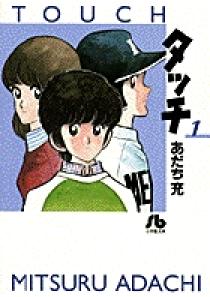
Pony Canyon’s two-disc Touch best compilation identifies the music as a separate catalog item, dated October 15, 2014. Its track list includes television themes and songs associated with the films. That is useful for exploring how music recalls different versions, rather than proving that all those versions share one plot. The original TV visual and publisher’s manga cover used here similarly retain their media identities and source credits.
Slow development can be the attraction or the reason to choose manga
The official AniList record for the original 1985 television adaptation reports 78/100, displayed here as 7.8/10 and observed October 3, 2026. Its scope is the 101-episode series. The external score does not include the theatrical trilogy, later specials, prose side story or MIX. A numerical rating is one discovery aid; its scope should remain visible beside an article discussing a much wider publishing and adaptation network.
A selected r/MitsuruAdachi discussion contains different recommendations about Touch. One viewer praises watching it before Cross Game and MIX, while others prefer reading and object to the anime’s pacing or adaptation choices. Those comments show a practical decision: whether a newcomer values the longer audiovisual experience or wants the author’s source presentation. Their claims about filler and ending coverage are opinions to investigate, not an official replacement episode index.
Our recommendation is strongest for people who enjoy relationship development alongside sport. A viewer seeking constant tactical baseball may find the early domestic and school scenes slower than expected. A reader comparing editions can start with the complete manga and later explore the performances and music. Neither choice requires accepting that popularity determines personal fit. The linked discussion includes later-story and other-Adachi-work details, so spoiler-sensitive visitors should open it deliberately.
Long-lived recognition is visible in packaging and licensing, not an invented profit figure
VAP’s March 24, 2006 DVD record packages the two later specials together and describes them as reissues of the 1998 and 2001 productions. Its historical promotional account reports a 25.6 percent average audience share for the original television run and figures in the 23 percent range for the specials. These are attributed historical broadcaster figures, not current streaming demand, worldwide audience size or a measured return on investment.
Shogakukan’s 2025 Adachi anniversary coverage describes merchandise based on the fictional COFFEE Minamikaze cafe, including curry and tableware. It also reports a cumulative collected-volume figure exceeding 200 million for Adachi’s works collectively. That author-wide total must not be relabeled as sales of Touch alone. The merchandise demonstrates a documented licensing initiative around recognizable story details; it does not reveal the margin earned by the creator, publisher or retailer.
Availability also requires care. d Anime Store’s March 22, 2024 notice lists the TV series and three theatrical films among titles ending distribution on March 31, 2024. A retained catalog page and image therefore do not establish uninterrupted present access. We use that page for production details and original imagery, while advising readers to check their local licensed service. No universal streaming promise, budget estimate or speculative franchise profit is added.
Follow the core story before optional later lives and another generation
Begin with the manga’s first volume or the television series’ first episode. For a longer screen continuation, choose Miss Lonely Yesterday and then Cross Road after the original anime. For a shorter school-era presentation, use the three named theatrical films as a separate lane. The prose side story can follow knowledge of the core story; its title and author should remain visible so it is not confused with the manga bunko edition.
MIX is the next shared-world discovery point because the publisher explicitly connects its later Meisei setting to Touch. It has new protagonists and its own source and screen records, rather than operating as Touch episode 102. Other Adachi titles remain comparison suggestions. Shogakukan’s catalogs explain source editions; Toho’s film listings identify the theatrical productions; VAP documents later screen relationships. AniList and MyAnimeList provide named catalog navigation, while the community thread supplies personal reading and viewing preferences.
Future updates should check actual licensed access, source-edition availability and any newly documented adaptation or publication. A new DVD package should update edition information rather than add a story installment. A verified English source release would deserve a language-specific reading link. Precise manga continuation chapters would require direct coverage verification. These distinctions let the guide grow while continuing to offer a clear first step instead of an increasingly tangled list of every product sharing the name.
Primary sources and useful navigation
- Shogakukan · reproduction manga first volume and 26-volume catalog
- Shogakukan · manga volume 26 endpoint
- Shogakukan · fourteen-volume bunko manga edition
- Shogakukan · Hikaru Aoki prose side story
- d Anime Store · original TV101, cast, staff and original artwork
- d Anime Store · historical March2024 distribution end notice
- Toho · first theatrical adaptation
- Toho · second theatrical adaptation
- Toho · third theatrical adaptation
- VAP · paired later TV specials, credits and historical audience figures
- VAP · specials’1998/2001 sequence and original soundtrack
- Pony Canyon · dated music compilation and tracks
- Shogakukan · MIX shared-world successor profile
- Shogakukan · anniversary merchandise and author-wide circulation scope
- AniList · named anime audience score
Community and catalog routes
The production and publisher links support project facts. Catalog and community pages are secondary navigation and may reveal later events.
Explore related story guides
Original series imagery is reproduced under permission asserted by the site owner; the source and rights credits are retained. The route diagram is Animeteor’s own explanatory graphic.
Games and live-action adaptations
- Touch — 2005 Japanese Film — Live-action: Japanese theatrical film