Start with the 2009 TV series, episodes 1–26. The 2004 three-part OVA is an alternate adaptation; Hiiragi’s manga has three volumes. The visual novel is a game, kept outside this viewing/reading map.
Reviewed 3 October 2026 · Opening premise and adaptation relationships. Major endings withheld; linked catalog summaries and discussions may contain spoilers. · Licensed access varies by country.
The source and screen branches

The 2004 OVA is not TV episodes27–29. The visual-novel game origin is explained in the article but excluded from the watch/read map; no prose novelization verified.
- WATCH · TV: 2009 Requiem · 1–26 · Complete television route
- WATCH · alternate: 2004 The Animation · OVA · episodes 1–3
- READ · manga: Hiiragi · volume 1 → Volume 2 → Volume 3 · final
Choose the twenty-six-episode television version by its full subtitle
Phantom: Requiem for the Phantom follows a young Japanese traveler who becomes entangled with Inferno, an organization operating through assassinations. The girl called Ein is already part of that world; the traveler’s past is erased as he is trained into another operative. The opening premise gives the story a severe question about identity: what remains of a person when someone else controls the name, memory and skills through which he can act?
For a first screen entry, choose the 2009 television series and watch its 26 episodes in numbered order. TV Tokyo’s archive identifies episode 26 as the final installment, while the licensed catalog lists the full run. There is no need to complete a separate earlier video production before starting this version. Its subtitle matters because searches for Phantom can return multiple adaptations and unrelated franchises.
Phantom: The Animation is a different, three-part 2004 OVA. Its licensed record names another director, studio and principal cast. Treat it as an optional alternate adaptation, rather than television episodes 27–29 or a concluding sequel. If comparing both screen versions, finish the television run first for our recommended entry, then watch the OVA from its own first episode with its separate production identity visible.
| Version | Verified coverage | Role |
|---|---|---|
| Requiem for the Phantom | 2009 TV, 26 episodes | Recommended first screen entry |
| Phantom: The Animation | 2004 OVA, 3 episodes | Optional alternate screen version |
| Masaki Hiiragi manga | 3 volumes | Separate comic adaptation |
| Phantom of Inferno | Visual novel game origin | Background; outside this watch/read map |
A visual novel is a game format, not a verified prose novelization
Nitroplus’s adaptation statement describes its earlier game becoming television animation and identifies Gen Urobuchi’s role in writing that game’s scenario. The visual-novel label does not mean that a published prose novel must be read before the anime. Under Animeteor’s adaptation rule, the game origin is explained here but games remain outside the anime and manga viewing/reading map.
KADOKAWA credits Masaki Hiiragi for the comic and Nitroplus for the original work. Its third-volume record identifies the conclusion, with a paper edition dated March 23, 2010 and a separately dated digital edition. Read volumes one through three as their own comic route. Do not treat the third volume as an automatically verified continuation after the television finale, or claim an exact anime-to-comic chapter transition that the publisher has not supplied.
The reviewed official records did not establish a separate prose novelization or a current official English publication of Hiiragi’s manga. Those absences remain stated research limits, rather than empty slots filled with fan translations or an invented English purchase link. The earlier OVA and later television production are both related to the game property, but their separate titles and creators prevent a misleading single continuous season count.
Visual case: an embrace can coexist with a weapon and a constrained identity
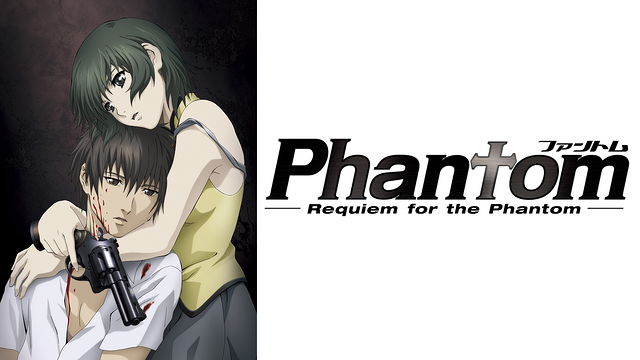
The licensed television artwork places Ein behind Zwei with an arm around him. A handgun occupies the front of the grouping, and marks of injury are visible on his face and shirt. The figures sit against a dark field on the left, while the right carries the full Requiem for the Phantom title on white. Their physical closeness and the weapon occupy the same frame rather than appearing as separate promotional promises.
Our interpretation is that this arrangement asks the viewer to hold intimacy and danger together. The image does not tell us whether closeness grants freedom from the organization, nor does it authorize a prediction about the ending. It is a supplied promotional illustration, not a newly fabricated screenshot or a verified depiction of one precisely identified episode.
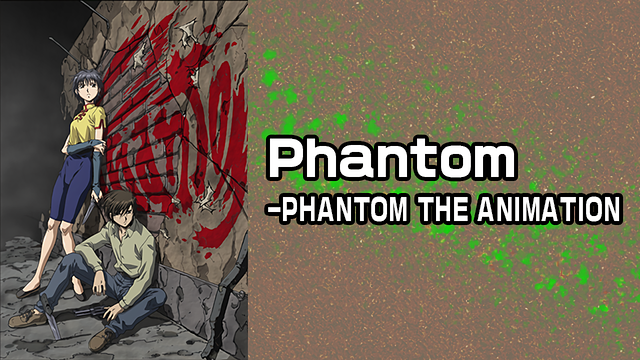
The 2004 OVA artwork places a standing girl and a seated young man beside damaged masonry marked with a large red pattern. A gun hangs beside the seated figure. The separate Phantom: The Animation title fills the textured field on the right. Comparing these original images helps visitors recognize which adaptation a catalog is displaying. Differences in poses and drawing treatment are observable; they do not establish that the OVA is an earlier chapter in the television version’s continuity.
Original visual reference
Skill can increase while freedom decreases
Our analytical starting point is the difference between competence and agency. Inferno trains a person to become effective, but the official premise also describes the erasure of his previous life. Becoming better at a demanded task does not mean becoming more able to choose the life in which that task matters. The assassin’s development therefore complicates an ordinary progression story about learning, gaining confidence and reaching independence.
Ein’s position makes that distinction relational. She is both a person encountered inside the organization and part of the process through which the newcomer learns its rules. A bond formed under coercion may be real while still carrying that environment’s limitations. Our reading focuses on this overlap rather than assuming that affection automatically removes responsibility or that a trained operative’s every decision is freely made.
For a rewatch, distinguish names assigned by others from memories and commitments claimed by the characters themselves. Notice when a role makes someone valuable to Inferno and when a relationship points toward a different kind of value. That is an interpretive framework, not a medical diagnosis of memory loss or a statement that every supernatural or psychological premise is clinically realistic. It also permits a discussion of the story’s control mechanisms without revealing the final outcome.
Urobuchi participates in the television scripts, but is not its sole writer
TV Tokyo credits Koichi Mashimo as director, Yosuke Kuroda for series composition and Bee Train for animation production. Its script list includes Urobuchi alongside Ippei Hyodo, Shogo Yasukawa, Yukito Nonaka, Hideki Shirane, Tatsuya Takahashi, Noboru Kimura and Kuroda. Describing the television series as entirely written by Urobuchi would collapse an explicitly collective production into the identity of the originating game writer.
The television character-design credits also name multiple artists, including Yoshimitsu Yamashita and Mutsumi Sasaki. Hikaru Nanase provides the music, with Lantis handling music production and GENCO the production role listed by the broadcaster. Ayahi Takagaki voices Ein, Miyu Irino voices Zwei and Miyuki Sawashiro voices Cal. These named credits belong to this television adaptation and should be checked before discussing an individual performance or soundtrack.
The 2004 OVA’s catalog instead credits Keitaro Motonaga as director, Arcs Create as animation producer and Kotaro Nakagawa for music, with Omi Minami and Takahiro Sakurai in the principal roles. Its different credits are useful evidence for treating it as another production. Nitroplus’s statement also connects Mashimo’s team with Noir, but a creative connection is not proof of a shared universe or a Noir prequel requirement.
A recommendation thread exposes disagreement, rather than one settled verdict
The displayed AniList score is 75/100, normalized to 7.5/10 and observed October 3, 2026, for the 2009 television series with 26 episodes. It does not rate the three-part OVA, Hiiragi’s manga or a particular game route. The named scope prevents an external television audience score from being mistaken for an average across the entire property.
A selected r/anime recommendation thread praises the characters, atmosphere and music while its replies challenge assumptions about older animation. Other respondents disagree about the ending’s effectiveness and clarity. One practical reply reminds readers that the short OVA and the longer television series are different choices. This is a collection of individual reactions, not a representative survey or proof that one interpretation of the ending is officially correct.
Our recommendation is for viewers interested in identity, coercive institutions and relationships inside a crime thriller. The linked discussion includes ending material, so first-time viewers can use this page’s spoiler-limited route instead. Praise for the music does not settle a disagreement about narrative resolution, and disappointment with the ending does not establish that another adaptation must be watched to repair it. Finish the named version before choosing which comparison or interpretive discussion to pursue.
There is a documented sales recollection, but it concerns the game
Nitroplus’s 2009 adaptation statement provides unusually concrete historical business context. Producer Digitarou recalls an original target of 20,000 copies, initial orders below 2,000, and a repeat order exceeding 1,000 after roughly a month. He also reports cumulative franchise game sales surpassing 150,000 across changing versions by the time of that statement. These are company-reported historical figures, not independently audited anime revenues or current lifetime totals.
The useful inference is limited: the statement attributes growing momentum partly to buyers spreading recommendations online and to support from distributors, shops and magazines. It does not provide the anime’s production budget, profit, marketing spend or a measurable return from any particular campaign. We keep the reported unit figures attached to their date, speaker and game scope rather than turning them into a claim that the television series sold the same number of discs.
KADOKAWA’s third manga volume illustrates a different catalog issue: its paper and digital publication dates differ. An electronic release date is not evidence that the comic’s story was first created on that day. Likewise, TV Tokyo’s October 2009 notice of episode 26 being added to its streaming archive is a service-update record, not necessarily the original broadcast date. A later package or game port needs its own labeled publication identity before it enters a release discussion.
Complete one adaptation before comparing versions or endings
Begin with Requiem for the Phantom episodes one through twenty-six. Read Hiiragi’s manga from volume one if choosing the comic route, and keep its three-volume completion separate from the television episode count. Explore the 2004 OVA as another screen adaptation, not a mandatory prequel or appended finale. The game origin remains informative background outside the core map.
TV Tokyo’s credits and final-episode archive, Nitroplus’s adaptation statement, licensed catalogs for both screen versions and KADOKAWA’s concluding manga record form the primary evidence here. MyAnimeList and community references can aid navigation, but their synopsis and ending pages may disclose major turns. The selected discussion is useful for identifying questions readers ask; it does not replace publisher evidence for volume coverage or production credits.
A future update should distinguish an announcement of a game edition, an anime reissue and a newly produced screen installment. It should also preserve the separate score scopes and avoid labeling an interactive visual novel as an ordinary prose book. That keeps adaptation research useful as the property changes while allowing a newcomer to follow a straightforward television route without purchasing unrelated media or treating fan preferences as required continuity.
Primary sources and useful navigation
- TV Tokyo · television staff and cast
- TV Tokyo · episode 26 final, service archive notice
- Nitroplus · adaptation statement and historical game-sales recollection
- d Anime Store · twenty-six-episode TV version
- d Anime Store · separate 2004 three-part OVA and credits
- Bandai Channel · OVA version identity
- KADOKAWA · Hiiragi manga 1, author and original-work credits
- KADOKAWA · concluding manga 3, distinct paper and digital dates
- AniList · named anime audience score
Community and catalog routes
- MyAnimeList · named anime catalog
- Reddit · selected recommendations and disagreement; ending spoilers
The production and publisher links support project facts. Catalog and community pages are secondary navigation and may reveal later events.
Explore related story guides
Original series imagery is reproduced under permission asserted by the site owner; the source and rights credits are retained. The route diagram is Animeteor’s own explanatory graphic.
The 2026 NITRO ARCHIVE visual-novel edition
Phantom PHANTOM OF INFERNO NITRO ARCHIVE is the Steam port of the 2013 Windows edition, which incorporates television-anime elements. Nitro Origin dates it to 4 September 2026; Steam displays 3 September. Japanese, English and Simplified Chinese text accompany Japanese voices. Keep this edition distinct from the original 2000 game, the later Xbox version and the 2009 television route.