Choose the complete manga or one anime version from the beginning. The 2001 and 2021 anime are parallel presentations; FLOWERS is a later-generation branch.
Reviewed 3 October 2026 · Opening premise and adaptation relationships. Major endings withheld; linked catalog summaries and discussions may contain spoilers. · Licensed access varies by country.
The source and screen branches

Parallel anime lanes are alternatives, not consecutive seasons. FLOWERS is a later-generation branch; no exact chapter handoff is certified.
- READ · complete source: Complete manga · volume 1 → 35 digital volumes / 12 print omnibuses
- WATCH · classic version: 2001 anime · episode 1 → Classic television entry · 64 episodes
- WATCH · new adaptation: 2021 anime · episode 1 → Official archive · 52 episodes
- OPTIONAL · later generation: Finish the original story route → SHAMAN KING FLOWERS
Choose a complete presentation before crossing into another version
Shaman King begins with Hiroyuki Takei’s manga and Yoh Asakura’s ability to communicate with spirits. For reading, begin the complete manga edition at volume one. For viewing, decide between the classic 2001 television series and the separate 2021 adaptation, then start the chosen version at episode one. Neither opening requires watching the other adaptation first.
The classic television catalog contains 64 episodes. The newer official archive ends at episode 52 and carries its own production credits. Those two totals identify different productions; they are not consecutive seasons to combine into a 116-episode list. The score on this page names the classic television entry only, while the original episode image below belongs to the 2021 version.
The practical reason to choose first is that Yoh’s introductions, companions and tournament premise can recur across presentations. Familiarity with those names does not establish an exact matching chapter. If you want the full manga presentation after either anime, start that reading route at the beginning; this guide does not certify a chapter shortcut after a television ending.
Thirty-five digital books and twelve omnibus books use different numbering
Kodansha’s English series listing presents a complete 35-volume digital manga. Its print omnibus listing presents twelve books. A customer comparing volume numbers should therefore ask which edition is being sold before concluding that a set is missing material. The official Japanese book guide also identifies the complete digital presentation as 35 volumes.
The twelve-book print count is a packaging count, not a declaration that the narrative has twelve original volumes. Check an individual omnibus product’s contents, language and condition when buying, especially a used or mixed collection. Do not apply a three-volume conversion blindly to every book: the complete original count does not divide into twelve equal groups of three.
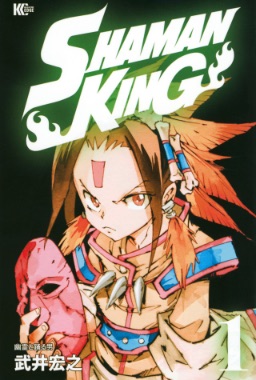
The first-volume artwork above comes from the official Japanese book guide. It is useful for recognizing the original work, but it is not proof of an English edition’s cover, translation or inventory. Readers who own an older edition should compare that edition’s contents against the complete publisher listing rather than treating every similarly titled book as interchangeable.
| Route | Verified identifier | First step |
|---|---|---|
| Complete digital manga | 35 volumes · Kodansha | Volume 1 |
| English print omnibus | 12 books · Kodansha | Omnibus 1; check contents |
| Classic television anime | 2001 entry · 64 episodes | Episode 1 |
| New television adaptation | 2021 official archive · 52 episodes | Episode 1 |
| FLOWERS | Later-generation project | After the original story route |
The classroom image introduces a person before a tournament identity
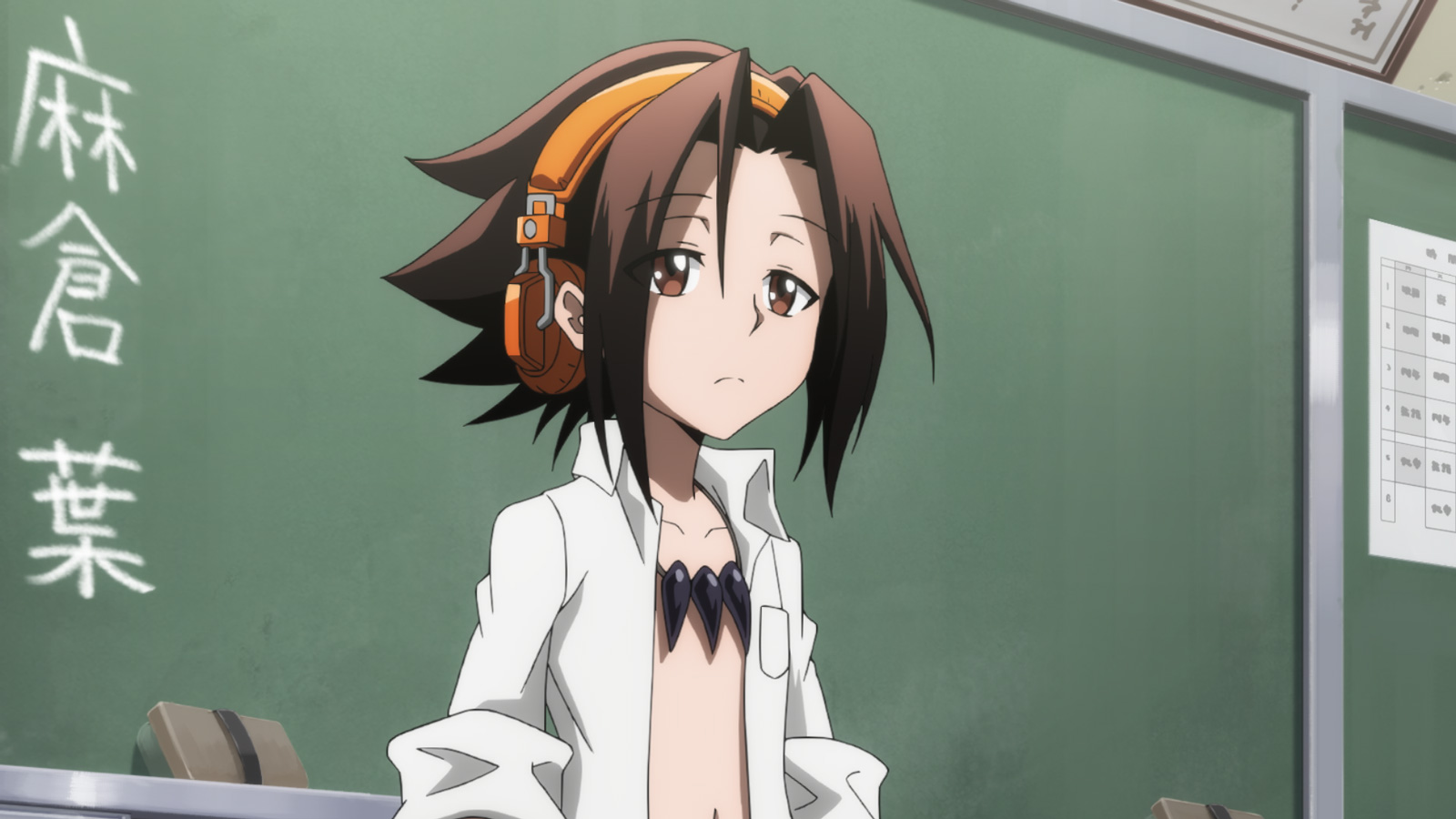
The official 2021 episode-one synopsis introduces Yoh through Manta’s encounter with a boy who talks with spirits. The reference still shows Yoh beside a classroom blackboard, wearing conspicuous orange headphones and a relaxed open uniform. This is an opening-episode image, not a frame from the classic 2001 production or a later tournament confrontation.
Our reading concerns the contrast between ordinary school surroundings and an unusual central character. The board and notice sheet anchor him in a familiar social space. His headphones and unhurried expression offer a visual personality before the premise requires an explanation of spiritual combat. A single image supports this observation about design and framing; it cannot establish the pace or performance of the whole episode.
The manga cover supplies a different invitation: Yoh is presented with a more overtly fantastic companion and strongly graphic title lettering. Comparing these two pieces suggests how an adaptation can alternate everyday introductions with supernatural identity. The comparison remains bounded to the inspected cover and opening still, rather than pretending they prove a scene-by-scene judgment of both television series.
Original visual reference
Spirit partnership changes the meaning of individual strength
A premise about drawing on a spirit’s power makes strength relational. Yoh is not simply a body collecting larger attacks; the identity and history of a partner matter to what he can do. That is a useful analytical lens for a reader who finds tournament rankings less interesting than the relationships behind them.
Our interpretation asks whether a contest treats cooperation as a tool, an obligation or a friendship. Those possibilities can produce different emotional meanings even when the visible action is a battle. Pay attention to who explains a technique, who agrees to participate and who is allowed to express a preference. A list of abilities alone can miss that distribution of agency.
This lens also helps compare media without demanding identical panel and shot counts. A manga can place explanation and action on the same page; animation can separate dialogue, reaction and movement in time. To argue that a particular version changes a relationship, cite a specific passage and episode during a later spoiler-marked comparison. Shared terminology by itself cannot establish equivalence.
A relaxed hero can make competition feel different
Yoh’s relaxed visual introduction is an invitation to consider temperament alongside ambition. In a tournament premise, urgency is often supplied by opponents, rules and deadlines. A protagonist who appears calm can create friction with that surrounding machinery. The useful question is how the story makes calmness compatible with taking other people seriously.
Our reading does not equate a relaxed pose with lack of effort. It asks when a quiet reaction provides confidence and when it might frustrate a companion. This distinction gives character analysis more precision than labeling Yoh merely lazy or merely kind. A later close reading should ground the answer in actions and consequences, not a promotional description.
The classroom frame is valuable because it supplies a modest starting observation without revealing a winner or a final allegiance. Viewers can carry the question forward themselves. The review therefore offers an interpretive route through the story while keeping the major tournament outcomes out of the introduction and the public-facing map.
FLOWERS belongs to a later-generation branch
The 2021 staff page credits Takei as original creator, Joji Furuta as director, Shoji Yonemura for series composition and Bridge for animation production. Those credits belong to that adaptation. They should not be pasted into a production summary for the 2001 anime, whose catalog identifies Xebec as its studio.
The FLOWERS official site identifies another project and separately lists its manga books. Its opening introduces a younger generation associated with the Asakura family. Place it after the original story route for a first-time reader or viewer, because a next-generation premise can disclose relationships that an original-story newcomer has not yet encountered.
The map gives FLOWERS an optional later branch, not an obligation before beginning Yoh’s story. It also avoids presenting the classic television ending as a verified direct bridge into the newer project. A reader following the manga should use the named sequel manga; a viewer following the newer animation should consult the FLOWERS anime’s own archive and availability information.
Edition questions are more useful than an unexplained franchise average
The displayed AniList audience score is attached to the 2001 anime entry. It is not a combined rating of the manga, the newer anime and FLOWERS. Keeping that scope visible prevents an attractive number from silently recommending a version that the number never measured. It is an external audience indicator, not an Animeteor vote or editorial score.
Community questions about complete editions and omnibus counts are useful prompts for research. We resolve the actual counts through publisher records. A Reddit collection photo or a recommendation can reflect one reader’s circumstances, but it does not certify current stock, translation completeness or a legally available stream in another country.
The linked manga encyclopedia and franchise community can help locate character discussions once a reader wants more detail. Their pages may expose later relationships immediately. For a first encounter, stay with the publisher overview and opening episode source before opening a character biography; that preserves the discovery that the route map is designed to protect.
Use publisher contents when planning a collection
Shaman King’s digital singles and print omnibus presentation make it especially easy to compare the wrong units when budgeting a collection. Compare the same language, total narrative coverage and format. A low price for one omnibus and a high price for one digital single do not, on their own, describe the cost of completing the same reading route.
No audited title-level production budget or profit account was verified for this guide. Multiple adaptations, later books and merchandise demonstrate a range of products, but cannot establish the franchise’s net profit. The useful purchasing advice here is to verify contents and legitimate availability rather than translating popularity into an invented financial return.
Start one original-story route, finish that presentation, and then choose a second adaptation or the next-generation branch according to your interest. Yu Yu Hakusho offers another supernatural ensemble and competition framework for comparison. That is a discovery link to a different work, not an additional installment or a shared canon claim.
Primary sources and useful navigation
- Kodansha · complete English manga
- Kodansha · print omnibus edition
- Official book guide · complete edition
- 2021 anime · staff
- 2021 anime · episode archive
- 2021 anime · first episode and image
- FLOWERS · official project
- AniList · named anime audience score
Community and catalog routes
- MyAnimeList · named anime catalog
- Shaman King Wiki · spoilers possible
- Reddit · complete-edition collection question
- Reddit · Shaman King community
The production and publisher links support project facts. Catalog and community pages are secondary navigation and may reveal later events.
Explore related story guides
Original series imagery is reproduced under permission asserted by the site owner; the source and rights credits are retained. The route diagram is Animeteor’s own explanatory graphic.
Production and edition updates
Shaman King Funbari Chronicle — ended mobile service
StudioZ’s 10 July 2023 notice identifies the end of Funbari Chronicle service and the related paid-currency refund procedure. Its stated refund period ran from 12 July 2023 at 15:00 to 30 September 2023 at 15:00, Japan time. These are historical refund dates, not a currently open process. The separately identified Japanese mobile product is not advertised here as a presently playable online service.
See the separate production record →
Shaman King × Granblue Fantasy — 15 January 2027
Cygames’ own 10 August 2026 release announces a Granblue Fantasy collaboration with the TV anime Shaman King beginning on 15 January 2027. It previews Yoh Asakura artwork and says event details will follow through the official game channels. No event end day or financial contract terms are supplied. This is an announced future event at the October review.
See the separate production record →
Shaman King Flowers — 2024 anime branch
The official Flowers site identifies Hiroyuki Takei’s later-generation manga, director Joji Furuta, series composition by Shoji Yonemura and animation production by Bridge. Its character introduction centers on Hana, son of Yoh and Anna. The site’s April 2024 final-broadcast notice places this as an existing production, not a newly announced 2026 season.